Fort Lauderdale puts new drivers into one of the most complex sharing-the-road environments in Florida before they have accumulated much experience. On a typical weekday, its streets carry local commuters, cruise-ship passengers in rental cars who have never driven these roads, college students on e-scooters, cyclists riding legally in travel lanes between the Intracoastal and A1A, and pedestrians crossing mid-block between beach hotels and the sand. Broward County averaged 101 crashes every single day in 2025, totaling 36,871 for the year. That number is not an abstraction - it means something goes wrong on these roads roughly every 14 minutes around the clock. For a teen driver learning here, knowing traffic signals and speed limits is a starting point, not a finish line.
Why Fort Lauderdale's Roads Create a Unique Sharing Challenge
Most cities have a clear majority of drivers who know the local roads. Fort Lauderdale does not. The beach corridor, the port, and the Las Olas entertainment district pull in large numbers of drivers who are watching their phones for directions, looking for parking, or simply distracted by the ocean view. A tourist in a rental car on A1A has no mental map of where cyclists typically appear, no familiarity with the crosswalk timing at Las Olas Boulevard, and no instinct for where pedestrians will step off the curb.
That tourist-driver dynamic is baked into the daily traffic pattern here in a way that a generic driver's education guide never addresses. It means the threat profile is different from a suburban neighborhood or an inland Florida city. The drivers around you are often as unpredictable as the cyclists and pedestrians you need to watch for.
The mix on any given Fort Lauderdale road can include:
- Local commuters familiar with the roads but often rushing through familiar shortcuts
- Rental-car drivers navigating by phone, slow to react, and unfamiliar with where bike lanes begin and end
- Cyclists riding legally in travel lanes on roads without dedicated bike infrastructure
- E-scooter and rental e-bike riders near the beach strip with widely varying skill levels
- Motorcyclists on high-speed arterials like Sunrise Boulevard where lane changes happen fast
- Pedestrians crossing A1A and Las Olas in volume, often between marked crosswalks
Broward County recorded 1,008 bicycle crashes in 2024 resulting in 22 cyclist deaths - an 83 percent spike in fatalities compared to the 12 cyclist deaths recorded in 2023, even though total bicycle crashes rose by only about 13 percent. The crashes that happened in 2024 were, on average, more lethal. In 2025, Broward recorded 759 motorcycle crashes resulting in 51 rider deaths. These are local numbers, not statewide averages. They describe what is happening on the specific roads where Fort Lauderdale drivers learn to drive.
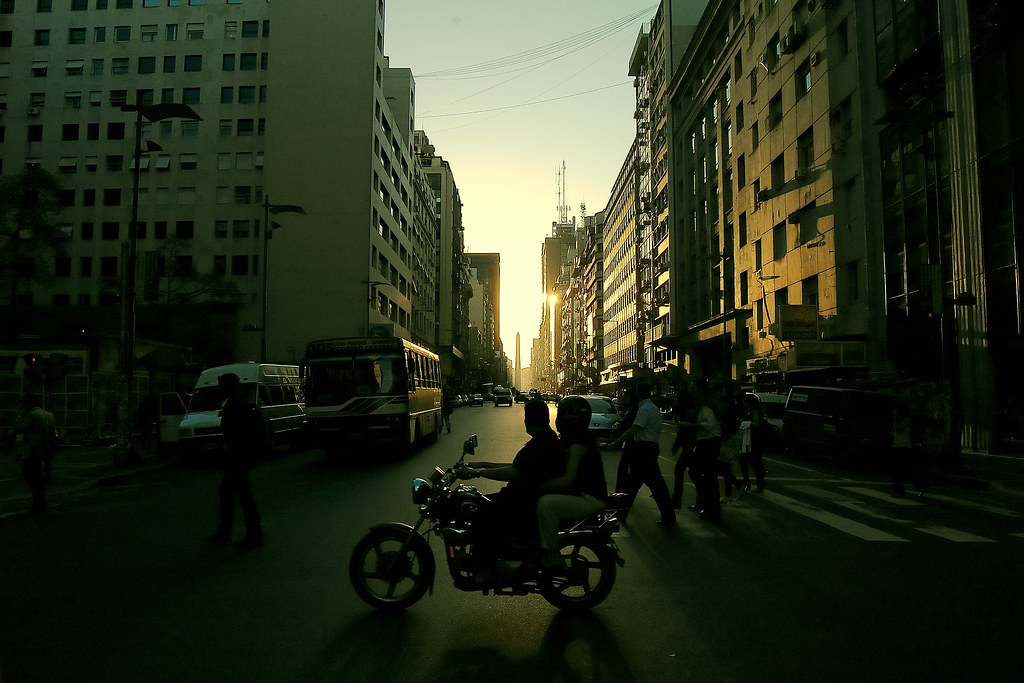
Florida's Passing Clearance Rule When Overtaking a Cyclist
Florida law requires a driver overtaking a bicycle to maintain a minimum lateral clearance of 3 feet between the vehicle and the cyclist, per Florida Statute 316.083 - verify the current statute for any updates. This is not a suggestion and it does not apply only on roads that have bike lanes. It applies on every road in the state. If the available space does not allow the required clearance, the driver waits.
The No-Passing-Zone Exception
One detail that generic guides address: Florida's no-passing-zone statute, 316.0875, contains an exception for situations where an obstruction makes it necessary to cross the centerline. Some legal analysis suggests this exception may apply when crossing the double yellow is necessary to give a cyclist the required passing clearance - but the statute does not define the term "obstruction," and whether a cyclist at a given speed qualifies is not settled in Florida law. If you encounter this situation, the pass is only defensible if oncoming traffic is clear and the maneuver is otherwise safe. Check the current statute and consult official guidance, as this exception comes up on narrow two-lane roads around Broward County's residential and beach-adjacent areas and is not a clearly defined rule.
The Right-Turn Restriction Near Intersections
A second restriction catches drivers off guard: if a cyclist is within 20 feet of an intersection, per Florida Statute 316.151, a driver behind or alongside that cyclist may not overtake the cyclist and immediately turn right in front of them. The driver must allow the cyclist to clear the intersection first. This rule targets the "right hook" crash - a driver who squeezes past a cyclist then immediately cuts right, striking the cyclist who had legal right of way. On Oakland Park Boulevard, where cyclists and right-turning vehicles converge at the same approach, this is not a hypothetical scenario.
Cyclist Rights on the Roadway
Florida law grants cyclists riding on the roadway the same legal rights and duties as motor vehicle operators. A cyclist is not legally required to use a sidewalk even when one runs directly alongside the road. This surprises many drivers who assume a cyclist in the travel lane is doing something wrong. They are not.
When you encounter a cyclist moving slowly in a lane with no bike lane present, the correct sequence is:
- Check your mirrors and maintain a safe following distance behind the cyclist - do not tailgate.
- When the adjacent lane is clear, signal and check your blind spot by turning your head.
- Pass the cyclist with the legally required 3-foot lateral clearance, using the adjacent lane if necessary.
- Return to the right lane only after you have fully cleared the cyclist - do not cut back in early.
- If no safe pass is possible (oncoming traffic, intersection ahead, insufficient lane width), follow the cyclist at reduced speed until conditions allow a safe overtake.
One additional rule applies when cyclists ride on sidewalks: they must yield to pedestrians and give an audible signal before passing a pedestrian. The sidewalk is pedestrian space first. Once a cyclist moves onto the road, they are operating as a vehicle and are entitled to the same clearance and consideration you would give any slow-moving car.
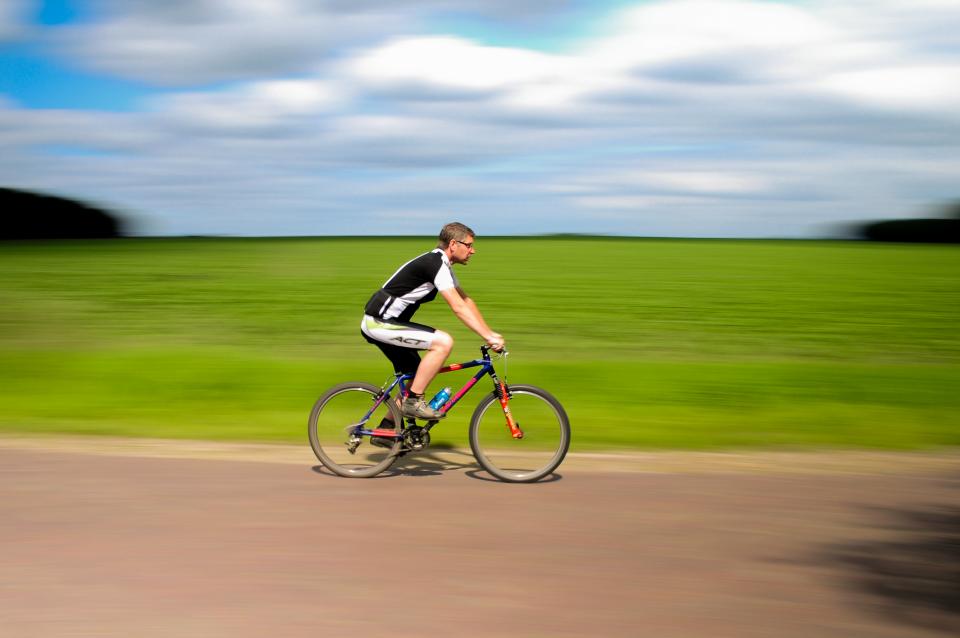
Sharing the Road with Motorcyclists
Florida recorded 9,548 motorcycle crashes in 2023 producing 621 fatalities. Motorcyclists are killed at a dramatically higher rate than passenger car occupants per mile traveled. That disparity does not come primarily from reckless riding - it comes from other drivers failing to see motorcycles or misreading how fast they are moving.
The Left-Turn Crash Pattern
The most common fatal motorcycle crash in Florida follows a predictable sequence: a car driver turns left across an intersection while a motorcycle is approaching in the oncoming lane. The driver either does not see the motorcycle at all, or sees it and misjudges the bike's speed, assuming a larger gap exists than actually does. The motorcycle cannot stop or evade in time. This single crash pattern - the left-turn conflict - accounts for a disproportionate share of motorcycle fatalities in the state.
The misjudgment is partly a visual problem. A motorcycle's narrow profile makes it appear farther away and slower than it actually is. At an intersection preparing to turn left, what looks like a distant, slow-moving object may be a motorcycle at highway approach speed. Wait for a larger gap than your instincts suggest. When in doubt, let the oncoming motorcycle clear the intersection before you turn.
Following Distance and Blind Spots
Florida safety guidance recommends maintaining at least a 4-second following distance behind a motorcycle, and more space in rain, wind, or on rough pavement - check current program materials from the Florida Department of Highway Safety and Motor Vehicles for any updates. Motorcyclists regularly adjust speed and lane position to avoid road hazards - potholes, debris, expansion joints, wet paint - that a car would simply roll over. That gap is what creates reaction time when a motorcycle slows or swerves suddenly.
Before every lane change, check your mirrors, then physically turn your head to sweep the blind spot. Motorcycles disappear into blind zones that would never hide a car. The Sunrise Boulevard corridor, a high-speed multi-lane road with heavy lane-change traffic, is exactly the environment where skipping the head-turn blind-spot check costs lives.
Pedestrian Right-of-Way on Fort Lauderdale Streets
Florida law requires drivers to yield to any pedestrian who has already stepped into a crosswalk - including at unsignaled intersections where no painted lines mark the crossing. Failing to yield is a moving violation. At signaled intersections, the pedestrian signal governs. At unsignaled intersections, any pedestrian in the crosswalk has right of way, and the driver must stop and wait until the pedestrian has cleared the driver's lane.
Mid-Block Crossings and the Crosswalk-Blocking Rule
Mid-block crossings create legal ambiguity. A pedestrian crossing outside a marked crosswalk is technically required to yield to traffic. But a driver who strikes that pedestrian faces serious consequences regardless of the technical right of way. Treat an unexpected pedestrian in the road as a hazard to avoid, not a legal argument to resolve at speed.
One rule that catches many drivers on road tests: stopping at a red light with your vehicle extended into or over the crosswalk is a violation. Stop before the line. A pedestrian with a walk signal has the legal right to cross in front of you - your front bumper sitting in the crosswalk forces them around your vehicle and into the lane of traffic to their left.
The intersection of A1A and Las Olas Boulevard is among Fort Lauderdale's most dangerous for pedestrians, driven by the combination of tourist drivers, rental cars, and heavy foot traffic moving between beach hotels and the water. Confirm current crash data with local or state traffic safety sources.
Oakland Park Boulevard at Powerline Road and the broader Sunrise Boulevard corridor rank among Broward County's most crash-heavy stretches for both cyclists and pedestrians. These are wide, fast arterials where crossing distances are long and pedestrians can be obscured by stopped vehicles in adjacent lanes. Before turning at any intersection on these roads, scan both sides of the crosswalk - a pedestrian stepping from behind a stopped car is a real and common hazard.
Electric Bikes, Scooters, and Mopeds on Fort Lauderdale Streets
Fort Lauderdale's beach rental economy has put large numbers of e-bikes, e-scooters, and mopeds on roads where many drivers do not expect them. Florida classifies these vehicles into distinct legal categories with different rules about where each can operate.
| Vehicle type | Propulsion | Speed relative to others | Where allowed |
|---|---|---|---|
| Class 1 e-bike | Pedal-assist only | Lowest | Roads, bike lanes, most multi-use paths |
| Class 2 e-bike | Throttle-assisted | Low | Roads, bike lanes, most multi-use paths |
| Class 3 e-bike | Pedal-assist only | Higher than Class 1 and 2 | Roads and bike lanes; restricted from some paths |
| Moped | Motor-driven, limited output | Moderate | Roads only; not expressways |
| Motorcycle | Motor-driven, unrestricted | Full road speed | All roads per registration class |
Florida law groups pedestrians, cyclists, motorcyclists, e-bike riders, skateboarders, moped operators, scooter riders, and even horseback riders under the legal category of "vulnerable road user." That classification shapes how fault is evaluated in crashes involving these users and underscores why the state treats them as a distinct legal group requiring specific driver duties.
The practical problem near the beach is that rental e-bike and e-scooter users are often tourists with no cycling experience and no knowledge of Florida road rules. They may ride against traffic, cross mid-block without looking, stop without warning, or enter a travel lane without checking for cars. Treat any rider on a rental e-bike as an unpredictable variable and give them more space than you think you need.
What These Laws Mean for Your Florida Road Test
The Florida road skills test evaluates real driving behavior, and sharing the road with vulnerable users is an active graded category - not background scenery. Examiners watch specifically for:
- Scanning for cyclists and pedestrians before initiating a turn - checking the signal is not enough
- Checking the inside mirror, then the side mirror, then turning the head to clear the blind spot before every lane change
- Yielding completely to pedestrians already in a crosswalk, including at unsignaled intersections
- Stopping before the crosswalk line at red lights, not on or past it
- Adjusting speed appropriately when cyclists or pedestrians are present near the travel lane
Sharing-the-road errors fall into the automatic-fail category on the Florida road test. An automatic fail ends the test immediately, regardless of how cleanly everything else went. Rolling past a pedestrian in a crosswalk, failing to check the blind spot before a lane change, or blocking the crosswalk at a red light each produce that result. The test route in the Fort Lauderdale area will include pedestrian crossings and intersections where cyclists could legally appear. Practice the scan sequence until it is reflex.
Practical Habits That Make Sharing the Road Automatic
Laws describe the minimum required behavior. Habits are what protect you when you are tired, running late, or surprised by something unexpected. The following habits close the gap between knowing the rules and actually applying them in the moment.
The scan habit that matters most at intersections is looking for visual blockers before committing to the turn. A vehicle stopped in the adjacent lane can hide a cyclist or pedestrian completely until they step or ride into your path. Before turning right across any crosswalk where a vehicle is stopped to your left, ease forward to the stop line, look past the stopped vehicle, then proceed. This is the situation where the physical head-turn catches what mirrors miss.
- Inside mirror check, then side mirror - confirm no cyclist is alongside or approaching in the bike lane before you move
- Look left past any stopped vehicle in the adjacent lane before pulling across the crosswalk - do not assume the path is clear because the lane beside you is stopped
- On right turn on red, come to a complete stop, then look left for traffic and right for cyclists and pedestrians - do not roll slowly through the scan
- On arterials with bike lanes or lane shoulders, scan the road surface ahead as you approach driveways and intersections - grates, debris, and wet paint that would push a cyclist left are visible cues, and seeing them lets you anticipate the conflict before it happens
Treat every cyclist as if they might need to swerve without warning. A grate in the road, a car door opening, a patch of wet leaves - any of these can push a cyclist suddenly into your path. Following distance and lateral space are what create room for that swerve without a collision.
Fort Lauderdale's nightlife corridors - Las Olas, the beach strip, the Riverwalk - produce a sharp increase in pedestrians in the travel lane during evening hours, often in dark clothing, sometimes in impaired condition. Slow down earlier than instinct suggests near these areas after dark. The time lost is seconds. The alternative is not recoverable.
Frequently Asked Questions
Can a cyclist legally ride in the middle of the travel lane in Fort Lauderdale?
Yes. Florida law gives cyclists on the roadway the same legal rights as motor vehicle operators, and a cyclist is not required to hug the curb or move to a sidewalk even when one is available. If the lane is too narrow to safely share side by side, the cyclist may legally occupy the full lane. A driver in that situation must wait for a safe opportunity to pass with the legally required 3-foot lateral clearance, or follow at reduced speed until the road widens.
Do I have to yield to a pedestrian who is crossing outside a crosswalk?
Technically, a pedestrian crossing mid-block outside a marked crosswalk is supposed to yield to traffic. In practice, Florida law also requires drivers to exercise due care to avoid striking pedestrians regardless of where the pedestrian is crossing. If a pedestrian is in the road ahead of you, yielding is both the legal and the only sensible course of action.
Is the A1A and Las Olas intersection actually more dangerous than it looks?
Yes, and the geometry is part of why. Right-turning drivers must cross a pedestrian path that may already have people in it when the turn begins. At some signal phases, pedestrians receive a head-start walk interval before vehicles get a green light - meaning a pedestrian who started crossing legally may still be well into the road when drivers expect the way to be clear. Treat a green signal at that intersection as permission to proceed when the crosswalk is visibly empty, not as confirmation that it is.
What following distance should I keep behind a motorcycle?
Florida safety guidance recommends at least a 4-second following distance behind a motorcycle, and more in rain or rough conditions - check current materials from the Florida Department of Highway Safety and Motor Vehicles for any updates. The more useful practice is to use that gap actively. Watch the rider's body position and throttle response: a motorcyclist who shifts lane position, scans the pavement, or covers the brake is reading a hazard ahead. Use that signal to scan the road surface in front of the motorcycle for the same debris or surface irregularity the rider is working around. The gap gives you time; attention tells you when to use it.
Can sharing-the-road errors actually end my Florida road test on the spot?
Yes, but not every sharing-the-road error produces an immediate end. The distinction generally tracks how close the error came to actual contact with a vulnerable road user. Stopping two feet past the crosswalk line is a point deduction; rolling through with a pedestrian still crossing is an automatic fail. A useful practice check: after every turn and lane change in your training sessions, ask whether a cyclist or pedestrian could have been in the space you moved through without looking. If the answer is yes on a regular basis, the scan habit is not built yet.
How should I handle e-bike and scooter riders near the beach who seem to be ignoring traffic rules?
Give them extra space - and understand what the law requires of you regardless of what they do. Florida's vulnerable road user classification means that even if a rental e-bike rider crosses against a signal or drifts into a lane without checking, a driver who had room to avoid the collision and did not may face a due-care finding. The state requires drivers to exercise caution around vulnerable road users independent of those users' own compliance with traffic rules. The buffer you give these riders is not a courtesy - it is part of what establishes that you acted with due care if a crash occurs.