Most Florida driving students encounter their first roundabout on a road test, without ever having practiced the approach. That is the worst possible introduction. A roundabout has specific rules - a few of which contradict what new drivers assume - and several of those rules appear on the Florida permit exam. If you are preparing for a road test anywhere in Broward County, this guide covers every rule you are likely to be tested on and identifies the actual roundabout locations in your area where you can build the habit before it counts.
What Is a Roundabout and Why Florida Is Building More of Them
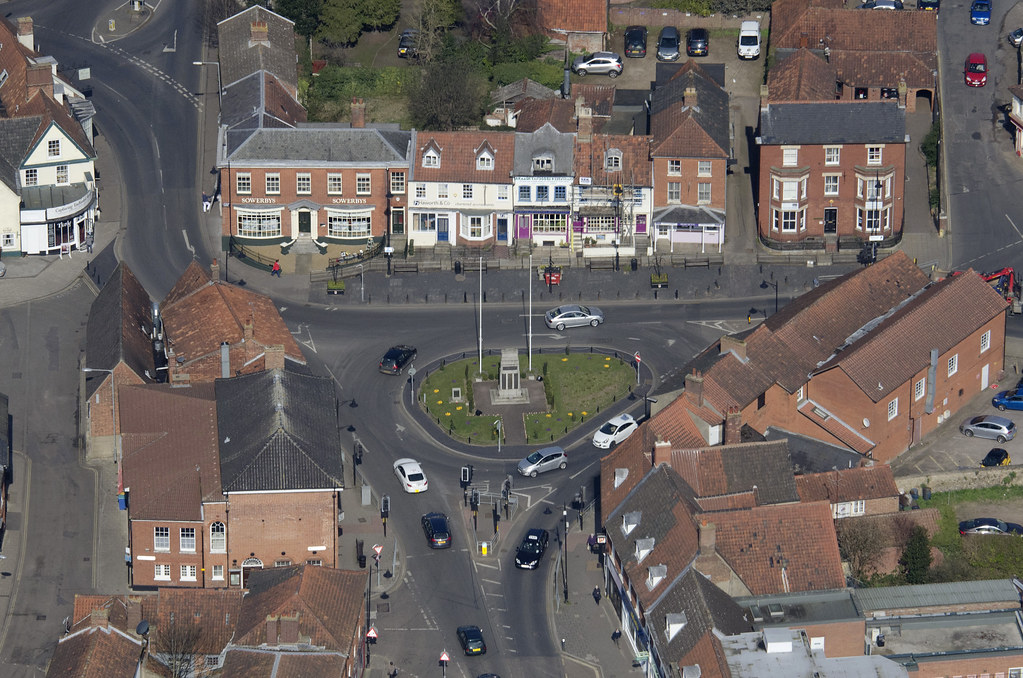
A roundabout is a one-way circular intersection where all traffic flows counterclockwise around a raised center island. That counterclockwise rule is not optional - it is written into the Florida Driver Handbook, and it applies to every roundabout in the state. Entering drivers make a right-hand turn into the circle; traffic inside always moves left to right from the perspective of anyone waiting to enter.
New drivers sometimes confuse modern roundabouts with older-style traffic circles or rotaries. The distinction matters. Traditional traffic circles were large, fast, and typically gave right-of-way to entering traffic, which made them unpredictable and crash-prone. Modern roundabouts are engineered differently - smaller diameter, lower design speeds, and a consistent yield-to-circulating-traffic rule that eliminates the most dangerous conflict points. Head-on collisions and high-speed broadside impacts are geometrically impossible in a properly designed roundabout. Even when crashes occur, the shallow angle and low approach speed change the outcome dramatically.
Florida has accelerated roundabout construction because state engineers and federal safety researchers have accumulated enough data to treat them as a preferred intersection type rather than an experimental one. FDOT has moved roundabouts into standard design guidance, and federal funding incentives tied to safety designations make them attractive for county and municipal projects. When you see a roundabout going in near a school, a residential collector road, or a corridor with a long crash history, that policy framework is why.

The Safety Numbers: FDOT and FHWA Data That Explain the Trend
The data FDOT relies on is striking. Compared to a stop-sign or signal-controlled intersection at the same location, a roundabout can reduce fatal and incapacitating-injury crashes by up to 90 percent and overall injury crashes by up to 75 to 80 percent. These are measured outcomes from before-and-after studies at converted intersections, not modeled projections.
The Federal Highway Administration has formally classified roundabouts as a "Proven Safety Countermeasure" - a specific designation reserved for treatments that have demonstrated consistent, statistically significant safety benefits across multiple study sites. That classification matters because it routes federal safety funding toward roundabout construction and away from treatments with weaker evidence.
The FHWA designates roundabouts as a Proven Safety Countermeasure based on consistent crash reduction results documented across numerous study sites in the United States.Federal Highway Administration, Proven Safety Countermeasures
The mechanism behind these numbers is not complicated. At a signalized intersection, a vehicle running a red light can strike crossing traffic at full road speed - 90 degrees, speeds additive, outcome severe. In a roundabout, the geometry forces every driver to slow to the posted advisory approach speed, and no conflict point allows a head-on or broadside collision at high velocity. Speed is the primary variable in crash severity, and roundabouts engineer lower speed into the intersection itself rather than relying on driver compliance with a traffic signal.
Roundabout Signs and Road Markings: What You Will See Before You Arrive
Florida's signage system for roundabouts follows a consistent sequence. Once you recognize it, you will see it the same way at every location in Broward County.
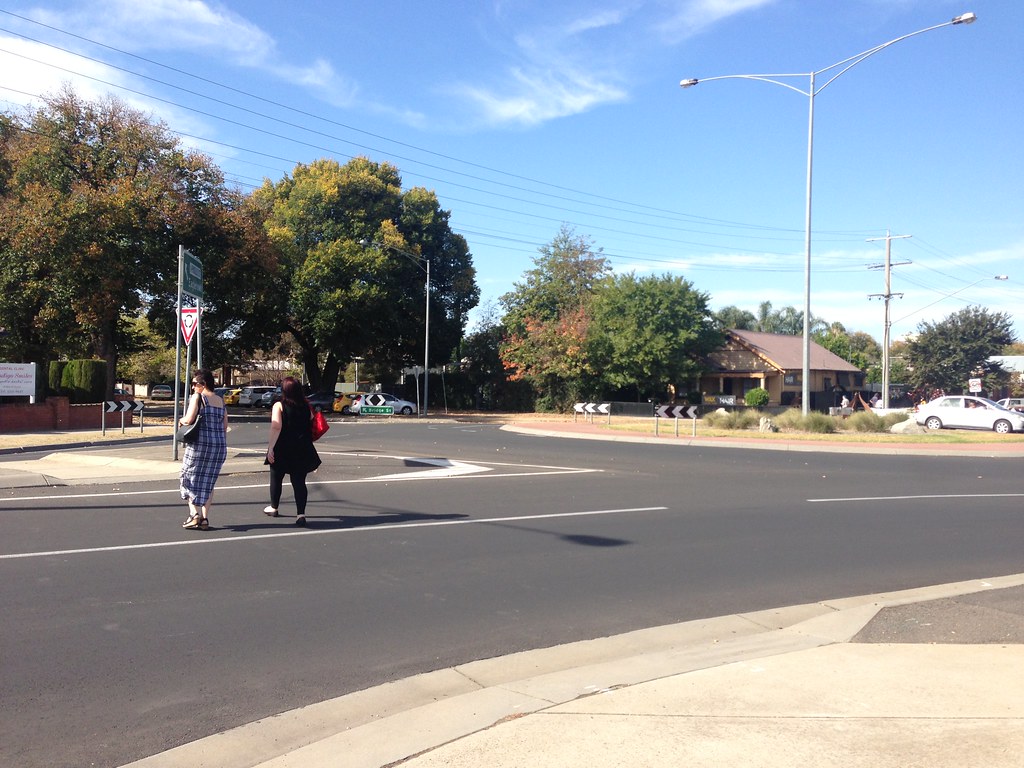
- Yellow circular warning sign: A black circular arrow on a yellow diamond-shaped background, posted on the approach road. This is your first indicator that a roundabout is ahead - usually far enough out to begin thinking about lane selection.
- Advisory speed plate: A smaller rectangular sign mounted directly below the yellow warning sign, showing the recommended approach speed. It is not a legal speed limit, but it reflects the speed engineers calculated as safe for that specific entry curve radius.
- Yield sign: A red-and-white downward-pointing triangle at the entry point of each approach. This sign carries full legal weight - you must yield to all vehicles already circulating inside the circle.
- Lane-choice signs and overhead guidance: At multi-lane roundabouts, signs on the approach indicate which lane to use for which exit direction. Read these before you reach the yield line, not at it.
- Pavement arrows and lane markings: Painted arrows on the road surface confirm your lane assignment on the approach and through the entry. At night or in unfamiliar territory, these are often clearer than signs.
One thing drivers miss: the advisory speed describes where you should be by the time you reach the entry, not where you start braking. Begin slowing earlier than the sign's position, and use the sign to confirm you are at the right speed - not to start your deceleration.
How to Approach: Speed Reduction, Lane Selection, and Scanning for Traffic
The approach is where most roundabout errors originate. You cannot correct a wrong lane choice after you have crossed the yield line.
Begin reducing speed well before the yield sign. As you slow, select your lane based on your intended exit. In a multi-lane roundabout, the right lane handles right turns; either lane can generally be used for straight-through movements; and the left lane handles left turns and U-turns. Always follow the posted approach signs and pavement markings at the specific roundabout you are entering, as individual installations can vary based on geometry.
While slowing, scan to your left for vehicles already circulating inside the roundabout. Traffic can be entering from multiple arms simultaneously, so circulating vehicles appear at different points in the circle depending on where they entered. A gap that looks clear when you are 300 feet out may close by the time you reach the yield line. Scan continuously and reassess right up to the moment you decide to enter or wait.
The Core Rule - Yielding to Circulating Traffic: How to Read a Gap and When to Go
The entry rule is absolute: vehicles already circulating have right-of-way. You must wait until there is a clear gap before entering. Stopping inside the roundabout after you have already entered is prohibited, so the decision about whether to go must be finalized before your front bumper crosses the yield line.
A practical way to read a gap: if the approaching circulating vehicle would have to brake or adjust speed to avoid you, the gap is not yours. Wait for a gap where you can enter at a steady, unhurried pace without forcing anyone inside the circle to react. Cutting a close gap and then hesitating once you are in the circle is worse than waiting an extra few seconds at the yield line.
Hesitation at the yield line creates a different problem. The driver behind you may have already committed to following you through. A stop they do not expect - especially if you hesitate at a gap that looked clear - can cause a rear-end crash before you even enter the circle. If the gap closes as you are about to go, commit to stopping clearly and early so the vehicle behind you has time to react.
When the roundabout is busy, gaps will be short. Be patient. The engineering keeps traffic moving, and a clear gap will open. Entering on a marginal gap to avoid waiting is the wrong trade-off.
Single-Lane vs. Multi-Lane Roundabouts: Step-by-Step Differences
Single-Lane Roundabout: The Walk-Through
- Reduce speed on the approach and read the advisory speed sign posted below the yellow warning sign.
- Check for pedestrians in the crosswalk on the splitter island to your right before the yield line - they have right-of-way.
- At the yield sign, scan left for circulating traffic and identify a clear gap where you can enter without forcing anyone to brake.
- Turn right into the circle, joining the counterclockwise flow at a steady speed.
- Travel inside the circle without stopping; maintain your position in the lane.
- As you pass the exit just before your intended one, activate your right turn signal.
- Exit at your intended opening, yield to pedestrians in the crosswalk on the exit splitter island, and complete the merge into the outgoing lane.
Multi-Lane Roundabout: Lane-Selection Comparison
The same sequence applies in a multi-lane roundabout, but lane selection on approach is more consequential because changing lanes once inside is prohibited.
| Intended Exit Direction | Approach Lane | Lane Change Inside Permitted? | Signal on Entry? |
|---|---|---|---|
| Right turn (first exit) | Right lane | No | No |
| Straight through | Either lane | No | No |
| Left turn (second or third exit) | Left lane | No | No |
| U-turn (returning the way you came) | Left lane | No | No |
The last column is worth noting. No entry direction requires a turn signal. Signaling as you enter tells waiting drivers you are about to exit at the first opening - which causes them to pull into traffic before you have actually left the circle. Signal only when you are about to exit.
Exiting Correctly: Right-Turn Signal Timing and Pedestrian Crosswalks
The signaling rule is the one new drivers most consistently get wrong, and it appears on Florida road tests. Florida law requires you to activate your right turn signal when exiting a roundabout - specifically as you pass the exit just before your intended one. This gives drivers waiting at the yield line an accurate, timely signal of your intentions without misleading them about an earlier exit.
Signaling at the entry point is the most common mistake. The driver waiting at the yield sign sees your right turn signal, assumes you are leaving at the first exit, and begins to enter the circle - only to find you still circulating. This is a primary cause of entering-driver and circulating-driver conflicts. Signal late, not early.
After signaling, steer toward the exit and complete the turn. Before you fully merge into the outgoing road, check for pedestrians. The crosswalks are on the splitter islands flanking each exit arm, not inside the circle. Pedestrians in those crosswalks have right-of-way. If someone is waiting or crossing, stop and let them clear before you complete your exit.
Special Situations - Missed Exits, Emergency Vehicles, and the Truck Apron
If You Miss Your Exit
Do not brake sharply, do not reverse, and do not try to cut back across the circle. Florida guidance is straightforward: continue circling until you reach your intended exit again. One extra loop costs a few seconds and is completely safe. Reversing inside a roundabout is prohibited and immediately creates a head-on conflict with circulating traffic that has no reason to expect a vehicle moving backward.
Emergency Vehicles
If the emergency vehicle has not yet reached the roundabout and you are still on the approach, follow standard Florida law: pull to the right and stop before entering. The two situations - already inside versus still approaching - call for different actions, and the distinction is a documented road-test question.
The Truck Apron
Most Florida roundabouts have a raised, textured ring around the center island - often paved in a contrasting material like stamped concrete or brick pavers. This is called the truck apron, and it exists for one engineering reason: to give the rear wheels of large vehicles extra surface to track over when their turning radius exceeds the circle's capacity. A tractor-trailer, a fire apparatus, or a large RV can position its front axle to clear the center island while the rear axle uses the apron.
The following road users must not use the truck apron:
- Passenger cars and SUVs
- Pickup trucks
- Motorcycles and motor scooters
- Cyclists
- Pedestrians
Driving a passenger vehicle over the apron can damage suspension components, degrades the surface over time, and removes the operational buffer that large vehicles actually need. If you are new to roundabouts and find yourself drifting toward the center, the correct response is to steer into the travel lane - not to use the raised ring as a shortcut.
Roundabouts in Broward County: Where Fort Lauderdale-Area Drivers Will Find Them
Broward County has more roundabout locations than most learners realize. Several are practical for practice runs with a licensed adult before a road test.
- Sunset Strip, Fort Lauderdale: Two roundabouts installed as part of the city's Complete Streets initiative, with the completed corridor opening in July 2018. These are among the most accessible practice sites for students based in Fort Lauderdale proper, and the street context - mixed residential and commercial - mirrors what a road test evaluator will look for.
- Holmberg Road at Riverside Drive, Parkland: A residential-area roundabout in a lower-traffic setting. Useful for a first practice session because circulating traffic volume is manageable and you can take your time reading gaps without pressure from a busy approach.
- Holmberg Road at Parkside Drive, Parkland: A second Parkland roundabout on the same corridor. A single practice run down Holmberg Road exposes a student to two roundabouts in sequence, which builds the approach-yield-exit habit more efficiently than a single location.
- University Drive at Old Club Road, Parkland: Completed in December 2021, this intersection sits on a busier collector road and gives students experience with higher circulating traffic volume and tighter gap windows - a step up in difficulty from the Holmberg locations.
- Loxahatchee Road corridor, Parkland (under construction): Three roundabouts at the intersections of Nob Hill Road, University Drive, and Parkside Drive along Loxahatchee Road are part of a major FDOT improvement project that broke ground in October 2023 and was approximately 75 percent complete as of spring 2026, with anticipated completion in early 2027. Check the City of Parkland public works page for current construction status and access conditions before routing a practice session that way.
A practical progression for Broward students: start on Holmberg Road in Parkland on a weekend morning when traffic is light. Move to the Sunset Strip roundabouts once the single-lane approach-yield-exit sequence feels automatic. Save the University Drive at Old Club Road location for a later session when you are comfortable holding lane position under real traffic pressure.
The Permit Test Connection
Florida's Class E Knowledge Exam covers traffic control devices, and roundabout rules - yield to circulating traffic, counterclockwise travel, correct exit signal timing - appear in Chapter 5 of the official Florida Driver Handbook. Florida driver education instructors consistently flag roundabout questions as a documented source of exam failures. The two points students miss most often are the no-signal-on-entry rule and the correct emergency vehicle procedure once inside the circle. Read Chapter 5 before your exam appointment, and review both of those points specifically.
Frequently Asked Questions
Do I need to signal when entering a roundabout in Florida?
No. Florida law requires a right turn signal when exiting, not when entering. Activating your signal at the entry point tells waiting drivers you are about to leave at the first available exit, which can cause them to pull into the circle before you have actually left - a common source of collisions at multi-exit roundabouts.
What should I do if an emergency vehicle approaches while I am already inside a roundabout?
Continue to your nearest available exit - do not stop inside the circle. Once you have cleared the splitter island, pull to the right and stop as you normally would for an emergency vehicle. Stopping inside the roundabout is both illegal and dangerous because it blocks the path of the emergency vehicle through the intersection.
What is the raised, textured ring around the center island?
It is called a truck apron, and it is built exclusively for large vehicles - tractor-trailers, fire trucks, and oversized RVs - whose wheelbase is too long to navigate the circle without the extra surface. Passenger cars, SUVs, pickups, and motorcycles should not drive over it, and pedestrians and cyclists should not use it either.
Which lane do I use in a multi-lane roundabout if I am going straight?
The Florida Driver Handbook states that either lane can generally be used for straight-through movements in a multi-lane roundabout, unless signs or pavement markings indicate otherwise. Use the right lane for right turns and the left lane for left turns and U-turns. Always confirm with the posted approach signs and pavement markings at the specific roundabout you are entering, since individual installations can vary based on local road geometry.
Can I change lanes once I am inside a roundabout?
No - lane changes inside a roundabout are prohibited regardless of how many lanes are present. The correct lane must be chosen on the approach before you reach the yield line. A wrong-lane choice means circling around to the exit again, not cutting across to the one you missed.
Are there roundabouts on a typical Fort Lauderdale-area road test route?
Road test routes are not published and vary by examiner, but roundabouts are present on public roads throughout Broward County and evaluators can use any legal road. Students who have practiced at the Sunset Strip locations in Fort Lauderdale or along Holmberg Road in Parkland report feeling significantly more confident if a roundabout appears during their test. Knowing the approach sequence, the signal timing rule, and the pedestrian yield requirement - rather than encountering them for the first time during evaluation - is the practical advantage of targeted practice.