Most driver education in Florida teaches you the rules of the road and how to pass your skills test. What it almost never covers is what to do the moment a law enforcement officer appears in your rearview mirror with lights flashing. For a new driver in Broward County, that gap has real consequences. A single traffic stop handled poorly can cascade into points, restricted driving privileges, and an insurance increase that follows you for years. This guide walks through every stage - from the first seconds to the aftermath - with specific attention to the GDL rules that apply to every teen driver in Fort Lauderdale.
Why New Drivers Need to Know This Before They Drive Solo
Broward County is patrolled by multiple agencies: the Broward Sheriff's Office covers unincorporated areas and many municipalities, the Fort Lauderdale Police Department handles city streets, and Florida Highway Patrol works I-95, I-595, and the Turnpike. All three follow the same Florida statutes, and for a new driver who has never been pulled over, the encounter can feel disorienting without preparation.
The stakes for a teen on a GDL license are higher than for an adult driver. Florida law sets a separate, much lower point accumulation threshold for under-18 drivers - one that a single ticket can reach. Add GDL curfew rules that officers verify at every teen stop, and a driver who fumbles the encounter can leave with more violations than the one that triggered the stop. Understanding the process before you need it is the cheapest insurance available.
The First 10 Seconds: What to Do the Moment You See Emergency Lights
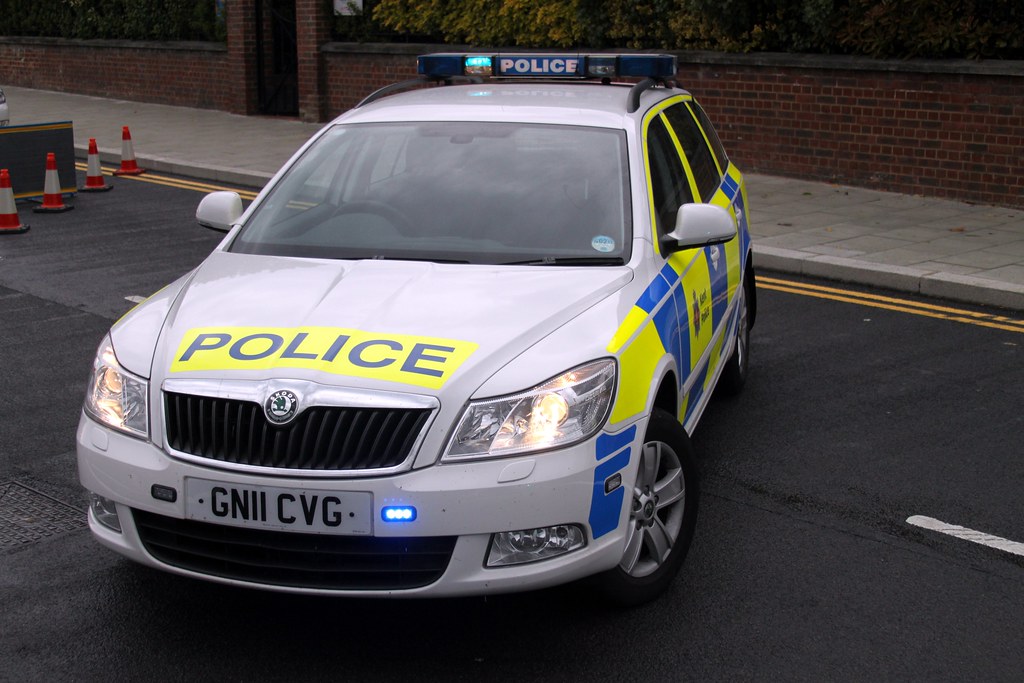
When red and blue lights appear behind you, do not slam the brakes or pull sharply right. Your response in the next few seconds tells the officer everything about how cooperative this stop is going to be. Follow this sequence:
- Signal right immediately so the officer sees you responding.
- Begin slowing gradually and smoothly - no sudden braking.
- Move toward the right side of the road, looking for a solid surface away from active traffic lanes.
- If the shoulder is narrow or dark, it is acceptable to drive slowly for a short distance to reach a safer spot - a parking lot entrance or an exit ramp is better than a blind curve.
- At night in Fort Lauderdale, prioritize a lit location. Gas stations and commercial lots along US-1 and Federal Highway are appropriate alternatives to a dark residential shoulder.
- Come to a complete stop, then activate your hazard lights.
Stopping Correctly: Engine Off, Hands on the Wheel, Window Down
Officers watch the vehicle from the moment they leave their patrol car. Movement toward the glove box, reaching under the seat, or handling a phone creates unnecessary tension before a word is spoken. After you stop:
- Turn off the engine.
- Place both hands on the top of the steering wheel where they are clearly visible.
- Roll your window completely down.
- If it is dark, switch on your interior cabin light.
- Wait for the officer to speak before reaching for any documents - if you need to open the glove box, announce it first: "My registration is in the glove box, I'm going to reach for it."
- Keep your phone away and ask any passengers to stay calm with hands visible.
These steps cost nothing and they communicate cooperation before the conversation begins. That matters in every stop, and especially when you are a young, visibly nervous driver.
Three Documents You Must Hand Over and Where to Keep Them Ready
Florida law requires every driver to carry a valid license and to produce it on demand from any law enforcement officer. Failure to produce it is a traffic infraction separate from whatever triggered the stop. You will hand over three documents:
- Driver license or learner permit - keep it in your wallet or a card holder, not loose in a bag where locating it under pressure wastes time and looks suspicious.
- Vehicle registration - issued by the county tax collector and tied to the vehicle. Keep it in the glove box in a clear sleeve, separated from old cards and manuals so it is the first thing you find.
- Proof of insurance - Florida accepts a digital card on your phone. Know where the app is before you need it. Make sure the policy shown is current - an expired card is not proof of active coverage, and this is one of the most avoidable citations new drivers receive.
A simple habit: each time your policy renews, swap the old insurance card in the glove box for the new one the same day it arrives.
How the Conversation Works and What Not to Say
Officers typically open with a question: do you know why I stopped you? You are not required to answer incriminatingly. A calm "I'm not sure" is appropriate and honest. You do not need to guess, explain your route, or volunteer where you were going.
What you are required to provide is your identity and your documents. Beyond that, you have the right to say little. Being cooperative with the procedural part of the stop - handing over documents, staying calm - is entirely separate from offering an explanation of your evening. Save those details for court if you choose to contest the citation.
You will likely receive a citation. Signing it is not an admission of guilt under Florida law - it is only an acknowledgment that you received it and understand you must respond. Refusing to sign is itself a separate offense. Sign, take your copy, and handle it afterward.
Your Legal Rights at a Florida Traffic Stop
Knowing your rights is not about being confrontational - it is about making informed decisions under pressure, especially when the consequences for teen drivers are severe.
- Remaining silent - beyond identifying yourself and providing the required documents, you are not obligated to answer questions about where you were going or what you were doing.
- Consent to search - an officer may ask to search your vehicle. You have the right to decline. A lawful search based on probable cause does not require your consent, but a request for consent is not the same thing.
- Field sobriety tests - the walk-and-turn, one-leg stand, and horizontal gaze nystagmus tests are investigative tools, not mandatory ones. You may legally refuse them without triggering an automatic suspension.
- Breathalyzer and chemical tests - this is where the law draws a sharp line. By driving in Florida, you have already agreed under the implied consent law to submit to a breath or urine test if an officer lawfully requests one. Under Trenton's Law, effective October 2025, a first refusal is now a second-degree misdemeanor - not a civil infraction - and triggers an automatic one-year license suspension. Refusing a breathalyzer is not a safe option; it is now a criminal one.
- Passenger identification - passengers are generally not required to show ID unless the officer has reasonable suspicion they have committed a crime. The driver's identification requirement is a separate legal obligation that does not extend to passengers automatically.
For drivers under 21, Florida maintains a near-zero legal alcohol threshold - a fraction of the standard adult limit. You do not need to feel impaired to face an automatic suspension at a traffic stop, and Trenton's Law means refusing the test is now a misdemeanor, not a workaround.
Extra Rules That Apply to Teen GDL Drivers
A traffic stop for a GDL driver involves verification that goes beyond license, registration, and insurance. Officers at a teen stop routinely check whether the driver is in compliance with the age-specific restrictions on that license.
Curfew Hours by Age
- 16-year-old licensed drivers may not drive between 11 PM and 6 AM unless accompanied by a licensed driver aged 21 or older, or driving directly to or from work.
- 17-year-old licensed drivers may not drive between 1 AM and 5 AM under the same conditions.
If a 16-year-old is stopped at midnight with no adult passenger and no documented work purpose, the curfew violation is added on top of whatever triggered the stop. The work exception applies to actual work commutes - it is not a general excuse, and officers know how to ask the follow-up questions.
The 6-Point Business Purposes Only Threshold
This is the GDL rule that most teen drivers and their parents have never heard of, and it is the one most likely to create a serious problem from a minor stop. Any driver under 18 who accumulates six or more points within any 12-month period automatically has their license restricted to Business Purposes Only for one year. That restriction covers school, work, and medical appointments - nothing recreational.
Four points from one speeding citation where the driver was significantly over the limit, plus three points from an earlier rolling-stop citation, clears that threshold. Two separate small incidents add up to a year of severely curtailed driving. The point accumulation math needs to be understood before the first solo drive, not after.
Permit Drivers
Driving alone on a learner permit is a violation in itself. An officer who stops a permit holder driving solo will cite the permit violation separately from the triggering reason. There are no exceptions for short distances or familiar routes.
What Happens After the Stop: Points, Fines, Insurance, and the BDI Option
| Violation | Points Added | Insurance Impact | BDI Course Eligible |
|---|---|---|---|
| Speeding - minor (under 15 mph over) | 3 points | Moderate increase | Yes |
| Speeding - significant (15 mph or more over) | 4 points | Higher increase | Yes |
| Speeding - criminal threshold (extreme excess) | 4 points plus criminal record | Severe, long-lasting | No |
| Reckless driving | 4 points | Very high, persists for years | No |
| Failure to stop / rolling stop | 3 points | Moderate increase | Yes |
Florida's point system triggers mandatory suspensions automatically: accumulate 12 points within 12 months and you face a 30-day suspension; 18 points within 18 months brings a 3-month suspension; 24 points within 36 months triggers a one-year revocation. No judge intervenes - the DHSMV acts when the threshold is crossed.
As of July 2025, driving at an extreme margin above the posted speed limit - the specific threshold is defined in current Florida law, so verify the exact figure at the DHSMV website - is a criminal offense, not a civil citation. A first conviction can carry jail time and a fine. Fort Lauderdale's expressways, where light traffic tempts higher speeds, are exactly where this risk concentrates.
For standard moving violations, Florida allows eligible drivers to elect a Basic Driver Improvement course once per 12-month period, up to five times in a lifetime. Completing the course keeps points off your record and prevents the insurance surcharge that follows a point-carrying conviction. The election must be made within a window after receiving the citation - check the citation itself and the Broward County Clerk of Courts for the current process. The BDI option is not available for violations at or above the extreme speeding threshold.
The Most Common Reasons New Drivers in Fort Lauderdale Get Pulled Over
These are not hypothetical risks - they are the stops that happen regularly to new drivers in this area. Most are preventable with deliberate habits built early.
- Speeding on US-1 and Federal Highway - posted limits shift along these corridors, and new drivers carry a speed from one zone into a lower-limit zone without noticing. Both FTLPD and FHP run regular enforcement on these roads.
- Rolling stops at residential intersections - a four-way stop in a quiet neighborhood is where new drivers cut corners consistently. The stop must be complete, every time. Broward residential streets see steady enforcement of stop-sign compliance.
- Improper lane changes on I-95 - failing to signal, cutting across multiple lanes, and merging with an inadequate gap are frequent citations on the highway. FHP maintains strong presence through the Fort Lauderdale stretch of I-95.
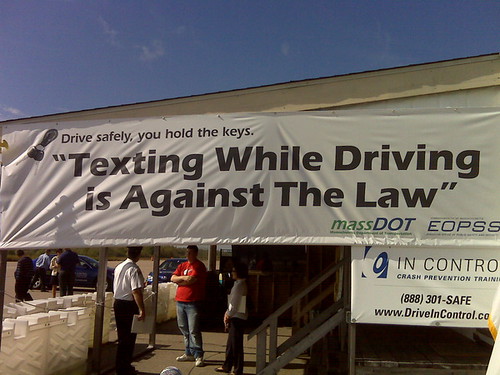
- Phone use while driving - Florida's hands-free law makes this a primary offense, meaning an officer can stop you for it alone with no other violation needed. New drivers who are accustomed to constant phone access are the most at risk.
- Expired temporary tags - officers run plates as a routine part of patrol. A new driver who bought a first car and lost track of the temp tag expiration is an easy stop. Verify registration status before every drive during the waiting period for permanent plates.
Frequently Asked Questions
Can I keep driving for a bit to find a safer spot before pulling over?
Yes - signal immediately and reduce speed to show you are responding, then drive slowly to a well-lit or safer location. A parking lot or wide shoulder is better than a narrow dark roadway. The key is to show compliance through the signal and reduced speed; do not continue at normal driving speed for an extended distance.
What happens if I'm stopped on a learner permit without an adult in the car?
Driving alone on a learner permit violates the permit conditions and an officer will cite that violation in addition to whatever triggered the stop. Florida permits require a licensed driver aged 21 or older in the front passenger seat during all permit driving. No exception exists for short trips or familiar routes.
Do my passengers have to show ID at a traffic stop?
Generally no. Florida law requires the driver to produce a valid license on demand, but passengers face no equivalent obligation unless the officer has reasonable suspicion that a passenger has committed or is committing a crime. Passengers can stay calm, keep hands visible, and are not required to answer identity questions. The driver's obligation and the passengers' situation are legally separate.
If I complete a BDI course, does the ticket disappear from my insurance record?
Completing the course keeps points off your Florida driving record and prevents the point-based surcharge on your policy. Some insurance companies access driving history through channels beyond the state points system, and policies vary. Contact your insurer directly to confirm how the citation - even one resolved through BDI - affects your rate. The Broward County Clerk of Courts can confirm the election process for your specific citation.
What exactly changed with Trenton's Law and why does it matter for teens?
Trenton's Law, effective October 2025, reclassified a first refusal to submit to a breath or urine test from a civil infraction to a second-degree misdemeanor. That means a criminal record, not just an administrative penalty, along with an automatic one-year license suspension. For a teen driver whose record is otherwise clean, this is a severe outcome from one decision at the roadside. Refusing a breathalyzer was always costly; it is now also criminal.
How much does a single ticket actually affect my insurance as a teen driver?
The increase depends on your insurer and policy, so contact your provider for specifics - but the impact is real and for teen drivers whose base rates are already higher, the added surcharge can be significant. More serious violations like reckless driving carry substantially larger increases that can persist for years after the points expire. This is the clearest reason to use the BDI option on an eligible first citation if you qualify: it stops the insurance consequence before it starts.