Most Fort Lauderdale drivers learn the interstates by repetition - merge here, watch that ramp, keep pace with traffic on I-95. What almost none of them are taught is what to do when the car stops working on one of those roads. A blown tire at highway speed on a Broward County interstate is a different emergency from one in a parking lot. Florida has a free, government-funded assistance program that has logged millions of roadside helps and that most drivers have never heard of. There is also a 2024 law change that now legally protects you when you are the broken-down vehicle - and a specific coverage gap on I-595 that every local driver should know before they ever need to rely on it.
Why Florida Highway Breakdowns Are More Dangerous Than Most Drivers Realize
Disabled vehicles on high-speed Florida roadways are one of the leading causes of secondary crashes, according to FDOT traffic incident management data. A secondary crash happens when a passing driver strikes a stopped or slow vehicle - or a person standing beside one - after the original breakdown has already occurred. The first incident creates chaotic conditions: drivers brake unevenly, attention shifts, and the transition between highway speed and zero happens over a very short distance.
On I-95 through Broward County, posted speeds are high and traffic density stays heavy from early morning through late evening. I-595 adds complexity with its managed express lanes and the interchange geometry at I-75 and I-95. Shoulders are narrow in places, on-ramp merge zones compress the usable space, and overpasses create blind approach angles for following traffic. These are not low-stakes roads to sit on with a flat tire.
Florida's heat makes the wait itself dangerous. A vehicle sitting in direct sun during a Broward summer becomes uncomfortable within minutes and genuinely hazardous for children, elderly passengers, or anyone with a health condition within fifteen to twenty minutes. Pavement temperature on a shoulder can run far above the air temperature. A driver managing an overheated passenger and incoming traffic at the same time is not in a position to make good decisions. The time to think through these steps is now, not then.
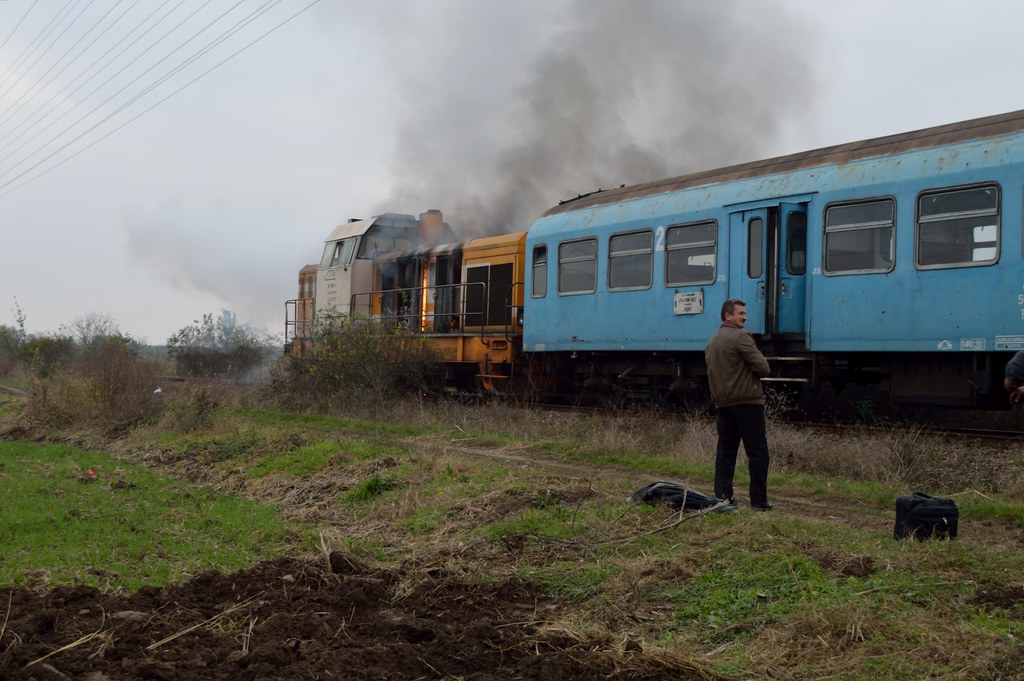
The First 60 Seconds: Hazard Lights On, Foot Off the Brake, Coast to Safety
The sequence below is the correct order of operations when you sense a problem while moving at highway speed. Each step matters, and the order matters.
- Activate hazard lights immediately. Do this the instant you notice something wrong - before you know exactly what it is. Hazard lights signal every driver behind you that something has changed. Under Florida's updated Move Over law, they also activate the legal protections discussed later in this guide.
- Release the accelerator. Do not brake hard. Hard braking on a highway invites a rear-end collision at full speed. Ease off the gas and let the car's momentum carry you forward while you plan a controlled exit toward the right shoulder.
- Signal right and begin moving toward the right shoulder gradually. A sudden lane change at highway speed is dangerous. Use the turn signal, check your mirrors and blind spot, and drift right at a gentle angle using remaining momentum.
- Aim for the farthest-right point of the paved shoulder. The farther from the travel lane you can get, the safer your position becomes. Pull as far right as pavement allows, then stop.
- Shift to park, turn wheels toward the right curb or shoulder edge. If a following vehicle strikes your rear, wheels angled right help push your car away from traffic rather than into it.
Where to Pull Over on Broward County's Interstates
On I-95, I-75, and I-595, the right shoulder is the correct destination. On I-95 through Broward, shoulder width varies considerably by segment. Some stretches offer a generous paved strip; others, particularly near interchanges, narrow to a point where a stopped vehicle is still partially in the travel lane. Getting as far right as physically possible, every time, is the baseline.
I-595 introduces a hazard that surprises many drivers. The I-95 Express Lanes in Broward County are separated from general-purpose lanes by double white lines, and crossing those lines is illegal - in either direction, in a vehicle or on foot. A driver who breaks down between an express lane barrier and the double-white boundary may have extremely limited space to work with and no legal way to move laterally. The correct response in that scenario is to stop as safely as possible, hazard lights on, stay in the vehicle with seatbelt fastened, and call for help before attempting anything else.
On I-75 through western Broward, shoulders are generally more consistent, but the road carries heavy truck traffic whose turbulence affects stopped vehicles on the shoulder. If no shoulder is available at all - possible on an elevated section or in an active construction zone - remain in the vehicle, seatbelt on, hazards running, and call both the FHP dispatch shortcode and 911. Do not walk along a highway travel lane under any circumstances.
Stay in the Car or Get Out? What Florida Safety Experts Recommend
This question does not have a single answer that fits every situation. Florida safety guidance treats it as conditional.
Stay in the vehicle, belted, when:
- You are fully on a paved shoulder with meaningful distance from the travel lane
- Traffic behind you can see your hazard lights and has room to react
- There is no smoke, fire, or fuel smell coming from the vehicle
- Reaching the guardrail on foot would require stepping toward moving traffic
Exit the vehicle when:
- There is smoke, fire, or a strong smell of burning or fuel
- Your vehicle is in or partially in a travel lane with no ability to move it
- FHP or a Road Ranger is on scene and directing you to exit
- Your car is being pushed or struck by following vehicles
When you exit, Florida safety authorities give one consistent rule: use the passenger-side door only, then move completely behind the nearest guardrail and stay there. Never stand between your car and the direction of traffic. The vehicle itself serves as a physical barrier; a person standing beside it does not. Once behind the guardrail, stay put until help arrives. Do not walk back toward the car to retrieve belongings - that trip back toward the roadway is when people get hurt.
Florida's Free Road Ranger Program: 24/7 Help on Broward's Major Interstates
Florida's Road Ranger program has been operating since 2000 and has recorded more than 6.1 million no-cost service assists, according to FDOT. It is funded by FDOT and private sponsors including State Farm. Motorists pay nothing. Most Fort Lauderdale drivers have no idea it exists.
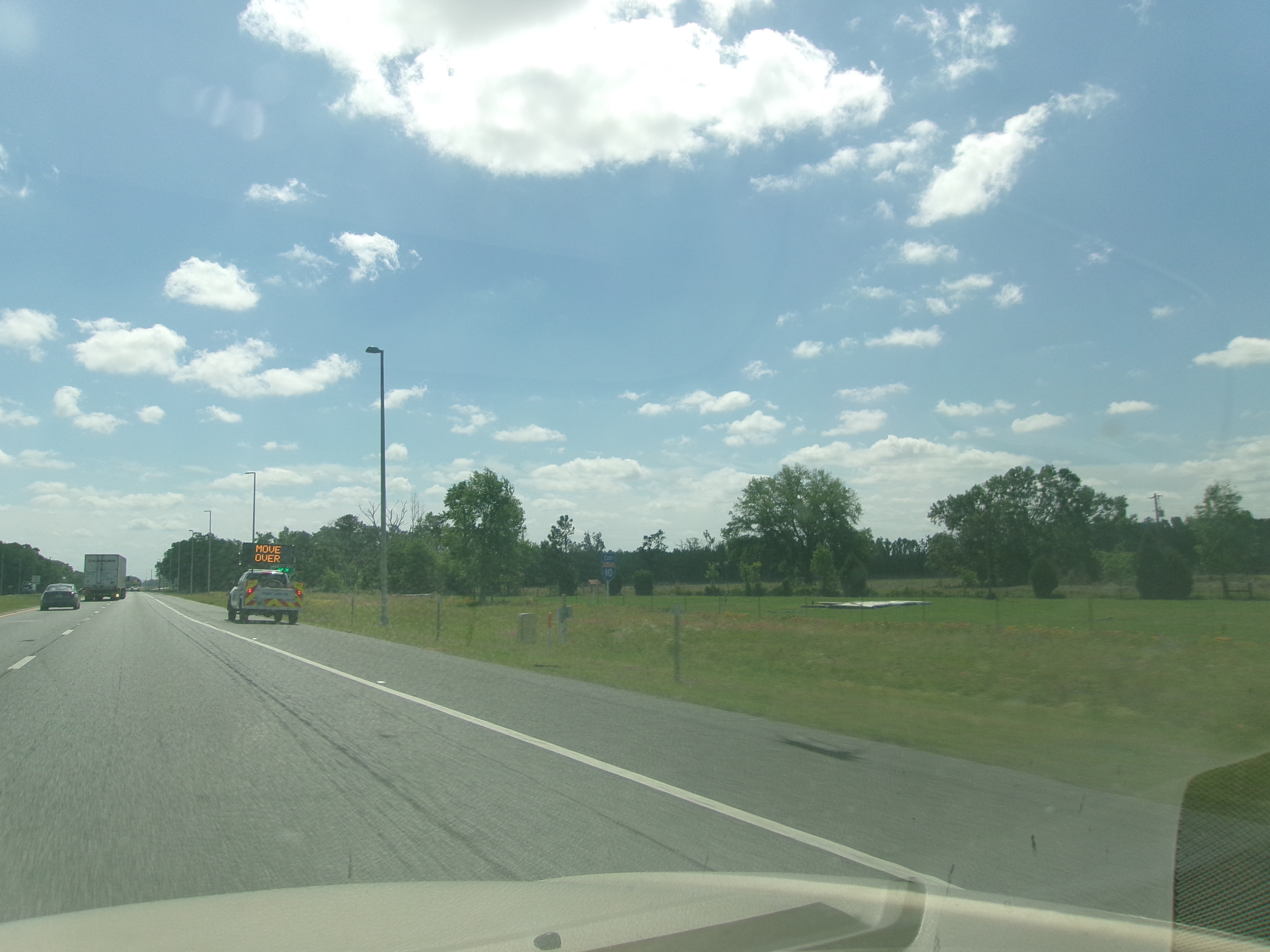
To request a Road Ranger, dial the *FHP shortcode from any mobile phone - verify the current code at fdot.gov before you need it, so you have it saved. When a dispatcher answers, give the road name, your direction of travel, and the last exit or landmark you passed. Rangers are uniformed and arrive in clearly marked FDOT-contracted vehicles. Most hold first aid and CPR certifications. Their trucks carry arrow boards and dynamic message signs that warn approaching traffic of a stopped vehicle ahead, which meaningfully reduces secondary crash risk for both the driver and the responder.
Road Rangers provide the following services at no charge to the motorist:
- Change a flat tire, if you have a serviceable spare
- Jump-start a dead battery
- Deliver a small amount of gasoline or diesel to get you to the next exit
- Provide two free local phone calls
- Reposition a disabled vehicle to a safer spot on the shoulder
In Broward County, Road Rangers patrol I-95, I-75, and portions of I-595 continuously - 24 hours a day, every day. That level of around-the-clock coverage is not standard across all FDOT districts, which puts Broward drivers in a relatively strong position compared to many other Florida counties.
Road Ranger coverage on I-595, however, is not continuous across the full corridor. Rangers patrol the western segment from I-75 eastward to a specific point, and separately patrol the eastern segment from SR 7 east to Port Everglades. The stretch between those two patrol zones is not covered under the standard Broward Road Ranger contract. A driver who breaks down in that middle section of I-595 should not count on a Road Ranger response. Call the *FHP shortcode, confirm whether a Ranger can reach your location, and have a private tow company number ready as backup.
Florida's Turnpike operates its own Road Ranger patrol separately from the FDOT District 4 program, covering the Turnpike mainline through Broward. If you break down on the Turnpike, the same *FHP dispatch shortcode connects you to the appropriate patrol.
How the 2024 Move Over Law Expansion Now Protects You When You Break Down
Florida's Move Over law originally applied to emergency response vehicles - police cars, fire trucks, ambulances. Effective January 1, 2024, the legislature expanded it to cover all disabled vehicles displaying hazard lights, emergency flares, or emergency signage. That now includes your car parked on the shoulder of I-95.
Under the expanded law, any driver approaching your disabled vehicle must move over one lane if they can do so safely. If moving over is not safely possible because of adjacent traffic or road geometry, they must slow to a speed substantially below the posted speed limit - the specific required reduction is set by statute, and you can confirm the current threshold at flhsmv.gov. Violating the law carries a per-incident fine; the current amount is listed at flhsmv.gov and is subject to legislative revision.
What this means from your side of the breakdown: your hazard lights are not optional. They are the legal mechanism that triggers Move Over protection for your vehicle. If your battery is dead and you cannot run hazard lights, deploy emergency flares or reflective triangles behind the vehicle. Without one of those visible signals, the legal protections do not apply to passing drivers in the same way, and you lose a layer of safety that costs nothing extra to maintain.
The 2024 expansion did not just extend who qualifies for Move Over protection - it moved the trigger for that protection from the presence of a marked emergency vehicle to the signals a disabled driver controls. What activates protection now is preparation made before the breakdown: flares in the trunk, a battery that can sustain the hazards. A driver who waits until they are stopped on the shoulder to think about this has already lost the window to act on it.
What to Keep in Your Car Before Your First Highway Drive
Road Rangers can handle many situations, but some items must already be in your car before help arrives. A flat tire with no spare means even the best-equipped Ranger cannot complete a change. A dead phone means you cannot call anyone. Build this kit now:
- Reflective warning triangles or road flares - place them behind the vehicle to activate Move Over protections and give following drivers advance warning; required backup when hazard lights fail
- A car phone charger that works with your current phone - check it fits before you need it; a dead phone on a highway shoulder eliminates your fastest path to help
- A printed copy of your insurance card and vehicle registration - phone screens wash out in direct Florida sun and batteries die; paper does not
- Bottled water - for everyone in the car during a Florida summer wait, especially critical with children, elderly passengers, or pets
- A fully inflated spare tire, lug wrench, and jack - Road Rangers carry their own tools, but a flat spare means a tire change is impossible regardless of who shows up; check inflation when you rotate your tires
- A high-visibility safety vest - if you must exit and move around the shoulder in low-light or high-glare conditions, being seen matters more than anything else
911 vs. the *FHP Shortcode vs. a Private Tow: Which Call to Make First
| Situation | First call | What you get | Cost to motorist |
|---|---|---|---|
| Injury or medical emergency on board | 911 | Police, fire, and EMS dispatch | None for emergency response |
| Flat, dead battery, or empty tank on I-95, I-75, or I-595 covered segment | *FHP shortcode | Road Ranger on scene - fix or assist | Free |
| Breakdown in I-595 middle corridor coverage gap | *FHP shortcode, then private tow | FHP awareness plus guaranteed recovery | Private tow rate applies |
| Breakdown adjacent to I-95 Express Lane barrier | 911 and *FHP shortcode simultaneously | Fastest combined response for lane-adjacent hazard | Road Ranger portion free |
| Mechanical failure a Ranger cannot repair | *FHP shortcode first, then private tow | Safer positioning while tow is arranged | Ranger free; tow billed separately |
The core decision is straightforward. If anyone is hurt, call 911 before anything else. If no one is hurt and you are on a covered road, the *FHP shortcode gets you a trained, equipped responder at no cost - and the Ranger can reposition your vehicle to a safer spot while you wait for additional help if needed. That repositioning window is one of the most underappreciated parts of the service, because a car that was half in a travel lane is dramatically safer moved fully onto the shoulder.
Private tow services fill the gap when the breakdown requires repair the Ranger cannot perform - a seized engine, a transmission failure, or a location outside patrol coverage. Save a tow company number before you need it. Searching for one on a highway shoulder while watching traffic pass is not the right moment to read reviews.
Frequently Asked Questions
Does the Road Ranger program cover every major highway in Broward County?
I-95, I-75, and the Turnpike mainline have around-the-clock patrol coverage. I-595 is the exception - the coverage map has a gap in the middle of the corridor, between the western and eastern patrol segments. When you break down and are uncertain whether you are in a covered zone, the fastest way to find out is calling the *FHP shortcode and giving the dispatcher your road and direction of travel. Dispatchers know the current patrol assignments and can tell you in real time whether a Ranger is assigned to your location or whether you should treat it as a private-tow situation from the start. Acting on confirmed information rather than assumed coverage saves time when the shoulder is not a safe place to wait and wonder.
Is the Road Ranger service actually free, or does a bill come later?
The service is entirely free. FDOT funds the program with additional private sponsorship; there is no charge to the motorist, no paperwork, and Rangers do not accept tips. If someone in an unmarked vehicle claims to be a Road Ranger and asks for payment, do not pay - report it to FHP.
What should I do if I break down near the I-95 Express Lane barrier?
The express lane corridor puts you in a channel between a barrier on one side and moving traffic on the other, with little room in either direction. That geometry is what makes staying in the vehicle particularly important there - exiting before responders arrive places you in the narrowest part of that channel with no protected space around you. Road Rangers arriving at lane-adjacent breakdowns deploy arrow boards to narrow or close the travel lane beside your vehicle before any person approaches on foot. Staying belted inside the car keeps you out of that space until the board is in position. Call both the *FHP shortcode and 911 simultaneously to get the fastest response, then stay put and let the responders establish a protected perimeter before you move.
Are hazard lights enough, or do I need to put out flares and triangles too?
Hazard lights meet the legal threshold that activates Move Over protections. The limitation of lights alone is visibility distance: your hazards communicate your position only to drivers who can already see your vehicle. On a curve, over a hill crest, or in heavy rain, a driver may not have line of sight early enough to react safely. Reflective triangles or flares placed well behind your stopped vehicle extend the warning zone on the road itself, giving approaching traffic an earlier cue that does not depend on being able to see the car yet. That distance - not the lights alone - is what determines whether a driver behind you has room to respond. Carry both.
Can a Road Ranger tow my car to a repair shop?
No. Road Rangers can reposition your vehicle to a safer spot on the shoulder or move it to a nearby exit area, but they do not provide long-haul towing to a shop. If your car needs more than the Ranger can provide, they will help you make two free local calls to arrange a private tow while your vehicle is in a safer position. That combination - safe repositioning plus help arranging your next step - is the core value of the program for breakdowns the Rangers cannot fully repair.
What if I have no idea what exit I just passed when I call FHP?
Give the dispatcher what you have: the road name, direction of travel, and the best surrounding description you can offer - an overpass, a visible business sign, an exit number still in sight, or a GPS coordinate from your phone's map app. Broward dispatchers work this corridor constantly and can often narrow your position from a rough description. Do not hang up to search for a more precise location - stay on the line and describe what you see.