Failing the Florida Class E road test is frustrating, but Florida has a defined process for getting back behind the wheel and passing the second time - or the third. What separates drivers who pass the retake from those who fail again is not more practice time. It is understanding exactly what went wrong, knowing the state's specific rules, and fixing the right thing before rebooking. This guide covers all of it with Broward County specifics, because the retake experience in Fort Lauderdale is not the same as a generic statewide article suggests.
What the Examiner Tells You - and How to Use It Before You Leave the Parking Lot
Florida law requires the examiner to explain the reason or reasons for your failure before you leave the testing area. This is not optional and it is not a courtesy - it is part of the process. Use it.
Before you get out of the car, ask the examiner to be specific about the maneuver or moment that caused the problem. "Backing maneuver" is useful. "You did not fully stop at the stop sign on the second right turn" is more useful. If the examiner cites more than one issue, write them down on your phone immediately. Stress compresses memory, and the details fade quickly once you are back in traffic.
That list of cited failures is your practice plan. Each one maps to a specific maneuver you can isolate and drill before the retake. Drivers who leave without capturing that feedback spend their practice time working on skills the examiner never flagged. When you sit down with a driving instructor before your retake, hand them the examiner's exact language - that is the most efficient brief you can give.

How Florida Actually Scores the Road Test
The Florida Class E road test does not have a numeric passing score. The percentage threshold - answering enough questions correctly on the written knowledge exam - applies to that written portion only. The road test itself is pure pass/fail, and it operates on two separate tracks that many drivers do not understand until after they fail.
| Failure Type | Category | Ends Test Immediately? | Primary Fix |
|---|---|---|---|
| Rolling stop at sign or light | Automatic disqualifier | Yes | Count a full beat after tires stop |
| Backing using mirror or camera only | Automatic disqualifier | Yes | Turn body, hand on headrest, look through rear window |
| Contact with curb or object | Automatic disqualifier | Yes | Slower speed, wider arcs in turns |
| Traffic law violation or refusal to comply | Automatic disqualifier | Yes | Route preview, follow all instructions aloud |
| Repeated minor errors (hesitation, drift, mirror checks) | Point accumulation | No - until point threshold is crossed | Consistency across every maneuver, not just problem spots |
The two-track system is where confusion breeds repeat failures. A driver who commits no single dramatic error can still fail because small mistakes stacked up across the full test. Conversely, a driver with an otherwise clean scoresheet fails the instant an automatic disqualifier occurs. Understanding which track failed you tells you whether your retake prep should zero in on one specific maneuver or address the overall quality of your driving throughout.
The Six Most Common Failure Causes on the Florida Class E Test
Rolling Stops
The tires must fully stop rotating at every stop sign and red light before any forward movement begins. Florida examiners are specifically trained to watch for this, and a tire that keeps rolling even slightly counts as a disqualifier. The fix is not looking for the stop sign earlier - it is building a physical habit of counting a beat after the car settles before touching the gas.
Backing Without Turning
During any backing maneuver, you must turn your body and look over your shoulder through the rear window. Using only the rearview mirror is not acceptable. Using the backup camera alone is an automatic disqualifier. The physical act of turning - placing your right hand on the headrest, rotating your torso, looking through the glass - is required technique, not optional.
Curb and Object Contact
Any contact during the test ends it immediately. This includes a minor brush against a curb while pulling into a parking space. Speed during close-quarters maneuvers is the usual cause - drivers rush the parking portion after performing well on the road portion. Slow down before you need to, not after.
Traffic Violations and Failure to Yield
Running a red light, rolling through a crosswalk while a pedestrian is present, or failing to yield when required each end the test on the spot. Driving near a Broward DMV office means navigating real traffic with real pedestrians - treat every intersection as if someone is watching because someone is.
Refusal to Follow Instructions
If the examiner gives a direction and you do not follow it - whether because you disagreed, were confused, or simply did not hear - the test ends. Confirm instructions out loud before you execute them. "Turning left" said calmly before signaling shows you heard, understood, and are acting on the instruction.
Accumulated Minor Errors
Inconsistent mirror checks, lane drift, hesitating too long at intersections, and erratic speed control each add to a point total on the scoresheet. Florida sets a specific threshold - cross it without triggering any single automatic event and you still fail. Ask your instructor where your minor-error patterns cluster, because these are often invisible to the driver.
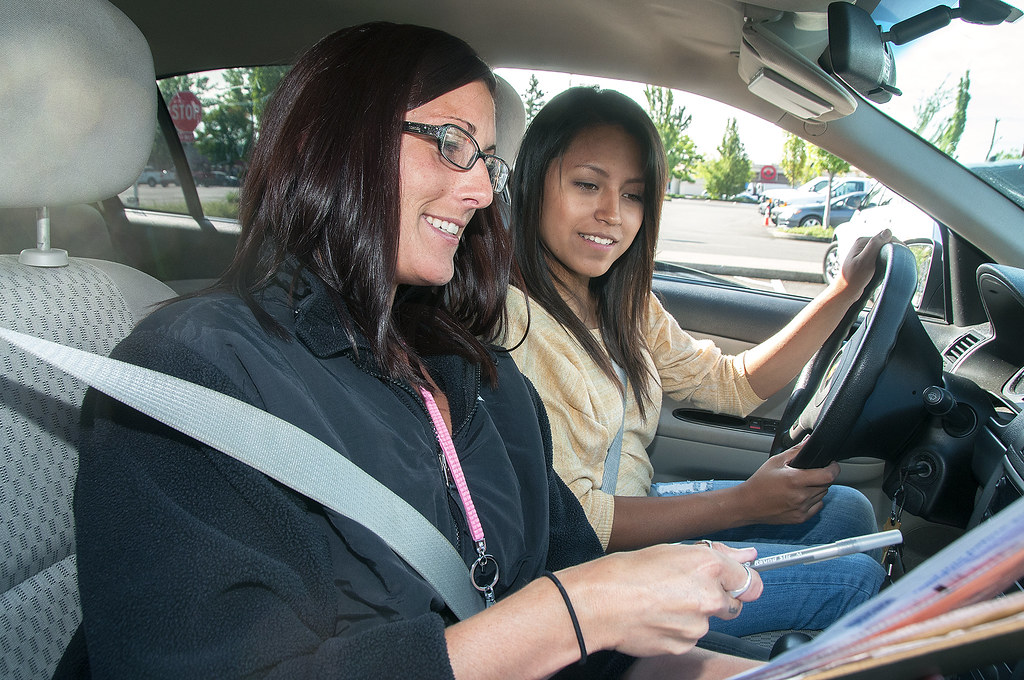
Florida's Retake Rules: What You Can and Cannot Do Next
The Waiting Period
Florida does not allow same-day retests. You must wait at least one full business day after a failure before you can attempt the test again. This applies whether you failed in the first two minutes or the final turn.
The Retake Fee
Florida charges a retake fee each time you reschedule after a failure. The amount is set by FLHSMV and can change - check flhsmv.gov or call the Broward County office directly for the current figure before you book.
The Five-Failure Suspension
This is the rule most articles skip, and it matters most for anyone who has already failed more than twice. If you fail the Florida road test five times within any rolling 12-month period, FLHSMV suspends your driving privilege under the classification "Incapable of Operating a Motor Vehicle Safely." The suspension is one year. There is no permanent lifetime cap on total attempts - the restriction is five failures within any 12-month window, which rolls continuously, not on a calendar-year reset.
The Bureau of Administrative Reviews Path
If you reach the five-failure threshold, you cannot simply rebook online. You must contact FLHSMV's Bureau of Administrative Reviews (BAR) to request a hearing. The BAR reviews your situation and, if approved, authorizes a sixth attempt. Failing that sixth test triggers the full one-year suspension with no further testing during that period. If you are approaching this limit, stop practicing unsupervised and get structured instruction before the next attempt - the stakes are too high for another self-directed run.
Vehicle Checklist Before You Rebook
Many drivers fail before the test begins. If the vehicle does not meet Florida's requirements, the examiner will not start the test, the appointment slot is forfeited, and the fee is not refunded. Verify all of the following before your retake:
- Current Florida registration - check the expiration date on the actual tag, not from memory
- Active Florida personal injury protection and property damage liability insurance - a lapsed policy cancels the appointment on the spot
- Working headlights and taillights on both sides
- Working front and rear turn signals
- Working brake lights - have someone stand behind the car while you press the pedal
- Clear, unobstructed windows and windshield
- Functioning horn
- Seatbelts for both driver and examiner
If you are borrowing someone else's car for the test, confirm the registration and insurance documentation at least a day before, not in the DMV parking lot. An expired tag or a policy that lapsed two weeks ago costs you the appointment fee and sends you back to the booking screen.
How to Practice Specifically for Your Weak Areas in Fort Lauderdale
Generic driving hours do not fix specific test failures. If the examiner cited your backing technique, three hours on I-95 corrects nothing. Practice needs to match the error.
The Broward County area has road environments that mirror common DMV test conditions:
- Residential grid streets near the Lauderdale Lakes and Pompano Beach offices - 25 mph zones with frequent stop signs, good for practicing full stops and intersection procedure
- Low-traffic parking lots during off-peak hours - open-air commercial lots let you run the backing maneuver repeatedly without pressure from other drivers
- Moderate arterials like Broward Boulevard, Oakland Park Boulevard, and US-1 - cover lane changes, merging, and speed management without freeway speeds
- Residential areas near schools during school hours - pedestrian yield situations in posted reduced-speed zones
The exact routes used by Broward County examiners are not publicly listed, but instructors who work those offices regularly know the intersections and road types examiners favor. That local knowledge is hard to replicate with a map.
How a Targeted Pre-Retake Lesson Differs From Extra Practice Hours
More driving time does not fix a specific technique error - it reinforces whatever habit you currently have, correct or not. Instruction targets the habit itself.
A targeted lesson before your retake gives you three things that solo practice or a family member in the passenger seat cannot:
- Root cause identification: The instructor watches your actual technique and identifies the physical habit behind the error - whether a rolling stop comes from foot position, rushed timing, or stress response, each has a different fix.
- Test-route replication: A local instructor familiar with Broward DMV offices runs you through road conditions that match the actual test environment - the same intersection types, the same parking lot setup, the same traffic density.
- Real-time correction: Errors are identified and corrected in the moment, before they settle back into the same pattern. A parent in the passenger seat can see a mistake, but rarely knows why it happened or how to correct the underlying movement.
- Checkpoint habit building: For disqualifying maneuvers like backing, the instructor builds a physical routine - turn, place hand on headrest, check all windows - that becomes automatic before you touch the gear selector. Automatic habits hold under test-day stress in a way that remembered rules do not.
When you call a driving school to book a pre-retake lesson, tell them specifically what the examiner cited. "I need work on full stops and the backing maneuver" is a complete brief. A good instructor focuses there - you do not need to redo the sections you passed.
How to Reschedule at One of Broward County's Five DMV Offices
Broward County has five driver license offices that administer the Class E road test: Lauderdale Lakes, Margate, Sunrise, Pembroke Pines, and Pompano Beach. All five use identical FLHSMV scoring criteria, so your choice of location does not change how you are evaluated - it affects how quickly you can get in.
Online Booking
The fastest way to reschedule is through the FLHSMV online appointment system at flhsmv.gov. You will need your permit or license number and will pay the retake fee during booking. Check all five Broward offices simultaneously before committing - availability shifts daily, and a 10-minute drive to a different office can mean a week earlier appointment.
Walk-In Availability
Some Broward offices accept walk-in road test applicants after scheduled appointment slots are served. Arrive early - before opening - if you plan to walk in, because slots go fast. Call the specific office the day before to confirm whether walk-ins are being accepted that day. This changes based on staffing and appointment volume.
Choosing an Office
If speed matters, check online availability at all five locations at once and take the earliest slot at whichever office has it. Offices in higher-population areas sometimes carry more appointment volume; smaller offices may open up faster on specific days. Current availability on flhsmv.gov is more reliable than any general advice about which office is usually faster.
Test-Day Mindset and Final Checklist
The examiner forms an impression in the first 30 seconds. Before you start the engine, adjust your mirrors, adjust your seat, and fasten your seatbelt. Do this visibly and methodically. Then confirm with the examiner that you are ready, check your mirrors before pulling out, and signal before any movement. None of this is theatrical - it is the correct procedure, and doing it naturally shows the examiner you approach the vehicle with discipline.
What to Bring
- Valid Florida learner's permit or qualifying identification
- Vehicle registration document showing current, unexpired Florida registration
- Proof of active Florida insurance for the test vehicle
- Payment for the retake fee - check flhsmv.gov for accepted payment methods at Broward offices
- A second adult if required by your permit conditions
Timing and Arrival
Arrive at least 15 minutes before your scheduled appointment. A late arrival is typically treated as a no-show, and the fee is forfeited. I-95 and the Turnpike both run through Broward County - account for traffic, especially during morning appointment windows.
During the Test
At every stop sign, let the car come fully to rest, count one deliberate beat, then check left-right-left before moving. At every backing maneuver, turn your body before the car moves. At intersections where you yield, wait until you are certain the path is clear - examiners score hesitation as a minor error, but a failure to yield is automatic disqualification. If you make a mistake, continue driving correctly. One minor error does not fail you. Two or three will not fail you. What fails you is letting one mistake rattle your focus for the rest of the test.
Frequently Asked Questions
Can I retake the Florida road test the same day I fail?
No. Florida requires at least one full business day between a failed test and your retake attempt. Same-day retests are not permitted regardless of the reason for failure. Use the waiting period to review the examiner's feedback and, if possible, get a targeted lesson before you rebook.
What happens if I fail the Florida road test five times?
Florida suspends your driving privilege for one year and classifies you as "Incapable of Operating a Motor Vehicle Safely" if you fail five times within any rolling 12-month period. To attempt a sixth test, you must contact the Bureau of Administrative Reviews, request a hearing, and receive approval. Failing a sixth time after that approval triggers the full one-year suspension with no further testing during that period.
Does it matter which Broward County DMV office I use?
All five Broward offices - Lauderdale Lakes, Margate, Sunrise, Pembroke Pines, and Pompano Beach - use the same FLHSMV scoring criteria, so your evaluation will be the same at any location. The practical difference is appointment availability. Check all five online before booking to find the earliest opening.
Will my backup camera fail me on the Florida road test?
Yes. Relying on a backup camera - or on the rearview mirror alone - during a backing maneuver is an automatic disqualifier. You must physically turn your body and look over your shoulder through the rear window. Practice this physical technique until it is the first thing you do every time you shift into reverse.
What vehicle documents does my car need for the Florida road test?
The vehicle must have current Florida registration (not expired) and active Florida personal injury protection and property damage liability insurance. If either has lapsed, the examiner will not begin the test and the appointment fee is forfeited. Verify both documents the day before your appointment, not in the parking lot.
I only failed because of one small mistake - does that really mean I failed the whole test?
It depends on what the mistake was. Florida's automatic disqualifiers - rolling stops, backing without turning, any contact with a curb or object, traffic violations, or refusal to follow instructions - end the test immediately regardless of how well you performed on everything else. A single minor error will not fail you, but if the examiner cited one of the automatic categories, then yes, one event was enough. Ask the examiner to confirm which category your failure fell under before you leave.