Fort Lauderdale sits at 26 degrees north latitude, close enough to the tropics that the sun tracks low across the southern sky during morning and evening commutes for much of the year. Florida averages roughly 3,000 annual sunshine hours - among the highest of any state - and that light does not politely step aside when traffic peaks. Most drivers think of glare as a fall problem, the kind remembered from northern states where a low November sun briefly blinds commuters for a few weeks. In Broward County, the geometry never lets up. For any new or teen driver preparing for a road test or logging supervised hours on east-west corridors through Fort Lauderdale, understanding where glare concentrates, what it does to your vision, and what to do when a traffic signal becomes unreadable is not optional knowledge.
Why Sun Glare Is a Year-Round Hazard in South Florida
The national crash numbers attached to sun glare are consistently undercounted. The NHTSA estimates roughly 9,000 glare-related crashes per year across the United States, but researchers note the real figure is higher because officers completing police reports often omit glare as a contributing factor. A 2017 study published through the NIH found bright sunlight present in approximately one-third of all injury crashes during daylight hours and linked it to a 16 percent increased risk of a life-threatening motor vehicle crash.
Florida's own data makes the scale concrete. The state recorded a 15 percent increase in sun glare crashes in 2022 over the prior year. Over the five-year span from 2017 through 2021, sun glare crashes in Florida produced 156 fatalities. That is not an anomaly - it is a pattern.
The reason South Florida differs from northern states is physics and latitude working together. At 26 degrees north, the sun drops toward the horizon during commute hours in every month of the year. There is no winter peak followed by a spring reprieve. No off-season. Glare conditions return every morning and every evening on every day the sun is shining - which in Fort Lauderdale is most days.
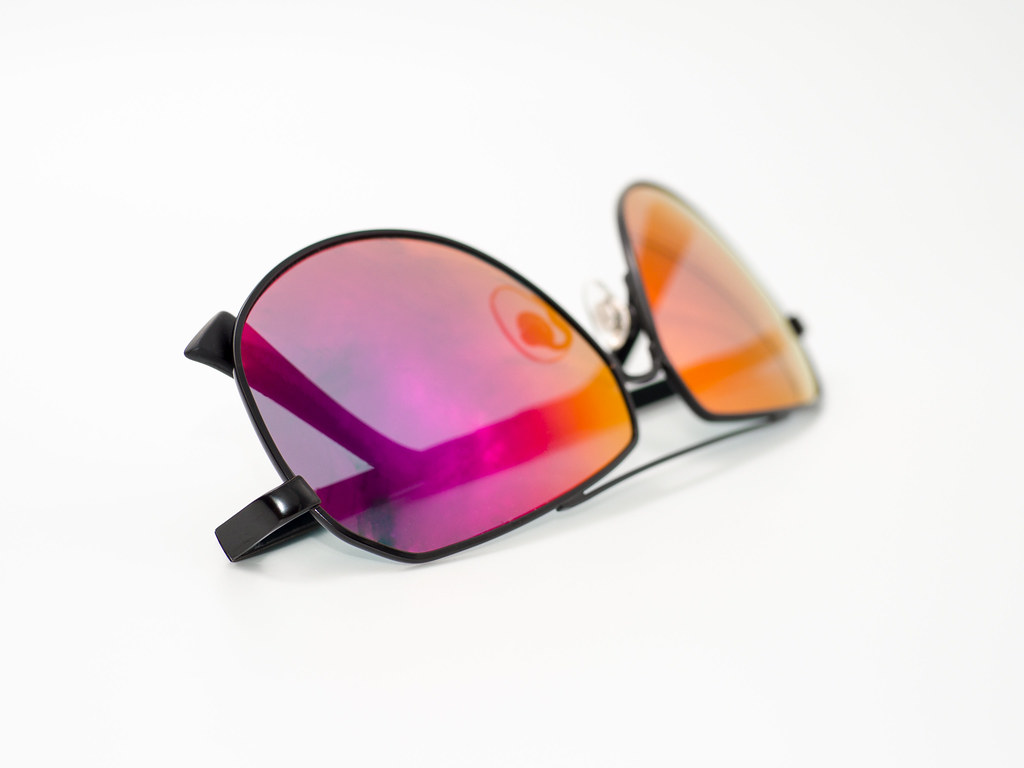
When Glare Hits Hardest: Fort Lauderdale's Danger Windows
Research on glare-related crashes places the highest-risk windows between 6 and 9 AM and between 5 and 8 PM. Those windows align almost exactly with Broward County's morning and evening commutes. In October, Fort Lauderdale's sunrise falls around 7:09 AM and sunset around 7:15 PM - squarely inside both windows. In December, a later sunrise catches drivers heading to school and work directly in the face. In June, the early sunrise means the sun is already angled low at 6 AM on eastbound roads.
Daylight saving time sharpens the evening risk. When clocks spring forward, sunset shifts an hour later, pushing it deeper into the 5-to-8 PM rush hour window when corridors like Broward Boulevard carry their heaviest load. The shift also catches drivers off guard because their internal sense of a "safe" late afternoon drive does not update with the sun's new position relative to traffic signals and vehicles ahead.
Broward County's Most Glare-Prone Roads
Broward County is the second-highest-crash county in Florida, recording more than 41,000 crashes per year. A disproportionate share concentrate on the east-west corridors that align with sunrise and sunset angles. The roads that carry the highest glare risk in the county include:
- Oakland Park Boulevard (SR-816) - a 13-mile east-west corridor from the western suburbs to Fort Lauderdale's coast, running true east-west across the entire width of the city
- Sunrise Boulevard (SR-838) - a high-volume arterial connecting I-95 to the beach, with signalized intersections at close intervals during the glare window
- Broward Boulevard - the central east-west spine through downtown Fort Lauderdale, carrying commercial and commuter traffic past multiple legacy intersections
- Commercial Boulevard - a northern corridor with dense retail development and frequent crosswalks where pedestrian visibility drops sharply in glare
- Hallandale Beach Boulevard - a southern Broward east-west route feeding cross-county traffic toward US-1 and A1A
- Griffin Road - a western Broward corridor with a direct east-west run into the I-595 interchange area
Oakland Park Boulevard has documented crash data that illustrates the problem in numbers. A Road Safety Analysis covering 2018 through 2022 found 333 total crashes on the corridor. Nearly half - 47 percent - were rear-end collisions. Rear-end crashes are the signature of glare: a driver cannot judge following distance accurately when the sun is washing out brake lights ahead. The intersection of East Oakland Park Boulevard and US-1 alone recorded 199 crashes in that same period, placing it among Broward's most active crash nodes. Separately, Sunrise Boulevard at NW 9th Avenue ranked second for overall crash frequency in Fort Lauderdale across 2023-2024, and the intersection of Sunrise Boulevard and Federal Highway is a top-tier danger point in the county.
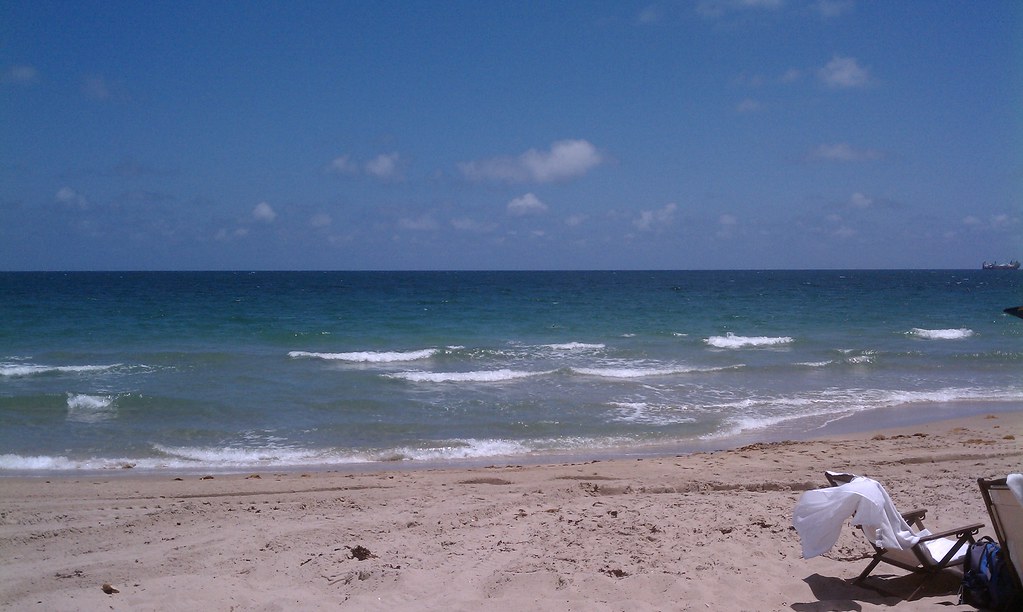
What Sun Glare Does to Your Vision and Reaction Time
Glare is a physiological event, not just discomfort. When bright light floods the eye, the pupil constricts hard to protect the retina. That constriction reduces the detail the eye can resolve in the surrounding visual field - the exact field where brake lights, pedestrians, and signal colors live. After the direct glare source is blocked or passed, the eye takes time to recover. Photostress recovery time means a brief hit of direct sun can leave a driver partially blinded for several seconds - long enough to miss a light change or fail to register stopped traffic ahead.
The specific consequences that show up at the wheel:
- Brake lights ahead wash out, making following distance judgment unreliable
- Traffic signal colors become indistinguishable at intersections where the signal head has no contrast-creating frame around it
- Pedestrians and cyclists at crosswalks disappear into the glare field, especially in light-colored clothing
- Lane markings on light concrete fade under direct sun, degrading lane-keeping
- Dashboard clutter reflecting into the windshield creates a secondary glare source inside the car
Teen drivers carry an additional risk factor. Inexperienced drivers already have slower hazard-recognition times than licensed adults. Photostress recovery adds delay on top of an already slower response chain. The AAA Foundation research finding below reflects a broad driver population that includes many experienced drivers. For someone in their first 50 hours, effective risk is higher.
Injury rates in sun glare crashes are 45 percent higher than the average for all crash types.AAA Foundation for Traffic Safety
FDOT's Infrastructure Response: Signal Backplates and What They Mean for Drivers
FDOT has addressed the signal-readability problem with a specific engineering fix: retroreflective signal backplates. A backplate is a dark-bordered frame mounted around the outside of a signal head. When sunlight washes out the signal from behind, the dark backplate creates shadow contrast that makes the lit lens visible against the bright sky. Without one, a green or yellow lens can be indistinguishable from the background during direct glare.
The program became prominent after a cyclist fatality in Jupiter where a driver stated they could not read signal colors due to glare. FDOT installed backplates at 11 intersections in response to that crash. The FHWA Crash Modification Factor database credits properly installed backplates with a 15 percent reduction in crashes at signalized intersections. FDOT's current design standards now require backplates on all new signalized approaches statewide.
The critical word for Broward County drivers is "new." Legacy intersections built before the updated standard are not automatically retrofitted. Some of the highest-crash nodes on Oakland Park Boulevard and Sunrise Boulevard may still present the unreadable-signal problem during peak glare hours. Before driving these corridors regularly, it is worth observing whether the signal heads have the dark framing backplates - that visual tells you immediately whether the intersection has been updated.

In-Car Preparation Before You Drive Into Glare
The right preparation before leaving the driveway makes a real difference when glare hits at 7:10 AM on Sunrise Boulevard. Run through this sequence every time you anticipate a glare-window drive:
- Put on polarized sunglasses, not just tinted ones. Polarized lenses block horizontally polarized light - the type reflected off wet pavement, flat water, and hoods. Plain tinted lenses reduce overall brightness but do not filter directional glare. See the comparison below.
- Clean the windshield inside and out. Interior windshield film - the haze from outgassing plastics and condensation - scatters incoming light into a diffuse wash. Wiping the inside surface before a glare-condition drive reduces scatter more than any other single action.
- Clear the dashboard. Phone mounts, water bottles, and papers sitting on the dash reflect into the windshield and create a secondary glare source competing with the road ahead. Move them below the dash line.
- Set the sun visor correctly before you need it. The visor blocks the sun disk but should never block signal heads or the road ahead. Tilt it to the side angle of the sun, or use the extension slide if your car has one, keeping the lower visual field clear.
- Switch on your headlights. In glare conditions, drivers coming toward you are just as impaired as you are. Running lights make your vehicle visible to oncoming traffic whose eyes are also recovering from direct exposure.
| Lens type | Blocks direct sun | Filters road surface reflection | Effective after rain | Recommended for Florida |
|---|---|---|---|---|
| Polarized sunglasses | Yes | Yes | Yes | Yes - first choice |
| Standard tinted lenses | Partially | No | No | No |
| Photochromic (transition) lenses | Yes when fully darkened | Partial | Partial | Partial - slow to react inside a tinted windshield |
| No eye protection | No | No | No | No |
New drivers sometimes ask whether anti-glare window treatments on side and rear windows are legal in Florida. Florida's tint law does not ban such treatments on side and rear windows provided the tint stays within permitted visible light transmission thresholds. The thresholds are set by statute and subject to revision - check the Florida Highway Safety and Motor Vehicles website for current legal VLT requirements before applying any treatment.
Behind-the-Wheel Strategies When Glare Strikes
Preparation helps, but glare can still overwhelm you mid-drive. The four adjustments that consistently reduce crash risk during an active glare encounter are:
Increase following distance to four or five seconds minimum. The standard two-second rule works under clear conditions. Under heavy glare, the brake lights ahead may be invisible until you are already too close. The Oakland Park Boulevard rear-end crash data - 47 percent of all crashes on the corridor - is a direct argument for extra space. Build the gap before you need it.
Use the shaded lane when you can safely change. On wide corridors, a lane running beneath an overpass or alongside a building can reduce direct exposure for a meaningful stretch. Take the shaded lane when it is available without an aggressive maneuver.
Work the visor edge. Drop the visor to block the sun disk itself while using the lower portion of the windshield - below the sun's position - to track the road, vehicles ahead, and signals. This technique takes practice. Deliberately practicing it during supervised driving sessions is far better than learning it under pressure during a solo commute.
Pull off when you need to. On Broward's east-west corridors, gas stations and commercial parking lots along Oakland Park Boulevard, Sunrise Boulevard, and Commercial Boulevard are spaced frequently enough that you rarely need to drive more than half a mile in a severely compromised state. If you cannot read lane markings, track traffic ahead, or distinguish a signal color, pulling off is the correct decision.
The Post-Rain Glare Trap: South Florida's Compounded Hazard
Fort Lauderdale's afternoon thunderstorm pattern creates a hazard that drivers from other regions rarely encounter. A storm moves through between 2 and 4 PM, soaks the roads, and clears quickly. By 5 or 6 PM, the sun is back - now hitting wet asphalt that acts as a mirror.
Dry pavement scatters light in multiple directions, softening glare. Wet asphalt reflects it directionally, concentrating the evening sun's angle into a flat, high-intensity bounce aimed at any driver heading west. The effect is measurably stronger than the same road dry. Water droplets still on the windshield from the storm compound it further, scattering incoming light into a diffuse haze before it reaches the driver's eyes.
This hazard does not appear in generic national driving guides because it is specific to South Florida's rain-then-shine weather pattern. No northern state produces this combination regularly. New drivers in Broward County should consider it a standard local condition, not a freak occurrence.
Tips for Teen Drivers Logging GDL Hours in Broward County
Florida's Graduated Driver License program requires 50 hours of supervised driving before a road test. Most parents and instructors use those hours for highway merging, night driving, and parking. Sun glare gets almost no deliberate attention - which means many teens hit the solo driving milestone without ever having practiced in conditions that account for 156 Florida fatalities over five years.
How to close that gap during supervised hours:
- Schedule at least one morning session between 7 and 9 AM on an east-west corridor - Oakland Park Boulevard, Sunrise Boulevard, or Broward Boulevard - so the teen experiences direct sunrise glare in real Broward traffic, not just in the parking lot
- Schedule at least one evening session between 5 and 7 PM on a westbound route, specifically including a signalized intersection approach where the teen can practice identifying whether a backplate is present and what to do if the signal is unreadable
- Include at least one post-storm evening drive so the teen experiences wet-pavement glare amplification before encountering it alone
- Actively practice the visor technique and four-to-five second following distance during glare sessions rather than simply driving through the conditions and hoping nothing happens
- Run a signal drill: approaching an intersection during the glare window, talk through whether the signal color is clear, what clues cross-traffic behavior gives, and when to stop regardless of signal state
The 50-hour requirement exists because supervised hours under varied conditions build judgment that no classroom or online module can replicate. Sun glare on a Broward east-west corridor at 7:15 AM is specific enough, and dangerous enough, to deserve a deliberate slot in that log.
Frequently Asked Questions
What should I do if sun glare makes a traffic signal completely unreadable?
Treat it the same way you would treat a signal that has gone dark: reduce speed well before the stop bar, yield to all cross-traffic, and do not proceed until the intersection is clearly safe. Do not assume the light is green because other vehicles have been moving - conditions can change faster than your photostress recovery allows. If you cannot confirm the signal state, come to a complete stop before the crosswalk line.
Why are polarized sunglasses better than regular tinted lenses for Broward County driving?
Tinted lenses dim the entire visual field evenly. Polarized lenses specifically block horizontally polarized light - the type that bounces off flat surfaces like wet pavement, standing water, and vehicle hoods. In Fort Lauderdale, where afternoon rain regularly leaves wet roads for the evening commute, the road-surface reflection is often the most intense glare source you face. A tinted lens reduces it slightly; a polarized lens removes most of it.
How dangerous is Oakland Park Boulevard specifically for glare-related crashes?
A Road Safety Analysis covering 2018 through 2022 found 333 total crashes on the corridor, with 47 percent being rear-end collisions - the crash type most directly linked to glare impairing following distance judgment. The single intersection of East Oakland Park Boulevard and US-1 logged 199 crashes in that period alone. The corridor's alignment runs true east-west for 13 miles, pointing drivers directly at the sunrise or sunset for extended stretches during both commute windows.
Does every intersection on Fort Lauderdale's east-west roads have the FDOT signal backplates?
No. FDOT's updated design standards require retroreflective backplates on all new signalized approaches statewide, but legacy intersections built before that standard took effect have not all been retrofitted. You can identify an upgraded intersection by the dark-bordered frame around the signal head - without it, the lit lens can become invisible against a bright sky during direct glare. Treat any approach where you cannot confirm signal state as a stop situation.
Can I count glare-condition driving toward my Florida GDL 50-hour requirement?
Yes - any supervised drive during the 6-to-9 AM or 5-to-8 PM window on an east-west Broward corridor will naturally include glare conditions during most of the year. Florida's GDL statute does not restrict which specific conditions must be practiced; the goal is varied experience that builds real-world judgment. Parents and instructors should plan these sessions deliberately rather than waiting for them to happen by chance near the end of the 50 hours.
Is sun glare in Fort Lauderdale worse in any particular season?
It is present year-round - that is what makes South Florida different from northern states. Florida's roughly 3,000 annual sunshine hours and Fort Lauderdale's latitude at 26 degrees north mean the sun stays within a low-angle range during commute hours across all 12 months. Winter brings a later sunrise that lands directly in morning rush hour. Summer brings an early sunrise with low-angle glare before 7 AM. The post-rain wet-pavement amplification effect is most frequent in summer and early fall during peak thunderstorm season, but the base glare hazard never has an off-season.