Fort Lauderdale drivers share local roads with one of the largest public school systems in Florida. That combination - heavy traffic, a dense school calendar, and strict state law - means school zone violations are among the most common and most expensive tickets a driver can collect in Broward County. This guide covers what Florida law actually requires inside a school zone, how to recognize an active one while driving, what's at stake if you miss it, and where Broward's enforcement cameras operate - including a 2026 legal development that every camera ticket recipient in this county should know about before paying anything.
Why School Zones Are Unavoidable in Fort Lauderdale and Broward County
Broward County Public Schools operates 327 schools and serves 253,198 students as of 2026. That footprint is spread across every corner of Broward County, which means school zones land on arterials, side streets, and collector roads throughout Fort Lauderdale and every neighboring city. The 2025-2026 school year began on August 11, 2025 - within days of that date, school zones throughout the county went active on a daily cycle that continues through late spring. Factor in summer programs and intersession schedules and school zone encounters become a near-daily reality for most local drivers.
Florida law allows a school zone to extend well beyond the school building itself, covering adjacent streets and corridors that may not obviously connect to a school entrance. A driver on a road that feels entirely residential, with no school in sight, can still be inside an active school zone subject to its full set of rules. This is especially relevant on major Fort Lauderdale corridors like US-1, Federal Highway, and the surface roads surrounding high-density school clusters in central and western Broward.
Avoiding school zones entirely is not a realistic strategy for most Fort Lauderdale drivers. Understanding the rules is the only reliable one.
How Florida School Zones Work: Speed Limits, Active Hours, and What Triggers Them
Florida law sets the range within which a locality can post a school zone speed limit. Broward County posts its school zones at the lower end of that permitted range - a conservative limit well below what's posted on the same road during non-school hours. The posted sign is the legal standard. What matters is what the sign says when you're there, not what you recall from another road or another time of day.
School zone speed limits are not in effect around the clock. They activate before the school day begins and remain in force for a set window after final dismissal. That buffer on each end of the school day - before the first bell and after the last one - exists because children are actually moving to and from the road during those times. Outside those windows, the standard posted speed for that road applies.
What this means in practice:
- The reduced limit is active during morning drop-off, not just during class hours
- It remains active during afternoon pickup, even if the sidewalk looks empty at that exact moment
- It applies on days with delayed openings or early dismissals - the school schedule determines the window, not the hour on your dashboard clock
- It does not apply on weekends or school holidays when the building is closed
The simplest rule: if school is in session that day, treat any posted school zone as active during any time that resembles morning arrival or afternoon dismissal. When uncertain, slow down first and confirm later.
Recognizing an Active School Zone While Driving
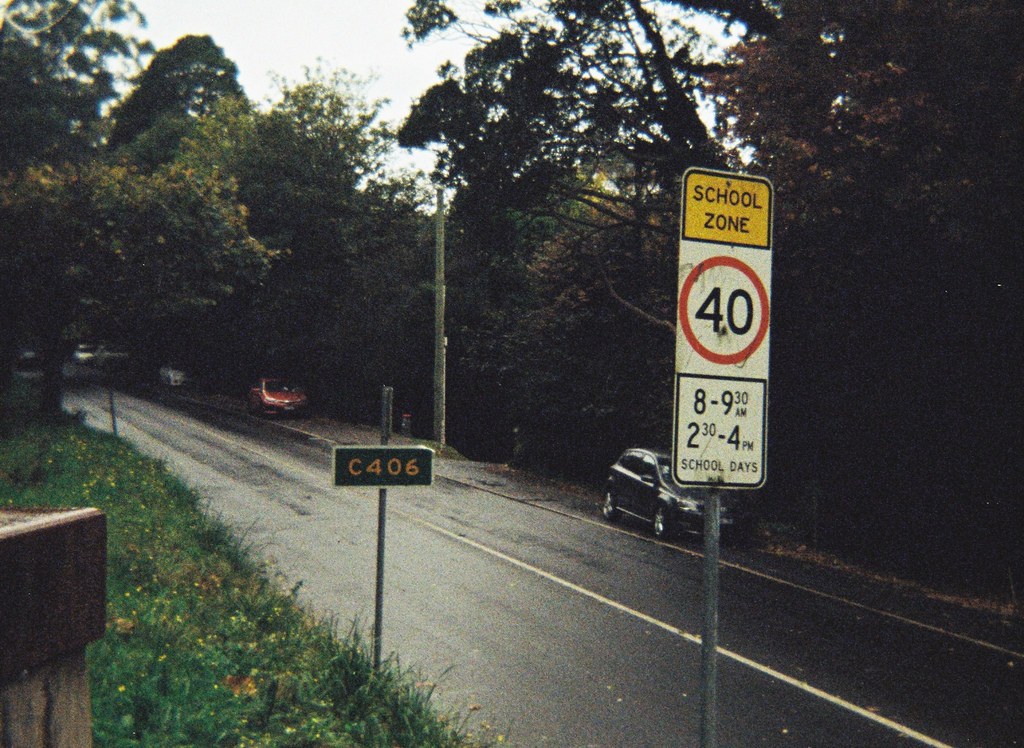
School zone signage in Florida follows a standard pattern. Yellow diamond-shaped signs bearing the words "SCHOOL" or "SCHOOL ZONE" mark where the reduced-speed area begins. Speed limit signs within the zone display the posted limit. Many zones use flashing amber beacons mounted on the signs to indicate when the reduced limit is currently in force - when those lights are flashing, the school zone rules apply. When they are not flashing, the road reverts to its standard speed.
Not every school zone uses flashing beacons. Some rely on static signage with posted time windows. In those cases, the driver is responsible for knowing whether the current time falls within the posted school zone hours. Ignorance of the schedule is not a defense.
Common mistakes new drivers make in school zones
- Assuming the zone doesn't apply when no children are visible. The limit is active whether or not children are present. An empty sidewalk does not suspend the law.
- Treating the school zone sign as an advisory, not a command. In Florida, a posted school zone speed limit is enforceable the moment you cross the sign - not the moment you spot a child nearby.
- Ignoring zones on roads that don't look like school roads. Zones can extend to surrounding streets with no visible connection to a school building from that point on the road.
- Missing the pre- and post-school windows. Drivers often slow down when they see buses and children but return to normal speed once the crowd clears - without realizing the legal window is still open.

The Real Cost of a School Zone Speeding Ticket in Florida
Florida law doubles the base fine for any speeding violation committed in an active school zone. A ticket for a given amount over the limit on a regular road carries a base fine - inside a school zone, that base fine is automatically doubled before anything else is added. Court costs and surcharges then layer on top of the doubled base, pushing the real out-of-pocket total significantly higher than the face amount on the citation suggests. What feels like a minor speeding slip becomes a genuinely expensive outcome.
Beyond the fine, a school zone speeding citation issued by a police officer adds points to your Florida driver's license. Points accumulate across violations and can trigger license suspension thresholds. They also appear on your record at insurance renewal, often producing a rate increase that outlasts the fine itself. The long-term insurance cost of a school zone ticket frequently exceeds the ticket amount for younger drivers on parent policies or for anyone with prior violations on their record.
For teen drivers specifically, a school zone ticket early in a driving history creates compounding problems: points on a newly issued license, higher insurance rates during the years when those rates are already at their peak, and possible complications with completing a supervised driving program.
For current fine amounts and point schedules, check the Florida Department of Highway Safety and Motor Vehicles (FLHSMV) website and the Broward County Clerk of Courts. Figures circulating on third-party sites are frequently outdated - fines and surcharges are updated periodically and vary based on how far over the limit the driver was going.
School Zone Speed Cameras in Broward County: Locations, How They Work, and the 2026 Legal Controversy
Florida law authorizes automated speed cameras in school zones under specific statutory conditions. Cameras operate without a police officer present - they photograph the vehicle, record the speed, and generate a notice of violation. In Broward County, known active camera locations include:
- SW 30th Street near Nova Southeastern University and University School
- Northbound SW 133rd Avenue near Flamingo Elementary and Western High School
- Multiple locations in and around Plantation serving schools in that corridor
- Lauderdale Lakes, which launched a dedicated School Zone Camera Safety Program under Florida House Bill 657
These cameras run throughout the entire school day - including the lunch period. A driver who slows correctly at morning arrival and afternoon dismissal but speeds through midday while the zone is still legally active is still within camera range. The cameras do not take breaks between bells.
Camera citations are issued when a driver exceeds the posted school zone limit by a threshold set by statute. The notice arrives by mail and carries a civil penalty. Unlike officer-issued citations, camera-issued violations do not add points to the driver's license - a meaningful distinction for drivers managing their record.
The 2026 Broward County legal controversy
In 2026, a Broward County traffic hearing officer dismissed all pending school zone speed camera cases before him, citing constitutional concerns with Florida's automated enforcement framework. That ruling does not automatically void all camera tickets issued in Broward - it applies to the specific cases that were pending before that hearing officer - but it signals that the legal status of camera enforcement here is actively contested, not settled.
If you have received a camera-issued school zone citation in Broward County, it is worth a conversation with a Florida traffic attorney before paying or ignoring the notice. Check with the Broward County Clerk of Courts for current guidance on how those cases are being processed. The landscape is in motion, and paying a citation you might legitimately contest is not a foregone conclusion right now.
The strongest defense against any school zone citation - camera or officer-issued - is not receiving one. Legal questions about enforcement procedures only matter after a ticket arrives; they don't change what the posted signs require of you on the road.
Florida's Handheld Device Ban in School Zones
Florida law prohibits holding or using a handheld communication device in an active school zone or crossing. This rule is stricter than Florida's general distracted driving law, which uses a tiered warning system for first offenses. In a school zone, hands-free operation is the only permitted mode from the moment you enter the zone - there is no first-offense warning exception.
Hands-free means the device is not in your hand at any point while driving through the zone. It must be mounted, cradled, or placed where you are not physically holding it. Audio must route through speakers or earbuds without picking up the device. Holding the phone in your lap during a call, glancing at it while stopped at a red light inside the zone, or picking it up briefly to adjust navigation - all of these violate Florida law in an active school zone or crossing.
For teen drivers, this matters beyond the fine. Early driving habits set the pattern for years of driving to come. Building the routine of activating do-not-disturb before leaving the driveway - not when you remember to, not when you enter the zone - removes the temptation entirely and protects the license from the start.
Crossing Guards: Why Their Signal Overrules the Traffic Light
In Florida, a crossing guard's signals carry the force of law and legally supersede traffic lights and stop signs. This is not a courtesy rule. When a crossing guard raises a stop sign to halt traffic, every driver in the affected lanes must come to a complete stop - even when they have a green light, even if no children are yet in the crosswalk, and even when stopping feels wrong given what the signal shows.
Florida grants crossing guards the same authority as traffic control devices within their area of operation. Failing to stop for a guard's signal carries penalties comparable to ignoring a red light, and in a school zone context the consequences compound with any other violation that occurs simultaneously.
A complete stop means the vehicle is fully stationary before the crossing area. Slowing to a crawl while the guard's sign is raised is not compliance. Some drivers assume the guard is directing pedestrians rather than stopping vehicles - that assumption is wrong. The guard's raised sign controls the driver's movement, not just the pedestrian's path.
For new drivers, the cognitive challenge is real: you are watching a green light and expecting to go, and someone steps into the road with a sign. Recognize crossing guards early - they wear bright vests and are typically stationed at intersections near school entrances - so you have enough distance to process and respond to their signal calmly.
Florida School Bus Laws Every Fort Lauderdale Driver Must Know
Florida's school bus stop law is one of the most misunderstood rules among new drivers, and one of the most consequential to violate. How it applies depends entirely on the type of road.
Two-lane roads
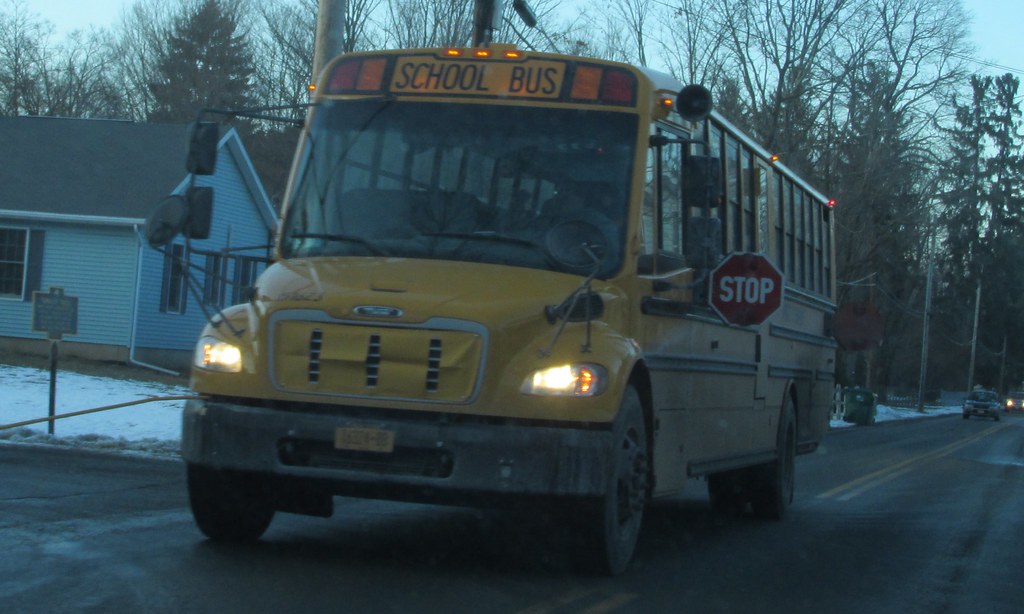
On a two-lane road without a dividing median, all traffic in both directions must stop when a school bus activates its flashing red lights and extends the stop arm. It does not matter which direction you are traveling or whether you are behind the bus or approaching from the opposite direction. Both lanes stop. Full stop.
Divided roads
An exception applies only when a physically raised barrier or an unpaved median of a specific minimum width separates the opposing lanes. In that case, traffic traveling on the opposite side of the physical barrier from the bus does not need to stop. Traffic traveling in the same direction as the bus, or approaching from behind on the same side, always must stop.
The critical word is physical. A painted center line is not a median. A shared turn lane is not a median. A concrete strip or a grass divider wide enough to meet Florida's statutory threshold is. If you are not certain which situation you are in, stop. The cost of incorrectly assuming you didn't need to stop is much higher than stopping unnecessarily.
Consequences of illegally passing a stopped bus
| Violation type | Fine level | License points | Additional requirement |
|---|---|---|---|
| Passing a stopped bus (any side) | Substantial minimum fine | Points added to license | Mandatory driver improvement course |
| Passing on the side where children board or exit | Significantly higher minimum | Points added to license | Mandatory driver improvement course |
| School zone speeding (officer-issued) | Doubled base fine plus court costs and surcharges | Points added to license | Potential insurance rate increase |
| School zone speed camera citation | Set civil penalty per statute | No points | None - civil, not criminal |
| Handheld device use in school zone | Fine per Florida law | Points possible | None |
For current fine amounts on each violation type, visit the FLHSMV website or the Broward County Clerk of Courts. The figures in circulation on general traffic websites are frequently outdated.
Practical Tips for New and Teen Drivers Navigating School Zones in Fort Lauderdale
Knowing the law and handling school zone situations smoothly while still developing driving skills are two different things. These habits close the gap.
- Leave earlier during school hours. School zone speed limits, crossing guard stops, and school bus stops all add time to routes that feel quick on a Saturday. Build the extra time into your schedule before you need it, not while you're already running late.
- Scan ahead, not just directly in front of you. Children move between parked cars with very little warning, particularly along US-1, Federal Highway, and the surface roads near large high schools in central Fort Lauderdale. Looking further ahead gives you the reaction time to respond.
- Learn your school zone roads during off-hours. Drive your regular commute or drop-off route on a weekend and note where school zone signs appear. Knowing in advance where a zone begins means you're already slowing before you reach the sign, not braking hard after.
- Set your phone to do-not-disturb before you leave, not after you enter the zone. The device ban applies the moment you cross into an active zone. Managing notifications before you start the car removes the temptation entirely.
- Practice bus recognition during supervised driving sessions. A bus's amber flashing lights indicate it is preparing to stop - begin slowing the moment you see those, before the red lights and stop arm activate. The earlier you identify the bus is stopping, the more calmly you can respond.
High-density school corridors in Broward - stretches where several schools sit within a short distance - can stack zones so closely that normal road speed is effectively unavailable during school hours. Sunrise Boulevard west of I-95, the Davie Road corridor, and stretches of Broward Boulevard near large middle and high school campuses are examples where sequential school zones create extended low-speed stretches during peak school times. Routing around these corridors in the morning and afternoon is worth it for both time management and compliance.
Frequently Asked Questions
What should I do if I received a school zone speed camera ticket in Broward County?
Do not assume you must pay it. In 2026, a Broward County traffic hearing officer dismissed all pending school zone camera cases before him, citing constitutional concerns with Florida's automated enforcement framework. Before paying or ignoring the notice, check with the Broward County Clerk of Courts for the current status of how those cases are being handled, and consider consulting a Florida traffic attorney who practices in Broward County courts.
Are school zone rules in effect during summer school or after-school programs?
Yes - if the school is operating on a given day, whether for summer school, an intersession program, or an after-school activity, the school zone rules apply during the active hours for that program. The law does not distinguish between a regular school day and a special program day. Verify active hours by checking the posted signs or the school's published schedule for that day.
What exactly counts as hands-free driving in a Florida school zone?
Hands-free means the device is not in your hand at any point while driving through the zone - it must be mounted or cradled, and any audio must route through speakers or earbuds without you picking up the phone. Holding the phone in your lap while it plays audio is not hands-free. Picking it up at a red light inside the zone to tap your navigation is not hands-free. Florida's school zone rule has no first-offense warning exception, unlike the general statewide distracted driving law.
How do I know whether a road has a median that exempts me from stopping for a school bus?
The divider must be a physical barrier - a raised curb, a concrete strip, or a grass median wide enough to meet Florida's minimum statutory width - not a painted line or a shared turn lane. When you are not certain, stop. If you regularly drive a road near schools, look at any divider during off-hours to assess whether it would qualify as a physical barrier under that standard.
Can a crossing guard stop traffic on a stretch of road that isn't marked as a school zone?
Yes. A crossing guard's legal authority in Florida is tied to their role and position, not strictly to the painted or signed boundaries of a school zone. If a guard is posted at an intersection and raises a stop sign, drivers are legally required to stop. The absence of a reduced speed limit sign at that exact point does not remove the guard's authority to control traffic movement.
Does a school zone speed camera ticket in Florida affect my driver's license points?
No - camera-issued school zone citations are civil penalties and do not add points to a Florida driver's license. A citation issued by a police officer who personally observed the speeding does carry points. If you are unsure how your citation was generated, the notice will specify whether it was camera-issued or officer-issued, and that distinction has direct consequences for your record and insurance rates.