Fort Lauderdale sits on a stretch of railroad corridor that federal safety data consistently ranks among the most dangerous in the United States. Sixty-five at-grade crossings run through Broward County alone, and between 2022 and 2024 those crossings saw 51 collisions involving Brightline trains. Most driver education content treats railroad crossings as an afterthought - a brief chapter about stopping before the gate. In South Florida, that is not good enough. The corridor carries Brightline passenger trains, Florida East Coast freight trains, and Tri-Rail commuter trains, sometimes simultaneously. The trains are fast, one of them barely sounds a horn, and a 2024 Florida law dramatically raised the penalties for gate violations. New drivers and teens on restricted licenses need a real briefing on this specific stretch of road before they ever encounter a crossing in Fort Lauderdale.
Why Fort Lauderdale Drivers Face One of the Nation's Most Dangerous Rail Corridors
Broward County's 65 at-grade crossings represent one of the highest concentrations of grade crossings for any passenger rail corridor in the United States. This is not a rural freight line running through empty land. It bisects eight municipalities, including Fort Lauderdale, cutting through dense residential neighborhoods, commercial districts, and school zones.
Brightline, which began test runs in 2017 and now carries passengers between Miami and Orlando, has recorded more than 182 deaths since those first runs through mid-2025. That figure gives it the highest per-mile fatality rate among all U.S. passenger railroads. In Broward County specifically, Brightline trains were involved in 51 collisions at crossings in just three years, 2022 through 2024, according to federal data compiled by the Broward Metropolitan Planning Organization.
Standard driver education materials rarely address this. Most guides say stop when the lights flash, do not drive around the gate, and wait for the train to pass. That advice is accurate but incomplete. In Fort Lauderdale, understanding why these crossings are so dangerous - and what makes them different from a typical freight-train crossing elsewhere in the state - is the only way to approach them safely.
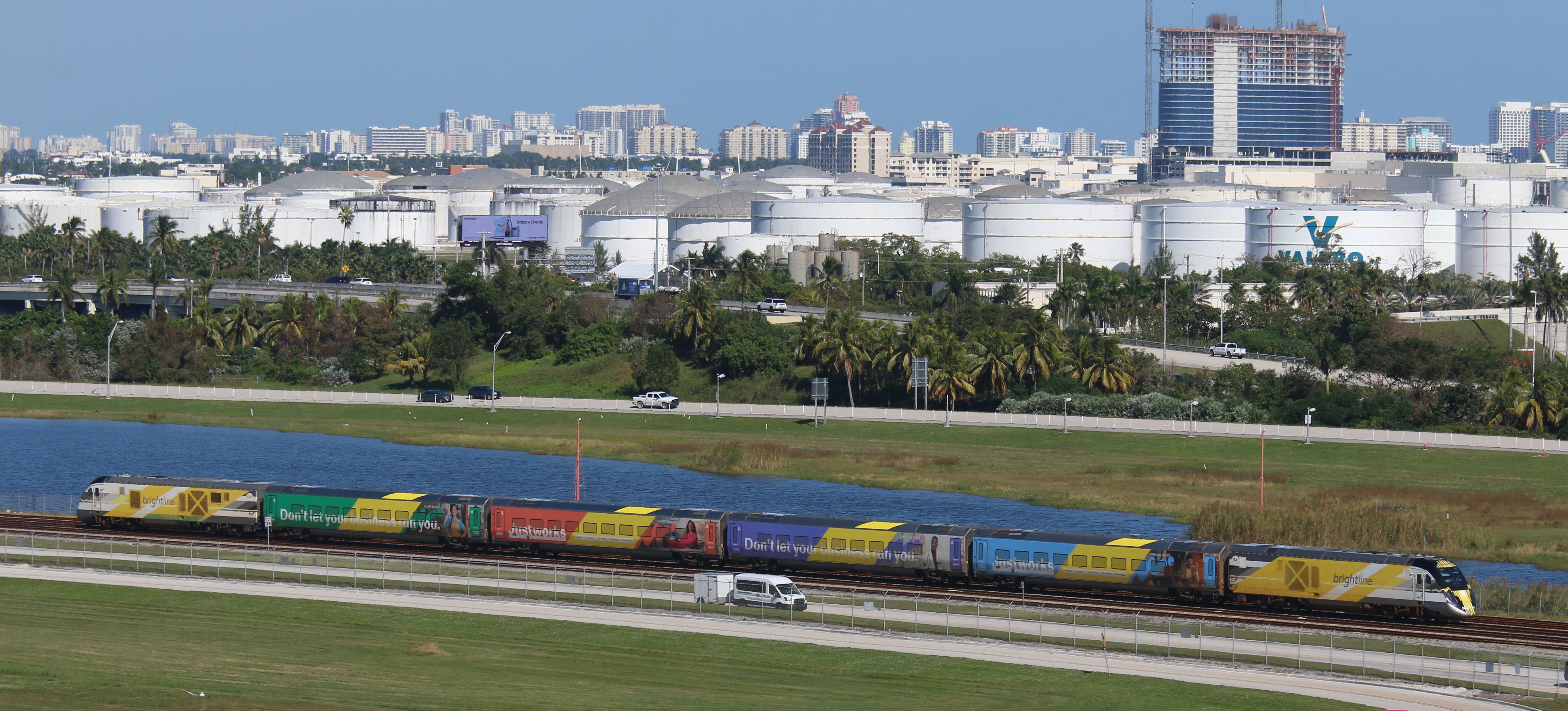
The FEC Corridor in Broward County: Where the Crossings Are and How Often You Will Encounter One
The Florida East Coast Railway corridor runs north-south through the eastern portion of Broward County, roughly paralleling US-1 and the Intracoastal Waterway. It passes through Fort Lauderdale, Hallandale Beach, Dania Beach, Hollywood, Pembroke Pines, and several other municipalities. If you live in eastern Broward County and drive anywhere with regularity, you will cross these tracks. Many drivers cross them multiple times a day without thinking about it.
The density matters because familiarity breeds complacency. A driver who crosses the same set of tracks every morning on the way to school or work starts to treat it as routine. Routine is exactly the wrong approach here. FEC freight trains run on freight schedules. Brightline runs passenger schedules that have expanded as ridership has grown. Tri-Rail also operates on portions of the South Florida FEC corridor. Three distinct rail operators can use the same tracks in Broward County, and their schedules do not coordinate in any way a driver can predict.
The crossings you should be most alert to are those with dual track configurations, where two parallel sets of tracks occupy the same crossing. Not all 65 crossings have this layout, but where it exists, it creates the most serious hazard new drivers face on these roads.
Two Tracks, Two Train Types, One Big Misconception: Brightline and FEC Freight Share the Same Corridor
The single most dangerous misconception at Broward County crossings is this: one train has passed, the gate is still down, but the track looks clear. A driver begins to inch forward or decides the gate must be malfunctioning. That instinct has killed people.
Brightline and FEC freight trains share two parallel sets of tracks and can run simultaneously in either direction - or the same direction - at the same time. A train traveling north on the east track does not prevent a second train from traveling south on the west track at exactly the same moment. The gates stay down precisely because a second train may be approaching from the opposite direction just as the first one clears your line of sight.
In March 2022, a man was killed in Lantana after stopping on the west tracks to wait while a FEC freight train passed on the east tracks. He did not see an oncoming Brightline train on the parallel track he was standing on. This scenario - watching one train while failing to check the adjacent track - is a predictable outcome of the corridor's dual-track design, and it happens in Broward County conditions, not in some abstract hypothetical.
A large-scale safety improvement project currently underway at 327 grade crossings between Miami and Cocoa is installing digital "Second Train Coming" warning signs at select crossings precisely to address this gap. But not every crossing has them yet, and the protective habit has to exist in the driver's mind before the sign appears.
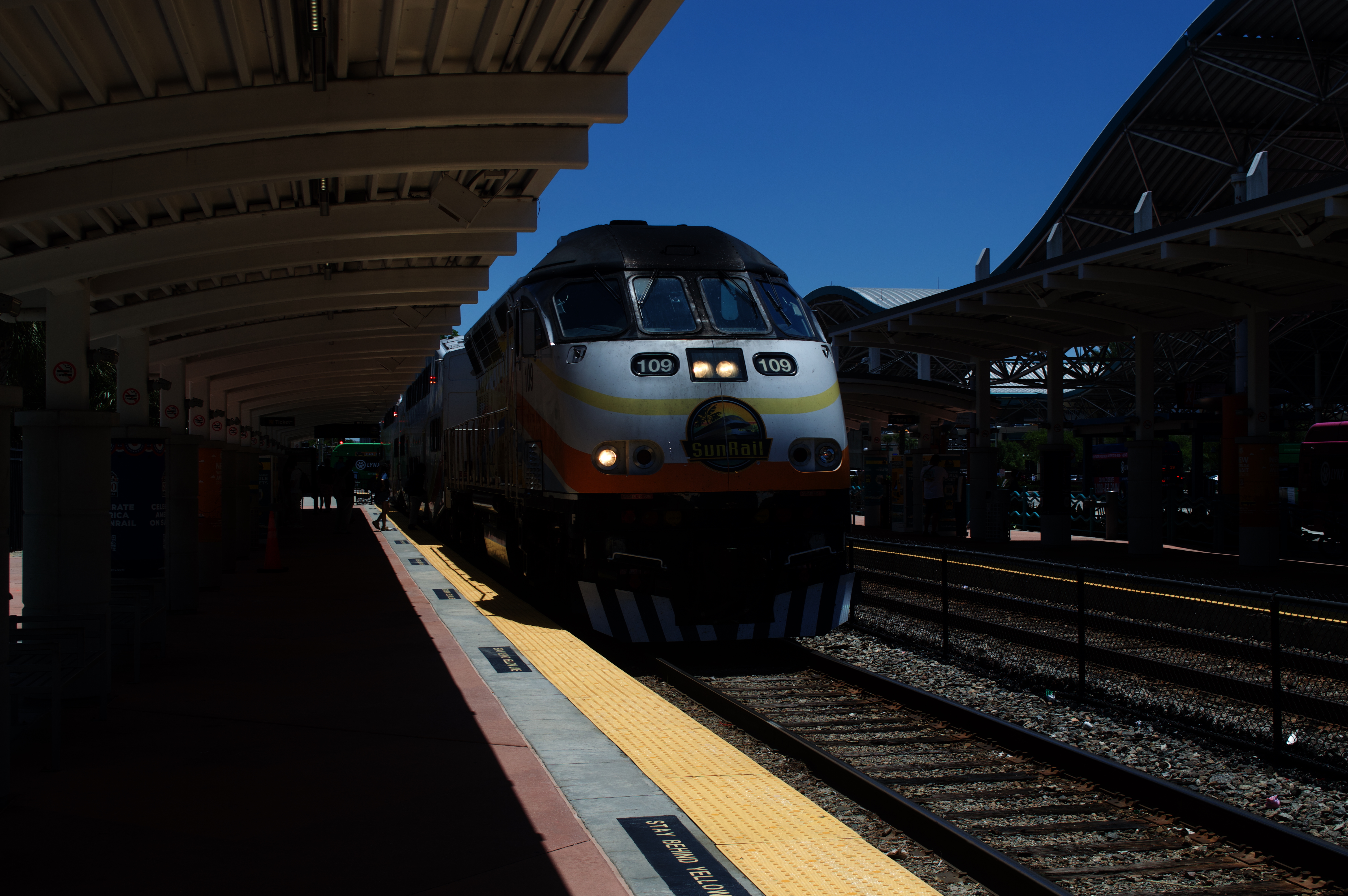
The Quiet Train Problem: Why Brightline Is Harder to Detect Than Any Freight Train
Every new driver in Florida learns to listen for a train horn. That mental model is built on decades of freight train practice, where a locomotive sounds its horn at every public crossing by federal rule. Brightline operates under a different standard. Brightline trains are not required to routinely sound a horn at grade crossings - a horn is only required in an emergency. On this corridor, that means a Brightline train can arrive at your crossing without any audible warning at all.
Speed compounds this. Brightline trains travel through South Florida's urban grade crossings at the corridor's operating limit, fast enough that a train appearing in the distance can reach a crossing in just a few seconds. At those speeds, stopping after a vehicle appears on the tracks is not physically possible for the train. The engineer has no options.
There is also a perceptual problem. Modern passenger trains like the ones Brightline runs are aerodynamic and relatively quiet at a distance, which makes them appear to be moving more slowly and from farther away than they actually are. A driver accustomed to hearing a loud freight horn approaching from far off has no reliable auditory cue with an approaching Brightline train.
- Do not rely on sound to detect an approaching Brightline train - use your eyes and the crossing signals, not your ears
- Look down both tracks before you move, even if the signals have gone dark and the gate has lifted
- If the gate is down, treat it as absolute - do not try to judge the train's speed or distance
- A crossing that appears clear to the eye is not confirmed safe until the gates are fully up and you have looked in both directions along both sets of tracks
Florida Law at Railroad Crossings: What the 2024 Penalties Actually Require
Florida's railroad crossing statute sets the physical rules: when warning signals are active, a driver must stop within a specific distance range from the nearest rail - not so close as to be on or near the track, and not so far back as to block intersecting traffic lanes. Flashing red lights at a crossing must be treated exactly like a stop sign, even if no physical gate is present. Signals without a gate do not reduce your legal obligation to stop and stay stopped until the signals go dark and it is safe to proceed.
The enforcement side changed significantly when a 2024 Florida law took effect on July 1 of that year. That law substantially raised the penalty for driving around or under a closed railroad gate. A first offense now carries a significant fine and multiple license points - enough to affect a standard license and to trigger serious consequences under the teen graduated driver licensing system. A second or subsequent offense carries a higher fine and additional points on top of those from the first. For current fine and point totals, check flhsmv.gov or the Florida Uniform Traffic Citation schedule, since these figures are set by law and can be updated.
| Violation | Fine level | License points | GDL impact |
|---|---|---|---|
| Driving around or under closed gate - first offense | Higher than pre-2024 | Multiple points - see flhsmv.gov | Can trigger GDL suspension alone |
| Driving around or under closed gate - repeat offense | Substantially higher | Additional points above first offense | Near-certain suspension |
| Stopping on the tracks | Civil penalty | Points assessed | Counts toward GDL threshold |
| Stopping too close to a closed gate | Civil penalty | Points assessed | Counts toward GDL threshold |
| Ignoring flashing signals with no gate present | Civil penalty | Points assessed | Counts toward GDL threshold |
The law draws a distinction between civil infractions and criminal violations. Driving around a closed gate is a civil infraction carrying the fines and points listed above. If a collision results from a crossing violation, the driver may face criminal charges depending on the outcome. No citation for a gate violation has ever been worth the risk it represents.
What to Do If Your Car Stalls or Gets Stuck on the Tracks
Every year, drivers end up stopped on railroad tracks for reasons that have nothing to do with ignoring a gate. A car stalls in traffic. A driver misjudges the space ahead and pulls onto the tracks before the path clears. A mechanical failure happens at the worst possible moment. The correct sequence of actions is specific. Do not improvise.
- Get out of the car immediately. Do not stay in the vehicle, do not try to restart it, do not wait to see if a train is actually coming. Leave the door unlocked and exit fast.
- Move away from the tracks at a 45-degree angle in the direction from which a train is approaching. This moves you away from the path of debris if the train strikes your vehicle - a struck car can be thrown a significant distance.
- Find the blue emergency notification sign posted at the crossing. Call the number displayed on it immediately. Calling that number activates a signal that stops all trains operating in the corridor. This is not a general dispatch line - it connects directly to train control and is the fastest way to stop an inbound train.
- Only after you and any passengers are clear of the tracks and you have made the blue-sign call should you call 911.
The blue emergency sign is the single most important piece of infrastructure at any FEC/Brightline crossing in Broward County - and most drivers have never noticed it. It is posted at every crossing. The number on it connects to a system that can stop all trains on the corridor. Calling 911 first and hoping dispatch relays the message is slower. Call the blue sign number first, then 911.
Operation Crossing Guard and Ongoing Enforcement: What Broward Deputies Actually Ticket
In June 2022, Broward County deputies ran Operation Crossing Guard, a zero-tolerance enforcement campaign at railroad crossings across the county. Over eleven days - June 6 through June 17 - deputies issued 540 citations. The breakdown shows exactly what they were watching for:
- 157 citations for stopping on the tracks
- 146 citations for driving around closed gates
- 122 citations for stopping too close to the closed gate
Those three violations account for the majority of the total. The volume - 540 citations in eleven days across one county - reflects how frequently these violations occur at ordinary crossings, not just at locations with a known incident history. Deputies did not need to stake out trouble spots. They could write citations at almost any crossing on a busy morning.
The enforcement model continues as a recurring priority. The U.S. Department of Transportation recognized Broward County's crossing density as a national safety priority and awarded a federal grant specifically for grade separation projects in the county - work that would replace at-grade crossings with overpasses or underpasses, removing the conflict between cars and trains entirely. That construction will take years. In the meantime, the 2024 law means deputies writing citations at crossings today are writing them under a higher penalty schedule than the one in place during that 2022 campaign.
Teen and GDL Drivers: How One Railroad Crossing Violation Can Suspend Your Restricted License
Florida's Graduated Driver Licensing program limits how many license points a teen driver can accumulate before facing a suspension. For teens in the GDL program, accumulating enough points within a twelve-month period triggers a mandatory thirty-day license suspension. A single gate violation under the 2024 law now carries enough license points to meet that threshold by itself - meaning one citation can suspend a learner's permit or restricted license without any prior infractions on the record.
A single railroad crossing gate violation under Florida's 2024 law carries enough license points to trigger a mandatory suspension under the GDL program on its own. For a teen driver, this is not a point that adds to a running total - it can end driving privileges immediately.
This is a fundamentally different risk profile than it was before the 2024 law raised the point value for gate violations. Under the old penalty structure, a teen who received a gate citation absorbed a smaller point hit. Now the same citation produces a point total calibrated to a stricter threshold than most GDL drivers carry any buffer for.
If you are a teen driver and receive a citation at a railroad crossing, do not ignore it or pay it without understanding the consequences:
- Contact a licensed Florida traffic attorney before paying the fine - paying typically means accepting the points, and in Florida you may have options to contest or reduce the impact
- Ask about a Florida-approved driver improvement course, which may reduce points depending on the violation and your citation history
- Notify your parents or guardian immediately - suspension notifications go to the address on file with FLHSMV, and missing a suspension period creates additional violations
- Check your current point total at flhsmv.gov so you know exactly where you stand before making any decision about how to respond to the citation
Safety Improvements Underway and What Drivers Should Still Do Today
The infrastructure improvements coming to this corridor are real and specific. The large-scale project covering 327 grade crossings between Miami and Cocoa is installing quad-arm gates - gates that lower barriers on both sides of the road, blocking drivers from pulling onto the tracks as well as from crossing them. Traditional single-arm gates only block the approaching lane, leaving a gap on the far side that some drivers use to go around. Along with the quad gates, the project is adding fencing, updated pavement markings, and digital "Second Train Coming" warning signs at select crossings. The separate federal grant targeting Broward County specifically is directed at grade separation, converting the most dangerous at-grade crossings into overpasses or underpasses where trains and cars never occupy the same plane.
Those projects will improve the situation over time. They are not done. Until every crossing in Broward County has quad gates and a completed grade separation, drivers are responsible for the habits they bring to every crossing they encounter. The practical list is short:
- Slow down well before any crossing where signals are active - the signals have detected a train even if you cannot see one yet
- Stop fully before the marked stop zone, not at a rolling crawl while scanning for the train
- After a train passes, look in both directions along both sets of tracks before moving - do not assume one cleared train means the crossing is safe
- Locate the blue emergency sign at your regular crossings during normal driving so you know where it is before you ever need it
- If the gate is still down when you arrive, stay back and stay stopped - do not inch forward to see around it
- Treat flashing red lights at a crossing without a gate exactly as you would a stop sign - come to a full stop, check that the signals have cleared, and check the tracks in both directions before moving
The crossings in Fort Lauderdale and Broward County will not feel dangerous until one of them does. That is precisely the problem. Sixty-five crossings, three types of trains, one of them arriving without a routine horn, running through one of the most densely crossed corridors in the country. The habits above take two or three extra seconds per crossing. Build them now.
Frequently Asked Questions
Does Brightline sound its horn at every railroad crossing in Fort Lauderdale?
No. Unlike FEC freight trains, Brightline is not required to routinely sound its horn at grade crossings - the horn is only required in an emergency. This makes Brightline trains substantially harder to detect by sound than any freight train a new driver has encountered elsewhere. Do not rely on hearing a horn as confirmation that a crossing is clear.
What should I do if my car stalls on the railroad tracks?
Get out immediately and move away from the tracks at a 45-degree angle in the direction a train is approaching - this moves you away from debris if the train strikes your vehicle. Find the blue emergency sign posted at the crossing and call the number on it right away. That call activates a system that stops all trains in the corridor. Do not try to restart or push the car, and do not call 911 before you have made the blue-sign call.
Can a single railroad crossing violation suspend a Florida teen's license?
Yes. Florida's 2024 railroad crossing law assigns a point value to a gate violation high enough that a single citation can meet the threshold that triggers a mandatory suspension under the Graduated Driver Licensing program - even with no prior violations on record. Any teen who receives a railroad crossing citation should consult a traffic attorney before paying the fine, since paying typically means accepting the points.
If one train has passed and the gate is still down, does that mean another train is coming?
Treat a gate that stays down after a train passes as confirmation that another train is on the way, not as a malfunction. Brightline and FEC freight trains share parallel tracks and can run simultaneously in both directions. A 2022 fatality in Lantana involved exactly this scenario - a driver stopped on one set of tracks while watching a train on the adjacent track and was struck by a second train approaching on the track he was stopped on.
Where are the railroad crossings concentrated in Fort Lauderdale?
The FEC rail corridor runs north-south through eastern Broward County, roughly paralleling Federal Highway and US-1. You will encounter crossings on east-west roads that cross the corridor throughout Fort Lauderdale and neighboring cities including Dania Beach, Hollywood, and Hallandale Beach. With 65 at-grade crossings across eight municipalities, any driver regularly traveling the eastern part of the county will encounter them often - often enough that familiarity becomes a hazard in itself.
What is a quad-arm gate and why does the upgrade project matter for drivers?
A quad-arm gate lowers barriers on both sides of the road, blocking drivers from pulling onto the tracks as well as from crossing them. Traditional single-arm gates only block the approaching lane, leaving a gap on the far side that some drivers exploit to drive around the gate. The crossing improvement project underway on this corridor is installing quad gates at crossings between Miami and Cocoa, including Broward County locations, specifically to remove that gap. Until a crossing near you has been upgraded, assume a single-arm gate is in place and treat the open far side as if it were blocked.