Drive north on I-95 through Fort Lauderdale and you will still see diamond-shaped signs on the overhead gantries. For a new driver who studied the Florida Driver Handbook, those diamonds mean high-occupancy vehicle lane - multiple occupants required or you pay. The problem is that Florida repealed its HOV law in July 2025, and the signs are still up. This guide explains exactly what changed, how the 95 Express managed toll lanes work today, who still qualifies for a free ride, and what violations look like so you do not learn the hard way at 70 miles per hour.
What the 95 Express Lanes Are and Where They Run Through Broward County
The 95 Express lanes are a set of dynamically priced managed toll lanes built into the leftmost lanes of I-95 itself. They are not a separate road. A buffer of plastic posts and, between access points, solid white lines physically separates them from the general-purpose lanes alongside them.
The system runs in two broad segments. The southern segment connects the SR 836/I-395 interchange near downtown Miami to Broward Boulevard near downtown Fort Lauderdale. The northern segment picks up at Stirling Road in central Broward and continues north to Linton Boulevard in Palm Beach County. Together they cover a significant stretch of South Florida's most congested corridor.
For Fort Lauderdale-area drivers, the most relevant stretch runs through central Broward - from Stirling Road through Davie, past downtown Fort Lauderdale at Broward Boulevard, and up through Sunrise Boulevard. The design favors longer commutes: access points are spaced well apart, and you cannot simply drift in or out between them.

July 2025: Florida Repealed Its HOV Law
Governor DeSantis signed SB 1662, a broad transportation bill that included repeal of Florida's HOV statute - for the exact signing date, see the bill history on the Florida Legislature's online session archive for the 2025 session. The law eliminated high-occupancy vehicle lane designations statewide effective July 1, 2025. The Florida Highway Patrol confirmed it stopped enforcing HOV restrictions on that date. State agencies responsible for issuing HOV decals - including county tax collector offices - stopped accepting new applications around that date. For the full legislative text, search the Florida Legislature's online session archive for SB 1662, 2025 session.
Before the repeal, Florida had a significant stretch of HOV-designated highway, with the great majority of that mileage concentrated on I-95 in South Florida - the same corridor running through Broward County. Much of that mileage had already been converted to managed toll lanes, but residual HOV exemptions and decals created a patchwork of rules that was genuinely difficult to track.
What the repeal did not do: it did not shut down the 95 Express lanes, remove the toll infrastructure, or eliminate every exemption. It removed the legal basis for treating certain vehicles differently based on occupancy alone. After July 1, 2025, every vehicle entering the express lanes must either pay the variable toll or qualify under one of the narrower exemptions that survived the legislative change.
Why the Old Diamond Signs Are Still Up - And What They Mean Today
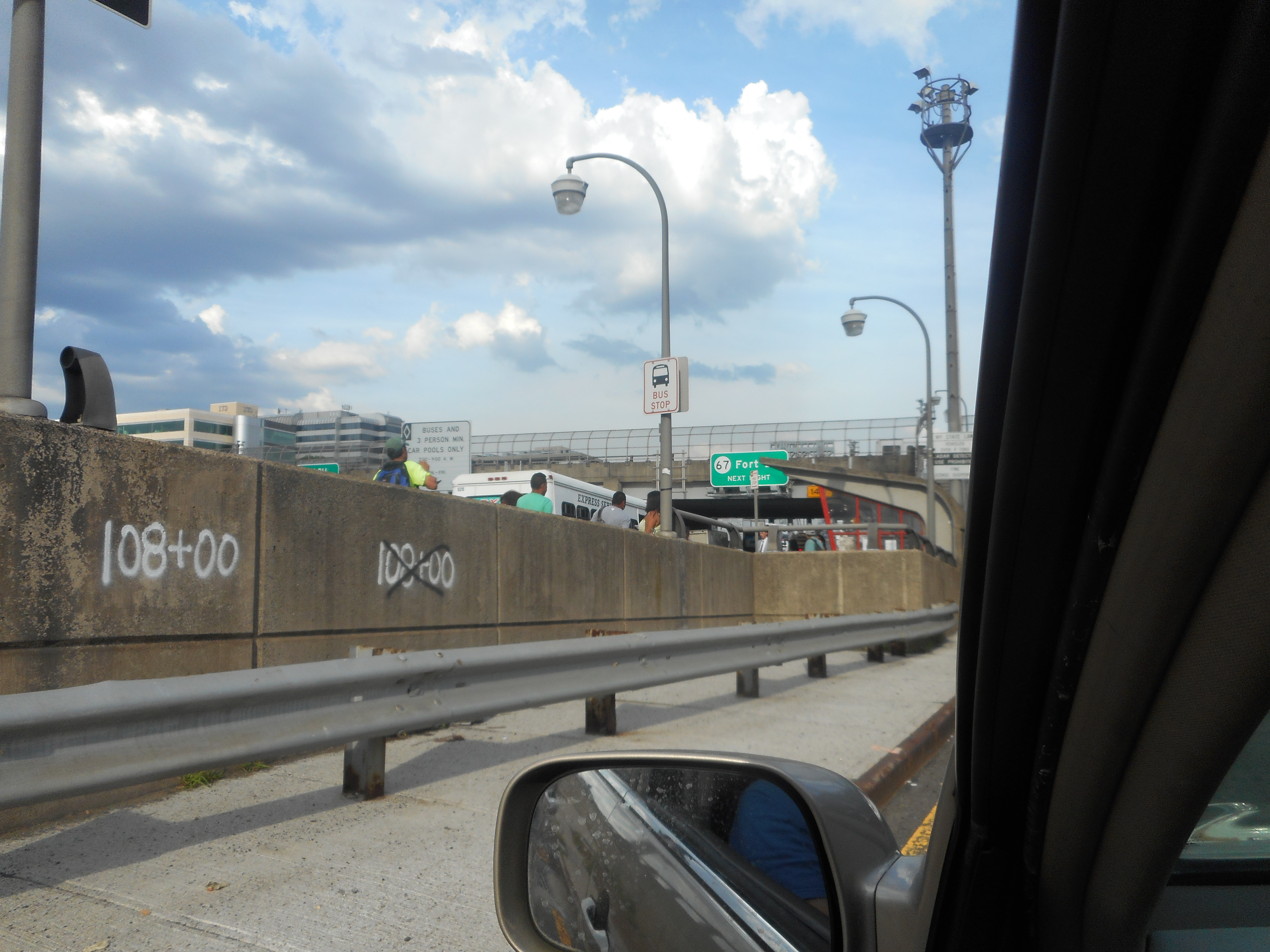
CBS 12 and other South Florida news outlets reported on the HOV changes in 2025, and signs remained physically bolted to their posts along the Broward corridor into 2026. FDOT has not removed or covered them. For a driver who learned road signs by the book, or who passed a permit test before mid-2025, the instinct to treat the diamond as a live restriction is understandable - and wrong.
The Florida Highway Patrol is not writing HOV tickets. The signs are infrastructure artifacts - the state changed the law faster than field crews updated the hardware. When you see a diamond on I-95, the question is not how many people are in the car. The question is whether you have a SunPass transponder properly mounted and whether the variable toll on the electronic sign makes the trip worth it.
Who Still Rides Free: The Carpool Exemption That Survived
The HOV repeal did not eliminate every free-passage category. Registered carpools carrying 3 or more occupants (the minimum required) can still use the 95 Express lanes without paying a toll - but the keyword is "registered." This is not automatic, and the system reads a decal, not heads.
The carpool must be registered with South Florida Commuter Services (SFCS) and the vehicle must display an official 95 Express carpool decal. A vehicle carrying several passengers but no decal pays the full variable toll. Registration is the qualifying act.
How to Register Your Carpool
- Visit the South Florida Commuter Services website (1800234ride.com) or call 1-800-234-RIDE to begin a carpool registration.
- Confirm that your regular carpool consistently meets the minimum occupancy threshold of 3 or more people - you must meet it on every trip you claim the exemption, not just at registration.
- Complete the SFCS registration application and request a 95 Express carpool decal for your specific vehicle.
- Mount the decal exactly as instructed; placement determines whether the gantry cameras recognize the exemption correctly.
- Note that a SunPass transponder is not required for registered carpool trips - the gantry reads the decal directly. If your vehicle already has a SunPass mounted, SFCS sends a transponder shield with your decal package; use it on exempt trips to prevent the transponder from generating a separate toll charge alongside your exemption.
On any trip where you enter the express lanes below the minimum occupancy while displaying the decal, the full toll applies. Consistent misuse - entering short-staffed and hoping the system does not flag it - risks both back-billing and decal revocation. The exemption is per qualifying trip, not a blanket pass for the vehicle.
The LEV and HOV Decal Programs Are Gone
If you drive a hybrid or electric vehicle and assumed that entitled you to free 95 Express travel, the picture changed on July 1, 2025. The Low Emission Vehicle (LEV) toll exemption program stopped accepting new registrations and renewals on that date. Existing exemptions do not transfer to new vehicles and cannot be renewed once they expire.
Here is what that means in practice depending on your situation:
- You received an LEV exemption before July 2025: It remains valid for one year from its original issuance date. After that, there is no renewal and no replacement program. You pay the variable toll like any other driver.
- You received an HOV decal before July 2025: Per a Florida Highway Safety and Motor Vehicles (FLHSMV) bulletin, existing HOV decals remain valid for one year from their original issuance date - check 95express.com or contact FDOT District 4 for your specific decal's status. They cannot be renewed after that date - permanently.
- You bought a new EV or hybrid after July 1, 2025: No exemption program exists for it. You need a SunPass and pay the standard variable toll.
- You are shopping for an EV and factoring in toll-free express lane access: That calculation does not hold for vehicles purchased after the program closed. Check 95express.com for current exemption status before projecting commute savings.
Check the expiration date on any decal you received before mid-2025. Once it lapses, there is no path back to exemption status for green vehicles.
SunPass Is the Only Way In - No Transponder, No Plate Billing, No Cash
This distinction catches experienced Florida toll-road users off guard just as often as new drivers. On most Florida toll roads - the Turnpike, SR 826, many US 1 plazas - if you drive through without a transponder, cameras photograph your plate and FDOT bills the registered owner later. That system is Toll-by-Plate.
Toll-by-Plate is not available on Florida's managed express lanes, including 95 Express. Enter without a properly mounted, active SunPass or Florida-compatible transponder and the system logs a violation. There is no standard Toll-by-Plate option that bills at face-value toll rates - instead, a violation enforcement invoice is mailed to the registered owner covering the tolls incurred plus a $2.50 administrative fee, and a $25 daily violation charge also applies. Check 95express.com for the current fee schedule, as amounts can be updated.
| Feature | 95 Express Managed Lanes | Regular Florida Toll Roads |
|---|---|---|
| Payment method | Transponder required | Transponder or Toll-by-Plate |
| Plate-only billing available | No | Yes |
| Toll structure | Variable, changes in real time | Fixed per plaza or segment |
| Cash lanes at plaza | No - no toll plazas | Some plazas, some lanes |
| Risk without transponder | Violation - enforcement invoice mailed with fees added | Higher toll via Toll-by-Plate |
Transponder Mounting Rules
A transponder in the cupholder or tucked behind a visor does not count. FDOT specifies mounting in the lower center of the windshield behind the rearview mirror. Tint bands near the top of the glass can block reads if they extend into the mounting zone - reposition the transponder if yours does. A failed read on an express lane gantry produces the same result as no transponder: a violation.
Rental Cars
Most major rental agencies operate toll accounts, but many of those are built around Toll-by-Plate billing, not a physical transponder in the vehicle. Before entering 95 Express in a rental, confirm the car has an agency transponder physically mounted inside - not just a sticker claiming toll coverage. If the rental only has a Toll-by-Plate arrangement, the express lane entry generates a violation that the agency will pass back to you with an administrative markup on top.
How Variable Tolls Work and What to Expect During Your Fort Lauderdale Commute
The 95 Express toll algorithm prices lanes in real time to keep traffic inside the express lanes moving above a target speed floor. When lanes start filling and slowing, prices rise to reduce demand. When the lanes have capacity and traffic is moving well, prices drop. The system is designed so that paying the toll gets you a meaningfully faster trip than sitting in the general-purpose lanes - otherwise there is no rational reason to pay.
Electronic signs posted before each entry point display the current toll amount and the next available exit destination. These signs update frequently. The price you see approaching the entry point is your operative figure - what it showed ten minutes ago is irrelevant.
Weekday rush hours in the Broward corridor - morning inbound and afternoon outbound - typically see the highest rates. Midday, evenings, and weekends see the lowest. For the current toll range on any given day, check 95express.com, which publishes real-time pricing. Specific amounts are not quoted here because they change algorithmically and any figure in a static article becomes inaccurate quickly.
One practical note for new drivers: the express lane toll is priced relative to the traffic conditions at that moment. If a crash on general-purpose I-95 is creating heavy backups, the express lane toll may spike at the same time - high demand for the fast lane drives the price up, not down. Check the sign before you commit.
How to Enter and Exit Safely: Broward Access Points and Lane-Change Rules
The express lanes in the Broward corridor have designated access points at the following locations:
- Stirling Road - southernmost Broward entry point for the northern segment
- Griffin Road
- SR 84
- Davie Boulevard
- Broward Boulevard - connects to the southern segment near downtown Fort Lauderdale
- Sunrise Boulevard
Between those points you are locked in. The lanes are bounded by plastic post markers and solid white line markings. Crossing a solid white line or driving over the post buffer between designated exits is a traffic violation - not a shortcut when you misjudge your exit.
The electronic signs before each entry point are your decision aid. They show the current toll and the next available exit. If your intended destination is before that exit, the express lane may not be worth entering - you would pay to get in and then need to continue past your turn. The lanes are built for longer-distance commutes, not one-ramp convenience.
When you are approaching an exit inside the lanes, watch for dashed white lines at the edge of the express lane - dashed means a lane change to exit is permitted there. Solid means stay put. That distinction is how you know when it is legal to move over.
Fines, Violations, and What Happens If You Get It Wrong
Entering a 95 Express lane without a valid, readable transponder generates a violation. The system logs the plate, and a notice goes to the registered vehicle owner. The initial charge includes a daily violation fee plus a per-invoice administrative fee - check 95express.com for current amounts, as these figures can be updated and citing a stale number here would create its own confusion.
What matters more than the specific dollar figures is the escalation path:
- Initial violation notice: Mailed to the registered owner with a deadline to pay or dispute.
- Continued non-payment: The outstanding balance grows and FDOT can refer the account for collection.
- Persistent non-payment: Florida law authorizes suspension of both the driver's license and vehicle registration until the balance is resolved. This is not a theoretical outcome - the state pursues chronic toll violators through the registration renewal process, which means you may not discover the suspension until you try to renew.
For carpool decal holders: using the express lanes below the required occupancy threshold while displaying the decal charges the full current toll for that trip. Repeated under-occupancy entries are flagged and can result in decal revocation and back-billing for previously claimed trips that did not meet the requirement.
If you receive a violation you believe is incorrect - wrong vehicle captured, a correctly mounted transponder that failed to read, a plate misidentification - FDOT District 4's 95 Express public information office handles disputes for the Broward corridor. The dispute process and contact information are listed at 95express.com. Address violations promptly: fees accumulate with time, and the window for straightforward resolution closes.