Broward County Public Schools started the 2026-2027 school year on August 10, and for the first time, every one of the district's approximately 1,300 school buses rolled out carrying an AI-powered camera system that watches the traffic around it. Through a contract with BusPatrol, each bus now logs any vehicle that fails to stop when its stop arm deploys - capturing license plates automatically, from multiple angles, with no officer required. Violators during August 10 through September 8 received written warnings. Starting September 9, 2026, those warnings become civil citations. For new and teen drivers in Fort Lauderdale, this changes the math on a law that was already serious and widely misunderstood.
Why This Matters Right Now: Broward County's AI Camera Enforcement
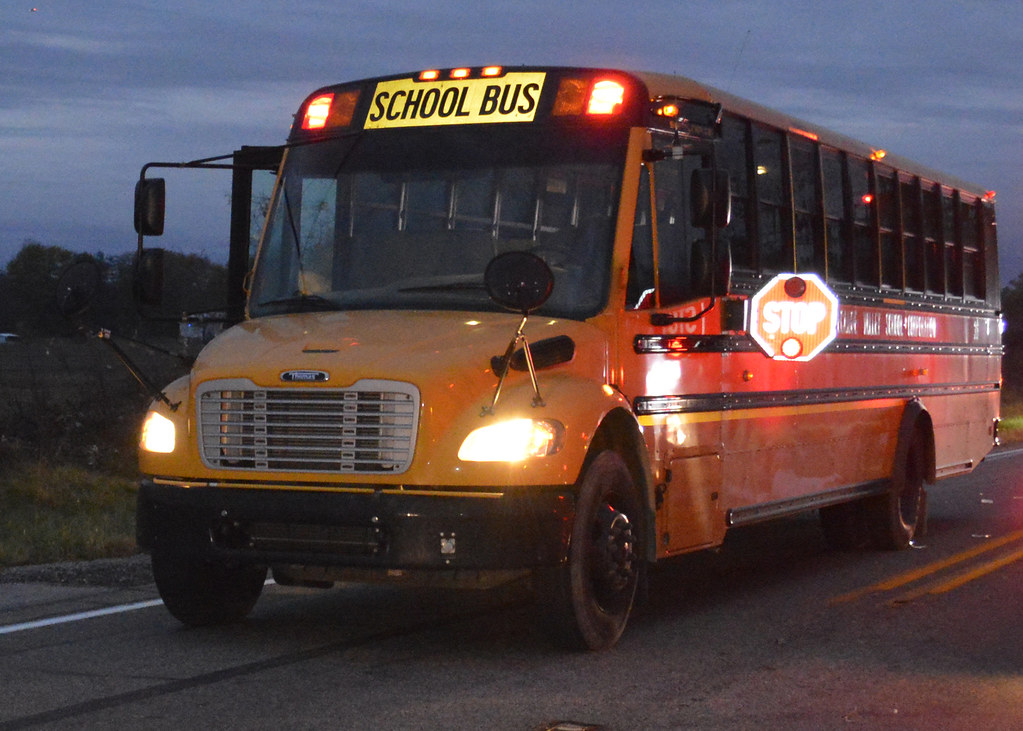
Each Broward school bus in the new fleet carries at least eight cameras - including AI-powered traffic monitoring and license plate recognition designed to capture stop-arm violations without human review in the field. When a stop arm extends and a nearby driver fails to stop, the system documents the event from multiple angles, reads the plate, and generates an evidence package that BusPatrol reviews before a citation is issued to the registered vehicle owner.
The scale of this rollout is not a pilot. It covers every bus in the district - any route, any street, any time. A driver who got through violations in previous years because no officer was nearby no longer has that margin.
The national data makes clear why programs like this exist. Surveys estimate that more than 213,800 illegal school bus passings happen across the United States every single school day, projecting to more than 38.4 million violations per year. Florida alone accounts for an estimated 2 million illegal passings annually - one of the highest totals in the country. The BusPatrol program is Broward County's direct response to that problem, funded in part by citation revenue split between BusPatrol and the school district, with the district's share directed toward student safety initiatives. The program is projected to generate significant annual revenue once the warning period ends - which is a signal of how many violations the system expects to catch.
What Florida Law Actually Requires
Florida law is straightforward but contains a condition that most drivers overlook. When a school bus displays flashing red lights and extends its stop arm, every driver must stop - in both directions on undivided roads - and must remain stopped until two distinct conditions are satisfied: the stop arm has fully retracted, and all children are clear of the roadway. Both conditions. Not one or the other.
The second condition is where mistakes happen. The legal obligation does not end when the red lights stop flashing. It does not end when the stop arm begins to retract. It ends when every child who was loading or unloading has completely cleared the road surface. A student who is still crossing, who drops something, or who moves slowly is still on the roadway - and moving your vehicle before they are clear is still a violation. See the Florida Driver Handbook and the FLHSMV website for the complete legal standard and current enforcement guidance.
Stopping when the red lights activate is only half of the legal obligation. You must stay stopped until the stop arm has retracted and every child is clear of the roadway - two conditions, both required, before you can legally move.
Keeping a gap of at least ten car lengths behind any moving school bus gives you enough sight distance and reaction time to respond properly when the bus decelerates and its signals activate. A tighter following distance often puts you alongside or past the bus door before you have time to react.
Yellow Lights vs. Red Lights: The Two-Signal Sequence
Every stop-arm deployment follows a two-phase signal sequence. Knowing both phases - and what each one requires of you - is the core of this law.
- Yellow flashing lights: The bus is preparing to stop. The stop arm has not yet extended. Your required response is to slow down immediately and prepare to stop. There is no legal requirement to stop the moment yellow lights appear, but accelerating to pass is both dangerous and sets up the exact violation the cameras are designed to catch. Treat yellow lights as a prompt to take your foot off the gas and cover the brake.
- Red flashing lights with stop arm extended: Children are loading or unloading. A complete, full stop is required - for all lanes, in both directions, on undivided roads. You cannot proceed until the stop arm retracts and all children are clear of the road.
The yellow phase exists specifically to give drivers warning time. Using that time to rush past a slowing bus is the most common stop-arm error that new drivers make, and it is the one most likely to end badly.
The Divided Highway Exception: When You Do Not Have to Stop
Florida law includes one exception to the two-direction stop rule. Drivers traveling in the opposite direction are not required to stop when a bus is on a divided highway - but the legal definition of "divided" is stricter than most people assume, and misreading the road type is what turns a believed exception into an actual violation.
A road qualifies as divided for this purpose only if opposing lanes are separated by a raised physical median or by at least the minimum width of unpaved space specified in Florida law. Consult the Florida Driver Handbook for the exact measurement. A painted centerline, double yellow lines, or a painted center turn lane does not meet the standard. The separation must be physical.
On Fort Lauderdale and Broward County roads, this plays out differently block by block:
- Federal Highway (US-1): Many sections carry a raised concrete or landscaped median, and those stretches qualify. Sections where only paint separates opposing traffic do not. Check each segment of any regular route - do not assume one block reflects the next.
- State Road 7 (US-441): Varies considerably. Some corridors have a raised physical median; others have only painted lane markings. You cannot generalize across the full length of this road.
- Oakland Park Boulevard: A center turn lane does not create a legally divided highway. Only a raised or unpaved physical separation qualifies.
- Residential side streets: Almost never divided under the legal standard. Default to treating these as undivided - stop in both directions whenever a stop arm deploys.
When you are uncertain, stop. The cost of stopping unnecessarily is zero. The cost of passing a bus on what turns out to be an undivided road is a violation that can reshape a driving record.
Camera Citations vs. Officer-Issued Tickets: Two Very Different Outcomes
This is the distinction that most existing guides completely miss, and it matters enormously for how a violation actually affects a driver.
| Violation Type | Issued To | License Points | Court Hearing |
|---|---|---|---|
| Camera citation (BusPatrol AI system) | Registered vehicle owner | None - civil matter only | Not required; pay or dispute |
| Officer-issued ticket (standard) | Actual driver | Points added - see FLHSMV for current value | Optional; can pay or contest |
| Officer-issued ticket (danger side) | Actual driver | Points added - see FLHSMV for current value | Mandatory - cannot simply pay |
Camera citations
A BusPatrol camera citation is a civil matter. It goes to the registered vehicle owner - not necessarily the driver. It carries no license points and does not appear as a moving violation on any driving record. If someone else was operating your car when a violation occurred, the citation still comes to you. Contesting it means following the civil dispute process described on the citation notice itself.
Officer-issued tickets
An officer-issued ticket is a moving violation issued to the actual driver. Points are added to the driver's license - check the FLHSMV website for the current point value assigned to this violation, because that number determines the downstream consequences. Paying the fine without contesting it means accepting both the fine and the points.
The danger-side offense
Passing on the side of the bus where children board and exit - the side where the stop arm deploys, facing oncoming traffic, near the curb - is treated as a more serious offense under a separate section of Florida law. It carries a mandatory court appearance; you cannot pay a standard fine and walk away. The minimum fine is substantially higher, and the legal process is treated differently. If you are facing this charge, consult a traffic attorney or contact the FLHSMV for current figures before any hearing.
Why Teen and GDL Drivers Face Disproportionate Risk
Florida's Graduated Driver Licensing system includes a point-threshold rule that resets the path to full driving privileges when a teen accumulates too many points within any rolling 12-month window. When that threshold is reached, the license is automatically restricted to Business Purposes Only - no recreational driving, no driving to a friend's house - for an extended period or until age 18, whichever comes later. Check the FLHSMV for the current threshold and the exact restriction terms.
A single officer-issued school bus ticket adds enough points that one more minor violation in the same 12-month window can push a teen over that threshold. A minor speeding ticket, a stop sign roll, a following-too-close citation - any of them are realistic mistakes for a driver who is still building road habits. The school bus violation puts a teen close enough to the limit that ordinary new-driver errors suddenly become license-restricting events.
This distinction between citation types matters directly here. A camera citation - civil, no points, issued to the registered owner - has no effect on GDL standing. An officer-issued moving violation is an entirely different matter that can freeze a teen's license progress for a year or more from a single incident.
Repeat Offense Penalties and License Suspension
A first conviction for illegally passing a stopped school bus is serious enough. A second conviction within five years moves into a different legal category - Florida law responds with a mandatory license suspension rather than just a higher fine. The suspension period is significant; see the FLHSMV or Florida statutes for the current range that applies to your situation.
If the repeat offense involved passing on the danger side of the bus, the suspension extends considerably further than the standard repeat-offense range - potentially reaching two years under current law. That length of suspension is not a theoretical maximum; it reflects the seriousness with which Florida law treats a pattern of endangering children in the most vulnerable zone around a school bus.
A first violation also creates a five-year window during which the next offense triggers suspension. Drivers who pay a citation and consider the matter closed may not realize they are now inside that window - where a second mistake carries automatic license consequences, not just fines.
Practical Tips for Encountering School Buses in Fort Lauderdale
Broward school buses operate across every municipality in the county. The highest-density hours are 7 to 9 AM and again 2 to 4 PM on school days. During those windows, any driver in a residential neighborhood or near a school campus should treat any approach to a school bus as a potential stop event.
Corridors with heavy school bus activity in Broward include State Road 7 (US-441), Oakland Park Boulevard, Sunrise Boulevard, Broward Boulevard, and the residential feeders around large school campuses. These are not the only areas - any neighborhood with a nearby school will have buses making multiple stops on side streets - but they are the high-frequency corridors that deserve extra attention during school hours.
Habits that reduce violation risk significantly:
- Stay at least ten car lengths behind any moving school bus - closer following leaves too little time and sight distance when the bus decelerates unexpectedly
- Before driving an unfamiliar route during school hours, confirm whether the roads you will travel are physically divided under Florida's legal definition - not just by how they look, but by whether a raised or unpaved median actually exists
- When yellow lights appear on a bus ahead, lift off the gas and cover the brake immediately; do not calculate whether you have time to pass
- Remember that the BusPatrol system captures the full event from at least eight camera angles, including clear license plate images - there is no ambiguity about whether a stop arm was deployed when a vehicle passed
- If you are the registered vehicle owner and a family member drives during school hours, understand that any camera citation will come to you - not necessarily to the driver - and act accordingly in terms of who drives which vehicle
Quick-Reference: What to Do When You See a School Bus Stop Arm
- Watch for yellow lights the moment a bus comes into view ahead. Take your foot off the accelerator and position it over the brake. Do not accelerate to clear the bus.
- When red lights activate and the stop arm extends, bring the vehicle to a complete stop. Stop regardless of which direction you are traveling, unless you have confirmed you are on a legally divided highway with a physical median or unpaved separation.
- Stay fully stopped - do not inch forward. Hold position until the stop arm has fully retracted and you can confirm children have cleared the roadway on both sides.
- Look, not just wait. Actively scan both sides of the road for children still crossing or moving near the road surface. Do not rely only on the stop arm position as your signal.
- Move only when both conditions are fully satisfied. Arm retracted and children clear. Ease forward cautiously, checking mirrors and your full path of travel before accelerating.
- If stopped behind another vehicle, wait for that vehicle to move before you do. School buses often make multiple stops in quick succession on a single street - each new stop-arm deployment restarts your legal obligation from scratch.
Frequently Asked Questions
Will a BusPatrol camera citation affect my car insurance?
A camera citation is a civil matter with no license points and no moving violation entry - so it typically does not trigger the same insurance reporting as a moving violation does. However, insurance companies vary in what they request during renewal review; confirm with your specific provider. The more significant insurance risk is an officer-issued moving violation, which does appear on a driving record and is what insurers are most likely to rate against.
The car is registered to me but someone else was driving - am I still on the hook for a camera citation?
Yes. Camera citations go to the registered vehicle owner, not the driver. If someone else was operating your vehicle when the violation occurred, contesting the citation requires following the civil dispute process detailed on the citation notice itself - typically identifying the actual driver at the time. Each notice includes instructions; read them carefully before the response deadline.
How do I confirm whether a Broward County road is legally divided?
Look for a raised physical median or a strip of unpaved ground - grass, gravel, or dirt - between opposing lanes. Painted yellow lines, painted double lines, and painted center turn lanes do not meet the legal standard. If only paint separates your lane from oncoming traffic, treat the road as undivided and stop. The Florida Driver Handbook describes the legal definition in detail and is worth reading before you drive routes with unfamiliar road configurations.
Can a teen driver contest a camera citation to protect their GDL progress?
A camera citation carries no points and does not affect GDL standing regardless of outcome, so there is nothing on the GDL front to protect from a camera citation alone. The GDL risk comes entirely from officer-issued moving violations, which add points and can restrict or delay license upgrades. If a teen receives an officer-issued ticket for a school bus violation, consulting a traffic attorney about options for contesting or mitigating the violation before accepting any points is worth doing.
I received a warning notice during August - do I need to respond to it?
Warning notices issued during the August 10 through September 8 period carry no fine and require no response or payment. However, the notice creates a documented record that the registered owner received notification of the law and the active camera system. Any similar violation on or after September 9 will be harder to characterize as an honest misunderstanding - treat the warning as the last prompt to review your habits before real citations begin.
Is it possible to receive both a camera citation and an officer ticket for the same stop-arm incident?
Yes. If a law enforcement officer witnesses a stop-arm violation directly, they can issue a moving violation ticket to the driver at the same time the camera system generates a civil citation to the registered owner. These are separate legal actions under separate provisions of Florida law - one civil, one criminal traffic - and they do not cancel each other out. A driver and a registered owner could both face consequences from the same moment of the same incident.