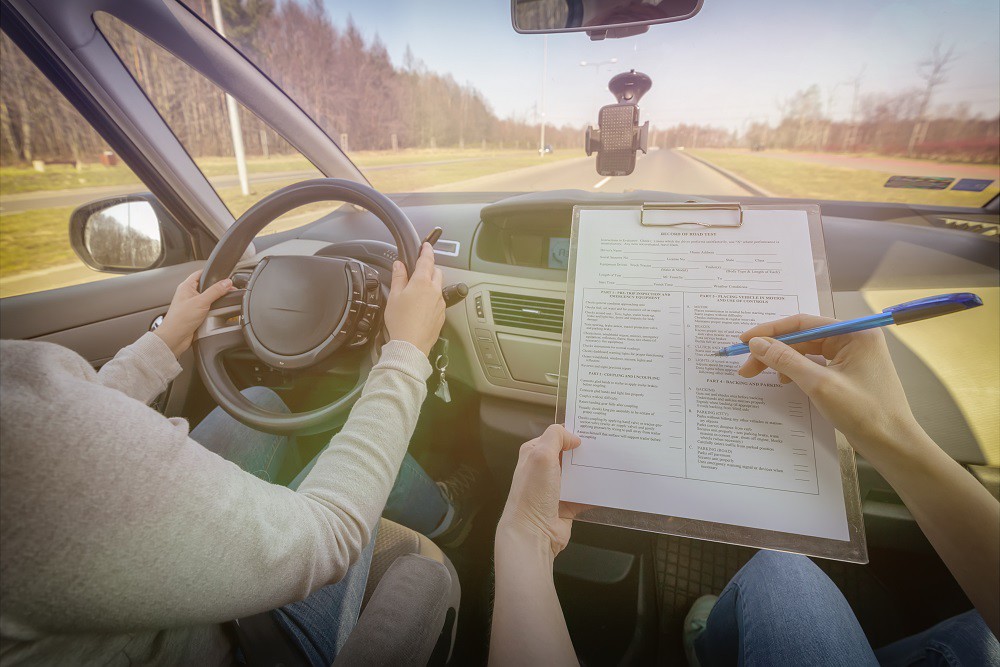
Most guides to the Florida road test read like a general checklist - signal, check mirrors, park straight. They skip the document that actually determines whether you pass or fail. Florida examiners use a standardized scoring form called HSMV 71201, the Class E Driving Skills Road Test Checklist, issued by the Florida Department of Highway Safety and Motor Vehicles. Every evaluator in Broward County uses this identical form, and every decision they make during your test maps back to it. Understanding the form's structure before you sit in that car changes your preparation from guesswork into something targeted.
What HSMV 71201 Is and Why the Structure Matters
The HSMV 71201 organizes the Class E road test into three distinct phases: a pre-drive vehicle inspection, a set of basic control maneuvers performed off or near the road, and on-road traffic skills observed during actual driving. Each phase covers specific evaluated behaviors - fifteen in total across the full test. Examiners score each behavior as the test progresses; errors accumulate, and some single events end the test immediately.
Knowing which phase you are in at any moment helps because the stakes differ. The pre-drive phase can end your appointment entirely if your car fails inspection, before you have driven a foot. The maneuvers phase contains the most technically specific requirements - minimum distances, movement limits, and explicit prohibitions on using certain vehicle features. The on-road phase is where most accumulated deductions happen, and where the difference between a recoverable mistake and an instant disqualification is often a matter of degree.
Understanding the HSMV 71201 form by name, and knowing how its three phases build on each other, is the single most useful preparation step a Fort Lauderdale student can take before a road test appointment.

Phase 1 - Pre-Drive Vehicle Inspection
Before the ignition turns, the examiner walks through a short inspection of your vehicle. This is not a formality. A car that fails inspection ends the appointment on the spot. You will need to reschedule, and you will not get credit for having shown up.
The examiner checks these items specifically:
- Horn - must be audible from a distance specified in DHSMV's current test documentation; the examiner will ask you to sound it
- Front turn signals - both sides must operate
- Rear brake lights - at least two must illuminate when the brake pedal is pressed
- Windshield wipers - must move and clear the glass
- Tires - no tire on the vehicle may show exposed cord through the tread
- Seatbelts - all belts in the vehicle must be functional and must latch
If any item fails, the test does not begin. The examiner is not making a judgment call - the inspection criteria are fixed. Bring a car you have checked yourself the day before. A dead turn signal bulb or a fraying tire is a fixable problem that should not cost you a test appointment.
Phase 1 Continued - Hand Signals and Vehicle Controls
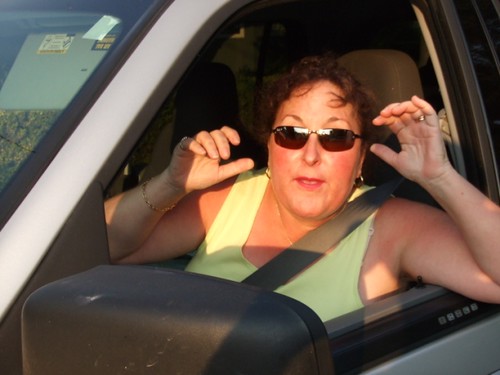
After the vehicle passes inspection but before any driving begins, the examiner asks you to demonstrate hand signals from the driver's window. Florida still requires this even though every modern car has electronic signals. The reason is practical: if your electrical system fails on the road, you need an alternative. The examiner needs to confirm you know it.
The three required hand signals are:
- Left turn - left arm extended straight out through the window, parallel to the ground
- Right turn - left arm bent upward at the elbow, forearm pointing toward the sky
- Slowing or stopping - left arm pointed downward toward the pavement, angled below the window line
The examiner may also ask you to identify controls - headlights, windshield wipers, defrost, hazard lights. The goal is confirming you can operate the car you are about to drive. If you are using a borrowed vehicle, spend five minutes in the driver's seat before your appointment locating every control the examiner might ask about.
Phase 2 - Basic Control Maneuvers
The Backing Maneuver
You will be asked to reverse in a straight line for a minimum distance set in DHSMV's current Class E test instructions - check flhsmv.gov for the exact figure. What makes this maneuver catch so many modern drivers off guard is not the distance. It is the requirement to look through the rear window the entire time. Florida's test instructions explicitly prohibit using the rearview mirror and prohibit relying on the backup camera display during this maneuver.
The intent is that you can control the vehicle by direct visual reference, not by watching a screen. Examiners will see where your eyes go. Looking at the camera or mirror instead of over your shoulder through the rear window is a scored error.
The Quick Stop
The examiner will have you drive at a set low speed - the current speed used is in DHSMV's official testing guidelines - and will give a stop command at a random, unannounced moment. You must brake firmly and bring the vehicle to a complete stop without the tires skidding. The randomness of the command is deliberate: anticipating it defeats the purpose of the evaluation, which tests whether you can respond to a sudden stop need without locking the wheels.
The Turnabout
Florida's score sheet labels this maneuver "turnabout," not three-point turn. The examiner selects a road section within a specific width range noted in the current test instructions. You must reverse the direction of the vehicle using no more than three movements: one forward, one reverse, one final forward. Any additional movement beyond three counts against you.
The practical approach is to steer fully and early during each movement rather than easing into the turns gradually. Timid steering in a confined space is what forces a fourth or fifth movement. Check both ends of the street before each movement and keep your speed low enough to stop if a vehicle or pedestrian appears.
Straight-In Parking
The straight-in parking maneuver tests your ability to judge distance and control the car at low speed in close quarters. The vehicle must end up centered in the space with no part of the car extending into the traffic lane. Examiners look at both the final position and the process - abrupt corrections during the approach are noted, as is a final position that leaves the car crowding one side of the space.
| Maneuver | Key Requirement | Common Error | Recoverable? |
|---|---|---|---|
| Backing | Straight line, minimum required distance, rear window only | Using backup camera or rearview mirror | Yes, if not repeated |
| Quick stop | Firm, complete stop without skidding | Braking too gradually; anticipating the command | Yes |
| Turnabout | Complete within required width space in no more than 3 movements | Needing a fourth or fifth movement | Yes, if not excessive |
| Straight-in parking | Centered, no overhang into traffic lane | Misjudging approach angle; drifting to one side | Yes |
Grade Parking in Flat Broward County
Most Florida road test guides describe grade parking as though every student is on a hill: turn the wheels toward the curb when facing downhill, away from the curb when facing uphill, set the parking brake, and engage a gear that would hold the car if the brake released. That description assumes a hill exists. In Fort Lauderdale and across Broward County, it does not.
The county is essentially flat. Because there is no meaningful grade to test on, examiners handle this requirement through simulation. You will be directed into a parking space or positioned near a curb, and the examiner will ask you to explain or demonstrate correct wheel-turn direction and parking brake use as if you were parked on a slope. What the examiner is listening for is whether you understand the principle - not whether the terrain is actually applying it.
The logic they want to hear: front wheels turned toward the curb when facing downhill, so the car rolls into the curb if the brake fails rather than into traffic; front wheels turned away from the curb when facing uphill, so the car rolls back into the curb. Set the parking brake in addition to gear selection in both cases. Be ready to explain it clearly rather than just demonstrating it silently, because in a flat simulation the verbal explanation carries much of the weight.
Phase 3 - On-Road Traffic Skills
Signaling Requirements
Florida law sets a minimum signaling distance before turns on urban roads, and a longer minimum before turns on highways. The current required distances are in Florida's traffic statutes, available through the Florida Legislature's online portal at leg.state.fl.us. Failing to signal, or activating the signal too close to the turn, is a scored deduction. Examiners pay close attention to signal timing because it is one of the most consistent differences between prepared and underprepared students.
Speed and the Default Residential Limit
When no speed limit sign is posted on a Florida residential street, state law establishes a default limit. Exceeding that default during the test produces deductions. Look up the current default in Florida traffic statutes before your test and internalize it, because Fort Lauderdale's neighborhoods include many residential stretches with no posted signs. You cannot assume a road is unregulated just because no sign is visible.
Lane Positioning and Intersections
The examiner notes whether you maintain proper lane position throughout: centered within your lane, not drifting toward the centerline or the shoulder, and already positioned correctly for an upcoming turn before you reach the intersection. At intersections they watch for a complete stop at the stop line - not a rolling slow-down - correct scanning in both directions before proceeding, and yielding to pedestrians in crosswalks.
Following Distance and Right of Way
Maintaining a safe gap behind the vehicle ahead is a scored item. Crowding the car in front, even briefly, is noted. Right-of-way errors are especially consequential: proceeding through an intersection when another vehicle had priority can escalate from a scored deduction to an automatic disqualification depending on how close the conflict was. When in doubt, yield. A momentary hesitation costs far less than ending the test.
The GPS Ban
The examiner provides all directions verbally during the test. Navigation apps and GPS devices are not permitted. Do not have a phone mounted on the dashboard or a navigation voice speaking through the speakers when you arrive at the test center. Having it active during the drive is a violation, and even having it visible signals to the examiner that your attention may be divided.
Automatic Disqualifications Versus Scored Deductions
The most consequential misunderstanding about the Florida road test is treating all errors as equivalent. They are not. Some errors accumulate as scored deductions - you lose points, but the test continues. Other events end the test immediately, regardless of how well you performed before that moment.
Events that result in automatic disqualification include:
- Any action that would constitute a traffic law violation if it occurred on a public road
- A crash of any kind involving the test vehicle
- Any action the examiner judges as dangerous to any person
- Accumulating excessive scored deductions over the course of the test
- Coaching by any person inside the vehicle
- Refusing to perform a required maneuver
- Attempting to bribe or coerce the examiner
Scored deductions, by contrast, are specific errors on evaluated behaviors - a late signal, a lane drift, a gradual response on the quick stop. These reduce your score but leave the test ongoing. The distinction matters enormously in how you respond to your own mistakes mid-drive. If you miss a signal on a turn, keep your focus on the next maneuver - that error is recorded but the test is not over. If you roll through a stop sign, it is.
The Coaching Rule - Why Any Passenger Is a Risk
Florida's road test rules disqualify a student any time a person inside the test vehicle coaches them. The rule has no threshold of severity. A single word, a gesture, or even a sharp intake of breath that functions as a cue counts. The disqualification is not contingent on whether the coaching helped or whether the examiner believes it changed the outcome - the act itself ends the test.
This creates a specific problem for families who assume that having an experienced driver or a paid instructor in the back seat is neutral. It is not. The coaching prohibition applies to:
- Parents or guardians who came to observe
- Driving instructors who taught the student and want to accompany them
- Siblings, friends, or any other person the student brought along
- Any non-examiner adult regardless of their relationship to the student
The practical rule is simple: if a passenger cannot sit completely silent for the length of the test without reacting to what happens, they should wait outside. A parent who gasps when the student brakes hard, or quietly says "signal" at an intersection, has ended the appointment. Experienced instructors who know the rule either wait outside or sit without reacting - ask your instructor explicitly what their approach is before test day.
Broward County Test-Day Specifics
The Six Locations
Road tests in Broward County are administered at six Broward County Tax Collector locations: Fort Lauderdale, Lauderdale Lakes, Margate, Sunrise, Pembroke Pines, and Pompano Beach. All six use the identical HSMV 71201 score sheet and evaluate the same behaviors under the same criteria. There is no grading advantage to choosing one location over another - the form and the standards are identical at every site.
What does vary between locations is the surrounding road environment. Each uses the streets immediately adjacent to its facility for the on-road phase. If you can, drive the roads around your chosen test center before your appointment to familiarize yourself with the intersection types, lane configurations, and whether nearby streets are primarily residential or arterial. That familiarity will not change your score criteria, but it removes surprise from the drive.
Building a Targeted Practice Plan
- Separate maneuvers practice from on-road practice in your early sessions. Drilling the backing maneuver, turnabout, and straight-in parking in a parking lot or quiet street - without traffic to manage alongside them - builds the precision those maneuvers require before you add the cognitive load of live driving conditions.
- When practicing with an instructor or parent, have them give only route directions - no commentary, no corrections, no reactions. You need to operate without feedback, since coaching during the actual test ends your appointment regardless of intent. Getting used to that silence during practice removes a variable you cannot control once you are in the seat on test day.
- Run the vehicle inspection at least once in the week before your appointment, not only the night before. An earlier check gives you time to find a dim brake light or a worn tire and address it without last-minute pressure. Knowing every item on the inspection list by name is also useful - it tells you what to look for rather than just looking generally.
- Practice the grade parking explanation as a spoken answer, not a demonstrated action. If you can state the principle clearly without prompting - which direction the wheels turn when facing uphill versus downhill, and why each is correct - you are prepared. If you hesitate when saying it aloud, keep repeating it until it comes out clean.
- Drive the roads around your chosen test center at the same time of day as your scheduled appointment. Traffic volume, pedestrian activity, and school zone conditions shift significantly by hour. A residential street near a school during morning drop-off is a different driving environment than the same street on a weekend afternoon. Familiarity with what those roads look like during your actual test window is not the same as simply knowing the route exists.
- In the days before your appointment, run at least one full session in the order the test actually runs: inspection check, hand signals, maneuvers, then on-road driving. Drilling skills in isolation does not prepare you for the attention shift between phases. Practicing the full sequence at least once makes that transition feel less abrupt when it counts.
Frequently Asked Questions
What score do I need to pass the Florida Class E road test?
Florida uses a deduction-based system where you start with a perfect score and lose points for each error. The passing threshold is set by DHSMV - check flhsmv.gov or ask at your Broward County Tax Collector location for the current requirement. When the test concludes, you will typically be shown which areas generated deductions. If you do not pass, that breakdown tells you which specific behaviors to target before you reschedule, rather than repeating the same general preparation. Ask the examiner to walk through the score sheet with you before you leave.
Can I use my backup camera during the backing maneuver?
No - but the error the examiner is scoring is where your eyes go, not whether the display is on. On vehicles where the camera activates automatically, the screen may turn on without any input from you. That is not itself the problem. If your eyes stay through the rear glass, you are meeting the requirement. If your eyes move to the screen instead, that is the scored deduction. This is a deduction, not an automatic disqualification - the test continues. Your overall score can still reach the passing threshold if the rest of your performance is clean.
What happens if my car fails the pre-drive inspection?
The test does not begin and you will need to reschedule. Whether any fee paid is forfeited or applied to a future appointment depends on the Broward County Tax Collector's current policy - that is set by the Tax Collector, not by DHSMV, so check the Tax Collector's website or call your test location directly for the answer. The rescheduling process also varies. The one reliable way to avoid this outcome is to inspect the vehicle yourself at least the day before and fix any problem while you still have time.
Does my parent have to wait outside, or can they sit in the car?
A parent may ride in the vehicle but must remain completely silent and still. If you are concerned that a parent or other passenger might react during the drive - even involuntarily - you can ask them to wait outside before the examiner starts the test. Once the test is underway, a coaching disqualification cannot be reversed. If you arrive with a passenger and realize during the pre-drive phase that they are anxious or likely to react, it is appropriate to ask that person to step out before the examiner begins. The examiner does not make that decision for you - it is yours to make before the test starts.
Are all six Broward County test sites equally difficult to pass at?
The scoring criteria are identical. A practical difference worth knowing is that appointment availability is not uniform across the six locations - if your first-choice site has a long wait, check the others, since openings sometimes appear on shorter notice at less-busy locations. Time of day is also worth factoring in. A morning slot near a school may bring school zone speed limits into play; a mid-afternoon slot on the same street may not. That does not change how you are scored, but it changes what you encounter on the road, and familiarity with the area at your actual appointment time is a small advantage.
Is the grade parking maneuver really tested in Fort Lauderdale if there are no hills?
It is still evaluated, and this is a point where preparation guides from outside South Florida can cause real problems. Many statewide Florida road test resources describe grade parking as a physical demonstration on an inclined road. Students who use those materials and test in Broward may arrive expecting to drive onto a slope. When the examiner asks for a verbal explanation instead, the format itself becomes a surprise. An incorrect or incomplete explanation loses points; a clear and correct one earns full credit for the item. If your practice materials assume a hill exists, supplement them with focused preparation on the verbal form - particularly the logic of why the wheels turn in each direction, not just which direction they turn.