Fort Lauderdale drivers operate under a legal patchwork that trips up new residents, returning snowbirds, and teenagers alike. Florida has not one but two overlapping phone-use laws, each covering different roads, different behaviors, and different consequences. Layered on top of those is a third, stricter standard that applies exclusively to learner permit holders - one that most parents do not know exists until their teen gets pulled over. Understanding which law applies to which situation is not a technicality; it is the difference between a non-moving violation with no points and a moving violation that follows a driver to their next insurance renewal.
Florida's Texting Ban: How Enforcement Changed in 2019
Florida's Ban on Texting While Driving Law has been on the books since 2013, but a July 1, 2019 amendment turned it into an actual enforcement tool. Before that date, the law was a secondary offense. Police could only write the citation if they had already pulled you over for something else - a broken tail light, an improper lane change. Texting alone was not grounds for a traffic stop. That changed in 2019, when the legislature reclassified it as a primary offense. A trooper or local officer who sees you looking down at a phone while the vehicle is moving can now stop you for that reason alone, with no other violation needed.
The law covers wireless communications devices used to manually type, send, read, or view a message while the vehicle is in motion. That includes text messages, emails, and social media messaging. It does not require the officer to prove you were reading versus composing - observable phone-in-hand, eyes-on-screen behavior while moving is enough to justify the stop. The law does not ban GPS navigation or handheld voice calls on regular roads for adults, both of which are addressed separately below.
A first offense is classified as a non-moving violation with no license points added. A second offense within five years is reclassified as a moving violation with license points attached to the driver's record. That reclassification is where the real-world damage compounds. Check flhsmv.gov for current fine amounts, as court costs and local surcharges affect the total significantly.
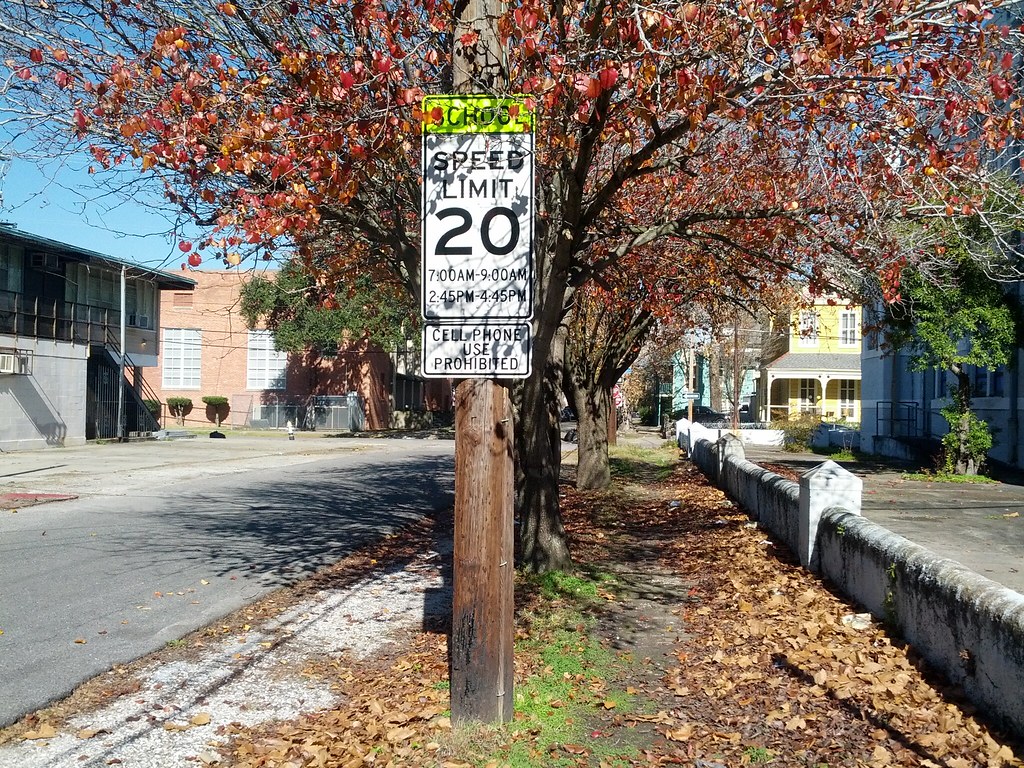
The School Zone and Work Zone Handheld Ban: A Stricter Standard
Effective October 1, 2019, Florida added a second law that goes significantly further than the texting ban. This one prohibits any handheld wireless device use - including voice calls, not just typing - inside designated school crossings, school zones, and active work zones. You do not have to be texting to violate it. Holding a phone to your ear and talking while passing a school zone sign is a citable offense under this law, even though that same call would be completely legal one block earlier on a regular road.
The penalty structure is stricter from the very first offense. Unlike the texting ban, which starts as a non-moving violation with no points on the first ticket, any school or work zone handheld violation carries license points and is classified as a moving violation immediately. There is no soft first offense here. The fine is also higher than the texting ban's first-offense baseline - check flhsmv.gov for the current figure.
For Fort Lauderdale and Broward County drivers, this affects a wide portion of daily routes. Broward County operates one of the largest public school systems in Florida. School zones line US-1 (Federal Highway) through Fort Lauderdale, Sunrise Boulevard, Andrews Avenue, Oakland Park Boulevard, and dozens of residential corridors near elementary and middle schools. Work zones appear throughout the county wherever FDOT or local crews are active on road projects. The Broward Sheriff's Office has run dedicated "No Texting While Driving" enforcement campaigns targeting school zones and high-traffic intersections across the county, so enforcement is not theoretical here.
Is Florida a Hands-Free State?
No. Florida is not a statewide hands-free state, and this confusion causes real problems for drivers relocating from Georgia, Tennessee, or any of the growing number of states that have passed full hands-free laws. Adult drivers 18 and older can legally hold a phone to their ear and talk while driving on regular roads in Florida - as long as they are not in a school zone or active work zone.
Two recent bills aimed at closing this gap both failed before reaching a floor vote:
- HB 501 (2025) - would have banned all handheld phone use statewide on any road; died in committee
- SB 1152 (2026) - a companion effort to mandate hands-free statewide; also died in committee without becoming law
The failure of both bills explains why Florida's current law feels half-finished to drivers familiar with stricter states. Georgia passed a full hands-free law in 2018. Florida has the school-and-work-zone piece but not the universal prohibition. The practical result on a road like US-1 through Fort Lauderdale: a driver can legally hold the phone to their ear, then becomes subject to the handheld ban when they enter a school zone on that same road, and is legally permitted to hold the phone again once the zone ends. Monitoring that in real time while navigating traffic is itself a form of distracted driving.
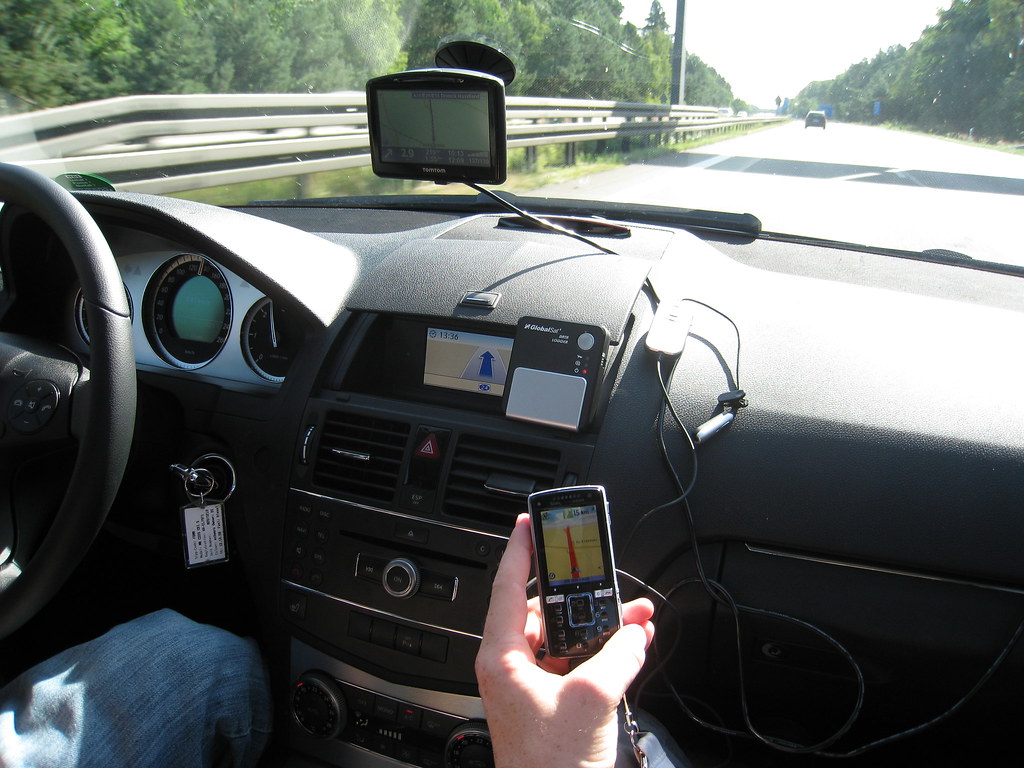
Learner Permit Holders Face a Total Device Ban
Florida's Graduated Driver Licensing program imposes a rule on learner permit holders that goes well beyond what either of the adult laws requires. The permit total device ban covers:
- Handheld voice calls - including holding the phone to the ear
- Text messages and emails of any kind
- Hands-free calls through Bluetooth or the vehicle's built-in audio system
- Any other use of a wireless communications device while the vehicle is in motion
The only exception, per the Florida Highway Safety and Motor Vehicles department, is reporting a genuine emergency. That exception is narrow and specific; it does not cover routine calls to a parent or checking a notification at a red light.
The Bluetooth restriction is the one that surprises most families. Many parents assume their teen can answer a hands-free call because it seems safer than holding the phone - and for adult drivers, it is legal. But a teenager with a learner permit cannot answer a call through the car's speakers at all. The phone needs to be physically out of reach: in the glove box, the back seat, or a bag in the trunk. A phone resting on the center console still creates pressure to respond when it lights up or buzzes.
AAA research provides the reason behind this stricter standard: distracted driving contributes to 58% of all crashes involving 16-to-19-year-old drivers. Learner permit holders are building the foundational automatic habits that experienced drivers rely on - scanning intersections, tracking speed, managing mirrors and blind spots. Adding phone interaction to that cognitive load at this stage multiplies risk far more sharply than it does for an experienced driver.
What Is - and Is Not - Legal on Fort Lauderdale Roads
The clearest way to understand Florida's phone laws is to compare behaviors across driver categories in one place:
| Behavior | Adult Driver (18+) | Learner Permit Holder | Inside School or Work Zone |
|---|---|---|---|
| GPS navigation (pre-set, mounted) | Legal | Legal | Legal |
| Typing a new GPS destination while moving | Illegal | Illegal | Illegal |
| Handheld voice call | Legal | Illegal | Illegal |
| Hands-free call (Bluetooth/CarPlay) | Legal | Illegal | Legal (no device in hand) |
| Texting or messaging while moving | Illegal | Illegal | Illegal |
| Eating, adjusting radio, talking to passengers | Not explicitly illegal | Not explicitly illegal | Not explicitly illegal |
That bottom row deserves attention. Eating, adjusting the radio, talking to passengers, reaching into a bag on the passenger seat, and grooming at a stoplight are not prohibited by Florida statute. But the Florida Department of Transportation classifies all of them as manual, visual, or cognitive distractions that can establish civil liability after a crash. After a collision, these behaviors appear in the police report and become evidence in personal injury claims - even though no traffic law technically banned the sandwich or the radio knob.
Real-World Consequences: Fines, Points, and Insurance
A first texting offense carries a base fine and no license points - a deliberately light consequence designed to warn rather than punish. The escalation on a second offense within five years is where drivers, especially new ones, take real damage. That second ticket becomes a moving violation with license points added to the Florida record.
Insurance companies pull motor vehicle records at renewal and whenever a new driver joins a policy. Moving violations signal risk, and insurers adjust premiums accordingly. A first texting offense with no points typically does not directly affect a premium. A second offense - now a moving violation with points - is the kind of notation that triggers a rate review. For a teenage driver being added to a parent's auto policy, the timing matters: teen surcharges are already substantial, and a moving violation on a fresh record compounds costs further.
The license point risk is most acute for drivers with short records. Florida suspends licenses when points accumulate past certain thresholds within set time windows - see flhsmv.gov for the current limits. An experienced adult driver might absorb points from a second texting offense and still have headroom before any suspension risk. A teen driver starting from zero points has no cushion. A second texting offense combined with even one other minor moving violation can push a new driver into the suspension window faster than they expect.
For school zone and work zone violations, this math is worse from the start. Any offense in those zones carries points and is classified as a moving violation immediately - no soft first offense. A single school zone handheld citation adds points, gets reported to insurers, and starts the point clock running from ticket one.
The Crash Numbers in Local Context
Distracted driving killed more than 3,200 people nationally in 2024, representing roughly 14% of all U.S. traffic fatalities, according to the National Highway Traffic Safety Administration. Florida alone records more than 50,000 distraction-related crashes every year, with cell phone use estimated to be a factor in more than 7,400 of those crashes in 2024, per FLHSMV. These are not abstract national figures; they are crashes in parking lots, intersections, and school drop-off lanes across the state.
For teen drivers, the proportion is worse. AAA research found that distracted driving contributes to 58% of crashes involving 16-to-19-year-olds. NHTSA and AAA research shows that talking on a handheld phone doubles the likelihood of a crash and slows a young driver's reaction time to roughly that of a 70-year-old. A teenager with a phone to their ear is not responding at teenage speed - they are responding with the processing lag of someone who has been driving for fifty years while their reflexes have declined.
Distracted driving is 100% preventable. If you are driving, your only job is to drive.National Highway Traffic Safety Administration
In Fort Lauderdale, these numbers land on roads already demanding high attention. US-1 through downtown carries heavy commercial and pedestrian traffic with frequent crossings. Sunrise Boulevard crosses multiple school zones and densely used intersections. I-95 interchanges at Oakland Park Boulevard and Commercial Boulevard push high-speed highway traffic onto surface streets where speeds, cyclists, and pedestrian crossings interact. The Broward Sheriff's Office enforcement campaigns that specifically target these corridors reflect where the local crash data concentrates.
Practical Steps for Staying Compliant
The gap between knowing the law and following it consistently is a habit gap. These steps close it before the car moves:
- Set your GPS destination before you shift into drive. This is the single habit that eliminates the most common illegal phone interaction. Once the car is moving, manually typing a new address is prohibited. If plans change while you are already driving, pull into a parking lot before updating the route - do not do it at a red light.
- Enable Do Not Disturb While Driving before you start the trip. On iOS, go to Settings - Focus - Driving. On Android, find Driving Mode in the Digital Wellbeing settings. Both modes silence incoming notifications and send auto-replies to texts, which cuts the urge to check at the source rather than relying on willpower at the wheel.
- Connect Bluetooth or CarPlay before pulling out. If the vehicle supports hands-free audio, pairing the phone is part of the startup routine - same as the seatbelt. For learner permit holders, this does not resolve the permit ban (which covers even hands-free calls), but it builds the right habit for when a full license arrives.
- Mount the phone on a dashboard or windshield bracket if you use navigation regularly. A mounted phone displaying a route you set before driving is fully legal and keeps your eyes higher. A phone in your lap doing the same thing creates a temptation to look down and is harder to glance at without taking your eyes fully off the road.
- For learner permit holders: put the phone physically out of reach before the car starts. The glove box, back seat, or a bag in the trunk works. A phone resting on the center console still lights up and buzzes in peripheral vision, which creates pressure to respond even when the driver intends to ignore it.
For music apps: cueing up a playlist or podcast before driving is legal and avoids any need to interact with the phone while moving. Skipping tracks by tapping a mounted screen is not explicitly prohibited for adult drivers on regular roads, but the reaching-and-looking behavior it encourages is the same divided attention the laws are designed to eliminate.
What's Next for Florida Law
The advocacy push for a full statewide hands-free law is sustained and organized. Safety groups, law enforcement associations, and insurance industry voices have backed multiple legislative attempts over several sessions. The failure of HB 501 in 2025 and SB 1152 in 2026 - both dying in committee without reaching a floor vote - reflects continued legislative resistance, not absence of pressure.
If a full hands-free bill eventually passes, the most likely change is a prohibition on holding the phone during any call while the vehicle is in motion, bringing Florida in line with Georgia and the majority of states that have already made that move. For Fort Lauderdale drivers already navigating the school zone rules, the practical adjustment would be smaller than it sounds - those rules already require hands-free only in a large portion of city driving. The full ban would simply extend that requirement to all roads at all times.
The most practical approach for any driver in Fort Lauderdale right now - teen or adult - is to drive as if the full hands-free law is already in effect. The habit of keeping the phone down on all roads is far easier to maintain than monitoring which specific block you are on and whether a school zone boundary applies. Teens in the learner permit stage are actually in a better position than they may realize: the stricter total device ban they must follow now is already more demanding than any full hands-free law that might pass. If the legislature eventually acts, they will need no adjustment at all.
Frequently Asked Questions
Can I legally use GPS navigation while driving in Florida?
Yes. GPS navigation apps such as Google Maps, Waze, and Apple Maps are legal to use while driving in Florida. The law's exception specifically covers navigation data displayed on the device. The restriction applies to manually typing a new destination while the vehicle is moving - enter the address before you pull out or pull over to update it. A phone mounted and displaying a route you set before driving is fully legal for adult drivers and learner permit holders alike.
Does Florida's texting ban apply when I'm stopped at a red light?
The texting ban applies to device use while the vehicle is "in motion," which creates a legal ambiguity at red lights since the vehicle is technically stopped. Officers retain discretion, and the behavior of reaching for the phone at lights is exactly how the habit of texting while driving develops. Whether or not a strict reading of the law covers that moment, the safety case for leaving the phone alone until you are in a parked and stationary vehicle is clear.
My teen has a learner permit - can they use the car's Bluetooth to take hands-free calls?
No. Florida's learner permit wireless device ban covers all wireless device use, including hands-free calls through the car's Bluetooth or a connected system like CarPlay or Android Auto. The only exception is a genuine emergency. This stricter standard catches many families off guard because it goes well beyond the adult rule. The phone needs to be out of reach or fully silenced before the car moves.
How does a second texting ticket affect my Florida driver's license and insurance?
A second texting offense within five years is reclassified as a moving violation with license points added to your record. Insurance companies factor moving violations into risk assessments at renewal and when processing new driver additions. A first offense with no points typically has no direct premium impact; a second offense with points signals a pattern of risk behavior. For a teen with a short record and no existing points cushion, that second ticket combined with any other minor violations can also move the driver closer to a license suspension threshold - see flhsmv.gov for the current point accumulation limits.
Is it legal to hold my phone and talk while driving through Fort Lauderdale?
For adult drivers 18 and older, yes - on regular roads outside school zones and active work zones. The moment you enter a school zone or work zone, holding the phone during any call violates the stricter handheld ban, which applies regardless of whether you are texting or talking. Learner permit holders cannot make or take any call under any road conditions except genuine emergencies. The cleanest habit is Bluetooth for all calls on all roads, regardless of what the law technically allows where you happen to be.
When could a full hands-free law pass in Florida?
There is no set timeline. Two bills - one in 2025 and one in 2026 - both died in committee without a floor vote. Legislative advocacy from safety and law enforcement groups continues each session. Follow the Florida Legislature's bill tracker (myfloridahouse.gov and flsenate.gov) and the FLHSMV website for updates; the legislative session typically runs from January through May and is where any new bill would move.