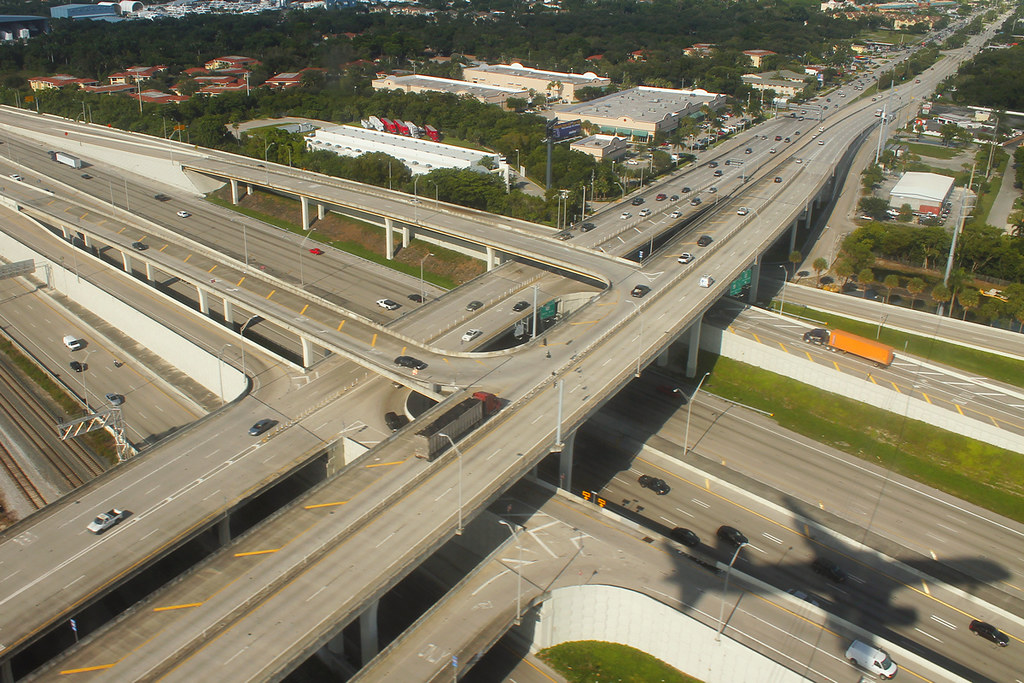
South Florida highways are not getting quieter any time soon. Between the I-95 widening through Broward County, the I-595 repaving, and the SR 9 interchange rebuilds, a new driver in Fort Lauderdale will encounter active construction zones on nearly every major route. Florida law treats these zones differently from ordinary roads - the fines are higher, the phone rules are stricter, and the enforcement starts earlier than most drivers expect. Two Florida statutes that almost no competing source discusses together - § 316.1893 and § 316.306 - can cost a teen driver a license before the first year behind the wheel is done. This guide covers both laws, the local corridors where they apply right now, and the specific techniques that keep you out of crashes and out of traffic court.
Why Construction Zones Are Especially Dangerous in South Florida
Florida recorded more than 16,000 work zone crashes in a single recent year, with 74 fatalities and 294 serious injuries, according to FDOT crash data. That is one state's annual total. Within that national picture, Florida ranked third highest in the country for fatal work zone traffic crashes in 2021-2022, according to FMCSA data. For Broward County drivers right now, exposure is above average because multiple major projects are running simultaneously across the county's busiest routes.
The conditions that make work zones deadly are predictable and consistent:
- Sudden speed limit drops with little runway to brake
- Narrowed lanes that leave no margin for drifting
- Unpredictable worker and equipment movement near live traffic
- Unfamiliar lane configurations that distract drivers from the road ahead
- Following distances adequate on open highway that collapse the moment traffic stops
New drivers are particularly at risk because a construction zone overrides everything practiced during training. Familiar exits disappear. Lanes shift without obvious reason. Road surface changes texture without warning. Understanding the rules before you enter these zones is not optional preparation - it is what separates a safe pass from a crash or a citation that follows you for years.
How to Spot a Work Zone Before You're in It
Florida uses the Manual on Uniform Traffic Control Devices standard for work zone signage. Every legitimate construction zone arrives with the same advance sequence, and every sign in that sequence is fluorescent orange. The color itself signals a temporary traffic control zone before you have read a single word. When you see orange, your driving situation has already changed.
The standard sign sequence runs in this order:
- Road Work Ahead - your first notification; start reducing speed and scanning ahead for what changes.
- Reduced Speed Ahead or a posted speed limit sign - the new limit applies from this sign forward, not from the first cone or barrel.
- Lane Ends / Merge Left (or Right) - advance notice of where your lane disappears, posted well before the actual taper begins.
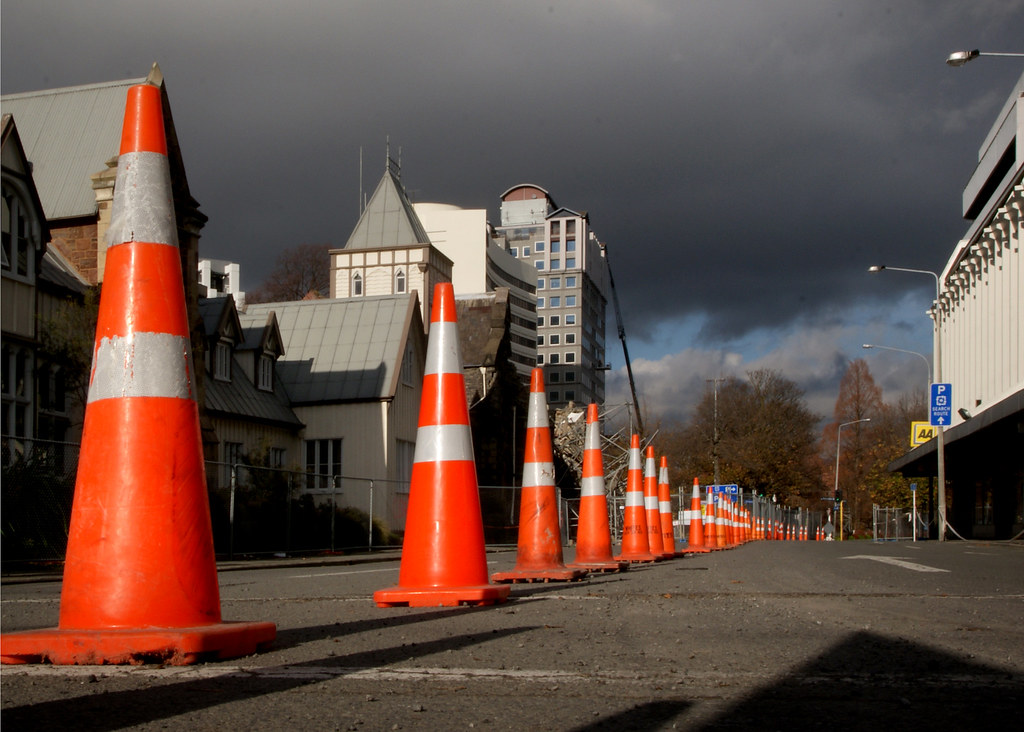
- Channelizing devices (cones, barrels, drums) - these mark the taper itself and the physical work area boundary.
- End Road Work - the zone is officially closed and standard speed limits resume.
The most consequential misunderstanding in work zone driving: the speed limit takes effect from the first advance warning sign, not from the first cone. The taper can start several hundred feet before any workers or equipment are visible. Officers enforce the posted speed from the moment you pass the sign. Most new drivers slow at the cones. By that point, they have already been in the legal work zone - and potentially over its speed limit - for a significant stretch.
Florida's Doubled-Fine Law Explained (§ 316.1893)
Florida Statute § 316.1893 requires that any speeding fine inside a designated construction zone be doubled when two specific conditions are both satisfied. Both must be present at the same time - one alone is not enough to trigger the multiplier, but both together are common on active Broward highways during work hours.
The two conditions are:
- Workers are actively present. The zone must be staffed when you pass through - construction workers, flaggers, or survey crews physically on or adjacent to the roadway. An empty zone with cones but no personnel does not trigger the doubled-fine provision.
- Advance warning signs are properly posted. FDOT must have completed the required sign sequence in compliance with MUTCD standards. An improperly marked zone can be challenged on this basis, though properly marked zones on I-95 and I-595 are the norm, not the exception.
When both conditions are met, the standard speeding fine is multiplied by two. At higher speeds, the resulting total climbs significantly. For current fine amounts, check the Florida Uniform Traffic Citation schedule at flhsmv.gov - base fines can change, and any figure printed here could be outdated by the time you read it. The doubling mechanism itself is the point: the same speed that produces a manageable ticket on an open road produces a much larger one when workers are present.
Enforcement on Broward highways is not a theoretical risk. Florida Highway Patrol and Broward Sheriff's Office patrol active work zones during daylight hours - precisely when § 316.1893 conditions are most likely to be satisfied. Officers do not need to warn you the doubled-fine provision applies. The law is communicated through the required signage you already passed.
The Hands-Free Rule in Work Zones Is a Primary Offense (§ 316.306)
Florida Statute § 316.306 prohibits holding a wireless device for any purpose in an active work zone. Not just texting. Any handheld use - checking a map, glancing at a notification, switching a playlist - qualifies as holding the device under this statute.
What makes this especially important for new drivers is the enforcement authority. This is a primary offense. An officer can pull you over solely for holding your phone in a work zone, with no other traffic violation required. There is no need for the officer to observe speeding, weaving, or erratic behavior. The phone in your hand is the complete basis for the stop.
The violation adds 3 points to your Florida license, plus a fine - check flhsmv.gov for the current amount. Three points may not sound serious in isolation. Paired with the point totals that work zone speeding can generate, the picture changes quickly, as the section on GDL thresholds below shows.
What qualifies as hands-free inside a work zone:
- A phone mounted on the dashboard or windshield, operated by voice command or a single tap
- Bluetooth audio through the car's speakers or a single-ear earpiece
- GPS navigation running on a mounted device you are not actively touching
What does not qualify: holding the phone at your lap, holding it briefly to check the screen, or holding it while stopped waiting for a flagger's signal. Stopped does not mean exempt. The statute does not carve out an exception for vehicles paused inside an active zone. If the zone is active, the prohibition is in effect, moving or not.
Speed, Following Distance, and Lane Position Inside the Zone
Rear-end collisions are the most common crash type in work zones. The cause is nearly always following distance that felt adequate on an open highway but proves insufficient when traffic stops abruptly - and in construction zones, traffic stops abruptly for reasons that cannot be predicted: a flagger drops a stop paddle, a piece of equipment backs across a lane, workers step into the roadway.
The standard two-second following rule is not appropriate here. Safety guidance consistently recommends at least four seconds of following distance through active construction zones. To check: pick a fixed point on the road, watch the vehicle ahead pass it, then count the full seconds before your front bumper reaches the same spot. Four seconds at 45 mph is more space than feels intuitive. Maintain it anyway - the zone was designed with workers close to traffic, and your stopping distance is the only buffer between a slow-down and a crash.
Lane position inside narrowed lanes deserves attention too. Construction barriers and equipment often reduce lanes well below their normal width. In a narrowed lane, position yourself toward the center - away from the concrete barrier wall and away from the open work zone on the other edge. Avoid drifting toward either margin.
Lane changing inside a work zone is a separate category of risk. Unless a sign directs you to change lanes, stay in your current lane from entry to exit. Weaving between lanes to gain a few car lengths is among the leading driver behaviors in work zone crashes - and it eliminates your buffer on both sides at once, at the moment you can least afford to lose it.
The Zipper Merge: How to Handle Lane Reductions Without Panic
When a sign reads "Lane Ends - Merge Left" a quarter mile ahead, the instinct of most drivers is to move over immediately. That instinct creates longer backups, not shorter ones. The correct technique is the zipper merge: stay in your lane until the actual posted merge point, then alternate with traffic in the continuing lane, one vehicle at a time.
Research from Minnesota DOT, now widely adopted by transportation agencies nationally, found that using both available lanes fully until the merge point reduces backup length by up to 40% compared to early merging. Early movers create a single long queue in one lane while the ending lane sits empty for hundreds of feet - wasting road capacity that was designed to be used.
How to complete a zipper merge correctly:
- Stay in your current lane if it is the lane that ends. Do not move over at the first warning sign.
- Match the speed of traffic in the continuing lane as you approach the merge point.
- Signal clearly as you reach the actual taper zone.
- At the merge point, take your turn - one vehicle from each lane, alternating.
- If you are already in the continuing lane, leave a gap for one vehicle from the ending lane, then go, then leave another gap.
Using both lanes to the merge point and then alternating is not aggressive driving - it is the intended design of the zone.Minnesota DOT, zipper merge guidance
The zipper merge can feel like cutting because drivers who moved over early are now watching you pass them. You are not cutting. You are using available road the way the zone was marked to be used. Signal, proceed to the merge point, and take your turn.
Flaggers and Temporary Signals: Who Has Authority and What You Must Do
FDOT-certified flaggers carry legal authority equivalent to a traffic control device under Florida law. Ignoring a flagger's signal is a chargeable traffic violation - the same legal category as running a red light. This matters because new drivers are sometimes uncertain what to do when a person on foot appears to conflict with a signal they can see clearly overhead.
The rule is direct: the flagger's signal takes priority. If a flagger holds a stop paddle and a traffic light ahead shows green, stop for the flagger. Signals operate on fixed cycles that may not have been updated for current construction activity. Flaggers have real-time awareness of what is happening in both directions through the zone. A signal does not.
Basic flagger signals to recognize before you enter a zone:
- Stop paddle extended horizontally: Stop completely. Hold your position until the flagger signals you forward.
- Slow paddle with arm raised: Proceed at reduced speed. Be prepared to stop.
- Flag waved in a downward arc: Stop. An older hand signal still used in some Florida zones.
When you stop for a flagger, stop before any stop line visible on the pavement, or, if none exists, before the flagger's position. Do not inch forward between signals. The flagger is coordinating two-way traffic through a single lane and is watching the opposite direction while you wait. Moving before you are signaled to go creates a direct safety hazard to workers on the other side of the zone who cannot see your vehicle.
How Work Zone Violations Hit Teen and New Drivers Hardest
Florida's point system applies to all licensed drivers, but the consequences land hardest on new drivers who have no clean driving history to absorb a mistake. Accumulating 12 points within any 12-month period triggers an automatic 30-day license suspension. At 24 points within 36 months, the suspension extends to one year. A single construction zone stop can generate enough points to put a teen substantially closer to that threshold than most realize before they get there.
| Violation | Points | Fine Level | Work Zone Fine Doubling? |
|---|---|---|---|
| Speeding 1-15 mph over limit | 3 points | Base fine | Yes, when workers present |
| Speeding 16+ mph over limit | 4 points | Higher base fine | Yes, when workers present |
| Handheld phone in work zone | 3 points | Work-zone-specific fine | Not applicable - own statute |
| Disobeying flagger signal | 4 points | Moving violation fine | Applies inside active zone |
| Following too closely | 3 points | Base fine | Check flhsmv.gov for zone specifics |
Two citations from one stop - speeding plus a handheld phone violation - can add 6 or 7 points to a new license in a single encounter. A second incident anywhere in the same 12-month window can push the total past the automatic suspension threshold. Points and fines are separate consequences, but they arrive together.
Insurance consequences follow independently of the point system. Florida carriers review driving records, and work zone violations - particularly a combination of speed and phone use - signal a high-risk profile that affects premium rates at renewal. For a teen on a parent's policy, a work zone citation is among the faster ways to change the household's insurance costs, sometimes for multiple years.
Broward County's Active Construction Corridors New Drivers Will Actually Encounter
Knowing the law matters more when you know where you will face it. Three active corridors in Broward County are the ones Fort Lauderdale-area drivers encounter most often right now.
I-95 Phase 3C: South of Hollywood Boulevard to South of Broward Boulevard
FDOT's Phase 3C project extends managed express lanes northward through the center of Broward County. Lane shifts, barrier walls, and active construction appear across multiple exits along this stretch. On weekday mornings and afternoons when workers are present, both conditions of § 316.1893 are routinely satisfied. The new express lane configuration also creates genuine confusion about which lane continues and where lanes merge - the zipper merge and the no-lane-change principles both apply throughout this corridor.
I-595: I-75 to I-95 Repaving
FDOT is repaving I-595 across this stretch, connecting I-75 in the west to the I-95 interchange near downtown Fort Lauderdale. Nighttime work is common on I-595, which means flaggers, reduced overhead lighting, and speed limit drops during hours when teen drivers may be returning home. Night construction zones carry additional risk because fluorescent orange signs are harder to spot at distance. Use headlights on low beam where possible, increase your four-second following distance, and expect the zone to begin before any equipment is visible.
SR 9 / I-95 Interchange: Deerfield Beach to Hallandale Beach
The SR 9/I-95 interchange rebuilding program spans 18 miles from Deerfield Beach to Hallandale Beach. This is a long zone, and drivers who enter at one end sometimes assume the zone ends when they no longer see active equipment near their lane. It does not. The zone designation persists for its full posted length, and the "End Road Work" sign is the only reliable marker that standard speed limits and phone rules have resumed. Check the FDOT District 4 project page for current schedule information before unfamiliar trips on this corridor - construction shifts from night-only to daytime activity can happen week to week.
Frequently Asked Questions
Does the work zone speed limit apply even when no workers are visible?
Yes, with one important distinction. The posted speed limit inside a marked work zone is in effect from the first advance warning sign, regardless of whether workers are visible at that moment. The doubled-fine provision under § 316.1893 requires workers to be actively present - but the underlying speed limit, and any standard fine for exceeding it, applies whether or not anyone is working when you pass through.
What should I do if a flagger signals me to stop but a traffic light ahead shows green?
Stop for the flagger. Florida law gives certified FDOT flaggers authority equivalent to a traffic control device, meaning their signal overrides the traffic light. The light may be running on a timed cycle that was not adjusted for current lane activity. Proceed only when the flagger signals you forward - not when the light changes.
Can I check my phone for navigation if I am stopped at a red light or waiting for a flagger inside a work zone?
No. Florida Statute § 316.306 prohibits holding a wireless device for any purpose inside an active work zone, and that prohibition does not pause when you are stopped. Being stationary at a signal or flagger's paddle inside the zone does not create an exception. Program your navigation before entering the zone or pull completely out of it before touching your phone.
How do I know when I have actually left the construction zone?
Look for the "End Road Work" sign. Until you see it, the zone's speed limit and handheld phone prohibition remain in effect. The disappearance of cones or the return of normal pavement is not a reliable indicator - equipment is often staged outside the active travel lane, and the zone boundary is defined by the signs, not by what is visible on the road surface.
Can I take a driver improvement course to remove work zone violation points from my Florida license?
Florida allows eligible drivers to elect a Basic Driver Improvement course to prevent certain violations from adding points, but this option is limited to once per 12-month period and no more than five times total over a lifetime. Not every violation qualifies, and work zone speed violations at higher fine levels may have additional restrictions. Confirm eligibility with the Broward County Clerk of Courts before assuming the points can be avoided - the rules for GDL-stage drivers may differ from those for fully licensed adults.
Is staying in an ending lane until the merge point legal, or does it look like cutting and invite road rage?
Staying in an ending lane until the posted merge point is both legal and correct. Florida law does not require early merging, and the advance warning signs are specifically designed to give drivers time to use both lanes productively before the taper. The tension comes from early mergers who interpret late arrivals as queue-cutters - they are not. Signal clearly, approach the merge point at a matched speed, and take your alternating turn. You are using the road the way it was marked to be used.